
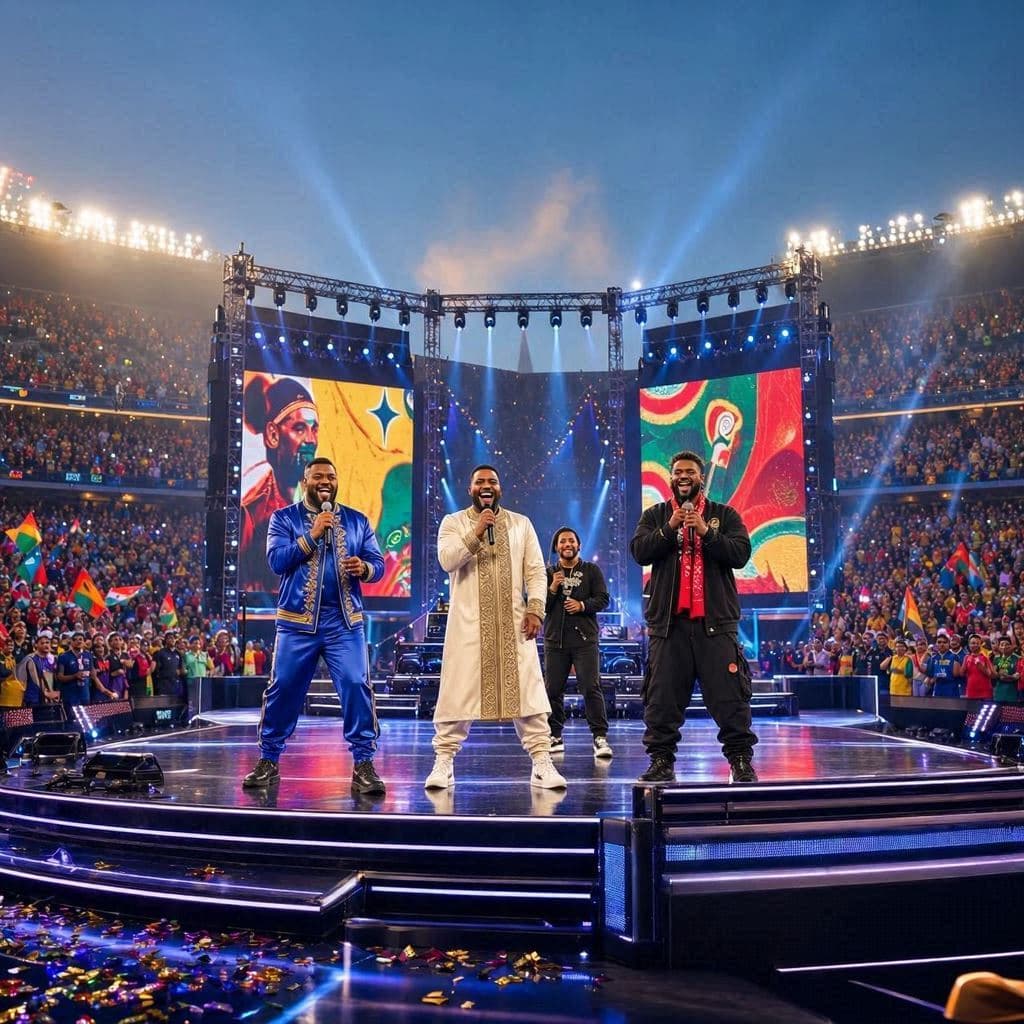
Football's greatest stage has always been about more than the final score. Long before the first whistle and long after the trophy is lifted, music, ceremony, and shared celebration help transform a sporting contest into a global cultural event. At the 2026 FIFA World Cup Final, entertainment became an integral part of that wider experience.
The final at New York New Jersey Stadium (MetLife Stadium) introduced the first official halftime show in FIFA World Cup Final history, blending football with large-scale live music in a format inspired by other major sporting events. The entertainment program accompanied the championship match between Spain and Argentina, drawing worldwide attention alongside the action on the field.
Before kickoff, the closing ceremony featured performances by Post Malone, Robbie Williams, Nicole Scherzinger, and Laura Pausini, while Jennifer Hudson delivered a rendition of the United States national anthem. Actor Tom Cruise also made a special appearance during the pre-match festivities, highlighting FIFA's effort to combine sport with international entertainment.
Halftime marked a historic first for the tournament. Curated by Chris Martin of Coldplay and produced in partnership with Global Citizen, the 11-minute performance featured Madonna, Shakira, BTS, Justin Bieber, and Burna Boy. Additional appearances included the PS22 Chorus, conductor Gustavo Dudamel, and several surprise guests, creating a fast-paced celebration intended to reflect football's global reach.
One of the show's signature moments came as Shakira and Burna Boy performed the tournament's official anthem, while BTS energized the audience with one of the group's internationally recognized songs. Madonna opened the musical program, and Justin Bieber contributed an acoustic performance before the finale brought together multiple artists in a collaborative closing number.
Beyond entertainment, FIFA said the halftime show supported the FIFA Global Citizen Education Fund, an initiative that raises funding for education and youth programs worldwide. Organizers described the production as an opportunity to combine football, music, and social impact on one of the world's largest live broadcasts.
The expanded entertainment format also prompted discussion among fans and commentators. Many welcomed the spectacle and its international lineup, while others questioned whether a longer halftime interval fit the traditional rhythm of a World Cup final. The differing reactions reflected the balance FIFA is seeking between preserving tradition and introducing new experiences for global audiences.
As the tournament concluded, the performances stood alongside the championship match as part of a landmark moment in FIFA history. Whether remembered primarily for the football or for its musical celebration, the 2026 World Cup Final demonstrated how the world's biggest sporting occasions continue to evolve while bringing together audiences from across cultures and generations.
AI Image Disclaimer: The accompanying images are AI-generated artistic interpretations inspired by verified event coverage and are not official photographs from the World Cup Final.
Sources (verified):
FIFA Associated Press People Global Citizen News.com.au The Guardian
Note: This article was published on BanxChange.com and is powered by the BXE Token on the XRP Ledger. For the latest articles and news, please visit BanxChange.com