
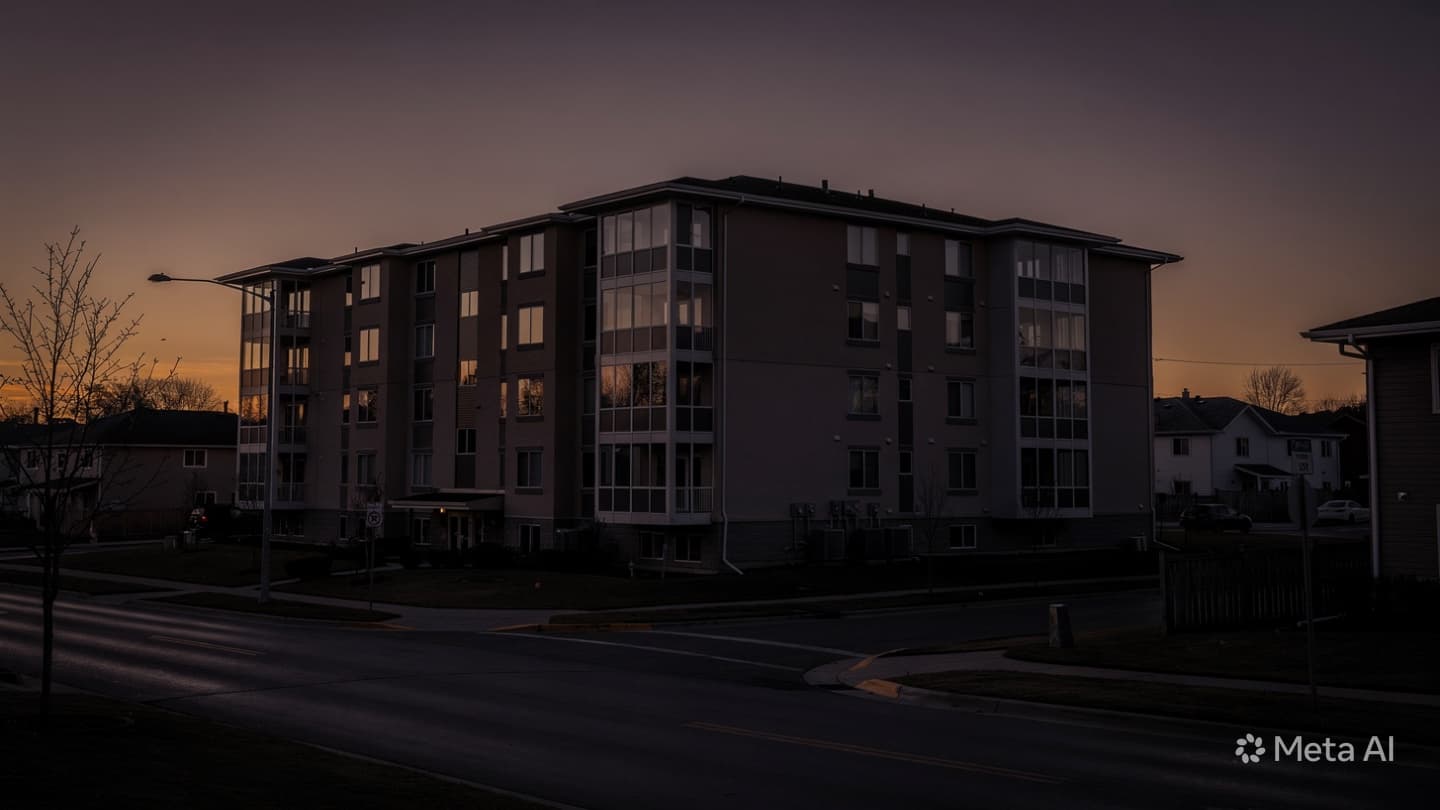
The morning in Bonnyrigg held a familiar cadence until the moment the air changed, thick with the scent of an encroaching, unnatural heat. Fire, in its rawest form, is an elemental force that respects no boundaries, turning the shelter of a residential unit into a theater of urgent action and, eventually, profound stillness. It is a visceral reminder of how swiftly the environments we craft for our comfort can become sites of sudden, irreversible departure.
There is an atmospheric weight to a building that has been touched by such an event. The concrete and brick, once simply walls that held a life, now stand as sentinels of a memory. One thinks of the man, in his eighth decade, whose existence was centered within these rooms. To be pulled from the smoke is to be transitioned from the sanctuary of the known into the sudden, cold clarity of an emergency response, a moment where life hangs by the thinnest of threads.
In the quiet aftermath, we find ourselves reflecting on the nature of age and the vulnerability that accompanies it. For a man in his 80s, the home is more than just a structure; it is an archive of years, a repository of habits, and a physical extension of his identity. When that archive is suddenly breached by fire, the loss is not merely physical, but the erasure of a life’s long-standing quietude. The neighborhood, usually bustling with the unremarkable rhythms of daily existence, now carries the hum of a tragedy that sits heavily in the air.
The emergency services that arrived on Brown Road found a scene defined by urgency and the brutal efficiency of the fire’s progress. The effort to provide CPR, to reach back across the threshold of existence, is a testament to the human instinct to protect and preserve. Yet, there are moments where the reach of help falls just short of the reach of fate. The scene at the unit block is one of those intersections where the valiant efforts of those in uniform meet the finality of a life completed.
As the smoke cleared and the investigators began their work, the site was transformed into a place of cold inquiry. The crime scene tape, the flashing lights, and the hushed tones of neighbors all serve to frame the incident in the clinical language of a report. It is a jarring contrast to the warmth that once surely defined a home, forcing those who dwell nearby to look upon their own surroundings with a newfound sense of fragility.
It is in this space of reflection that we consider the brevity of the time we have. The tragedy in Bonnyrigg is not just a localized event; it is a meditation on the finite nature of our presence in the physical world. Each window in a unit block represents a life, a set of dreams, and a rhythm of days that we rarely pause to consider. When one of those windows suddenly goes dark, the light of the entire structure seems to dim.
The investigation into the circumstances of the fire is a necessary process, yet it feels secondary to the weight of the loss itself. The authorities have begun their work, setting the gears of the legal and forensic machinery in motion to understand the ‘how’ and the ‘why.’ While these answers will provide a record for the Coroner, they offer little to those who simply observe the silence now settling over the building.
On the evening of June 16, 2026, emergency services were called to a unit block on Brown Road in Bonnyrigg, where they found a man in his 80s who could not be saved. The site was secured, and inquiries into the cause of the blaze remain ongoing. The incident, while tragic in its isolation, serves as a solemn reminder of the sudden shifts that can occur in the quietest of lives. The story ends, for now, in the records of the state, but the echo of that loss remains in the air of the neighborhood.
Note: This article was published on BanxChange.com and is powered by the BXE Token on the XRP Ledger. For the latest articles and news, please visit BanxChange.com