
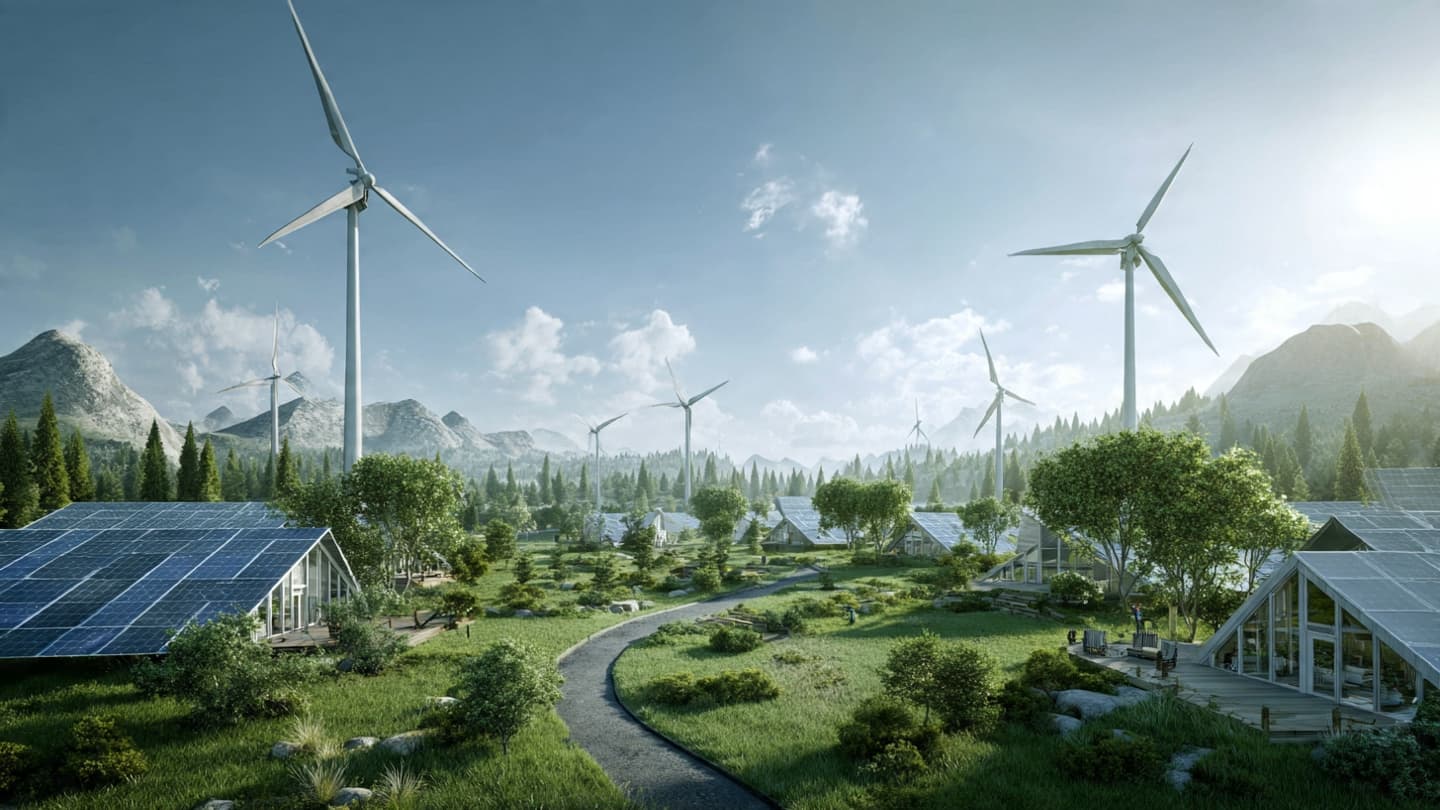
Energy has always moved quietly behind the scenes of civilization, shaping how cities grow and how economies breathe. In recent years, that silent foundation has begun to shift as renewable energy expansion continues across Europe and the United States.
Wind farms now stretch across coastal regions and open plains, while solar installations continue to grow in both urban and rural landscapes. These developments do not represent a sudden transformation, but rather a gradual layering of new systems over existing infrastructure.
In the United States, renewable energy investment continues to rise alongside modernization of electrical grids. Solar and wind projects are increasingly supported by improved battery storage systems and digital monitoring tools that help balance supply and demand.
Europe is experiencing a similar evolution. Many countries are expanding clean energy capacity while strengthening cross-border electricity cooperation. This interconnected approach helps stabilize supply across regions with different production patterns.
Technological improvements have played a central role in making renewable energy more practical. Efficiency gains and falling costs have allowed solar and wind systems to compete more strongly with traditional energy sources in many markets.
Energy storage has also become increasingly important. Batteries and grid-scale storage systems help address the natural variability of renewable sources, allowing electricity to be stored and used when demand is high.
Economic factors continue to influence the pace of transition. Governments and private investors are allocating resources toward long-term energy security, diversification, and infrastructure resilience.
At the same time, employment patterns are shifting. The renewable energy sector is creating demand for engineers, technicians, construction workers, and system designers, while traditional energy industries adjust to new realities.
Environmental concerns remain a key driver of this transformation. Efforts to reduce emissions and address climate-related risks continue to shape policy decisions and investment strategies across multiple regions.
Although progress is visible, the transition remains gradual and complex. Different countries move at different speeds, and infrastructure limitations still present challenges. However, the overall direction continues to point toward cleaner and more diversified energy systems.
AI Image Disclaimer Images in this article are AI-generated illustrations, meant for conceptual representation only.
Source Check International Energy Agency (IEA) Reuters Bloomberg Financial Times World Resources Institute
Note: This article was published on BanxChange.com and is powered by the BXE Token on the XRP Ledger. For the latest articles and news, please visit BanxChange.com