
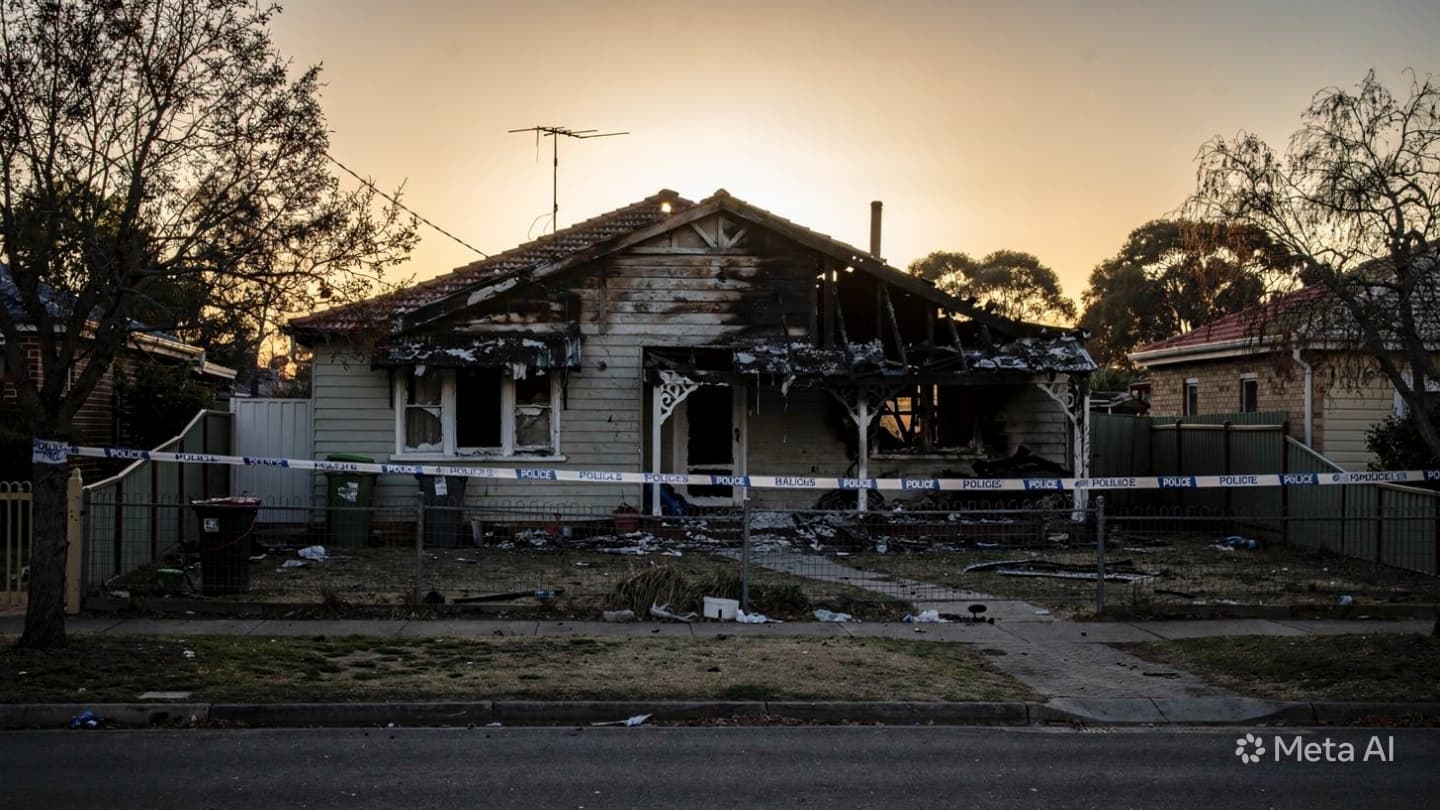
The air in Fulham often carries the scent of salt from the nearby coast, but on a quiet May morning, the atmosphere shifted toward something more heavy and indelible. It is a peculiar thing how a home, usually a fortress of memory and personal history, can be transformed by fire into a shell of hollowed-out geometry. In the early hours, the rhythmic pulse of the suburbs was interrupted by the sirens, the sudden illumination of flashing red and blue, and the sharp, unforgiving bite of heat against the cool night sky. Neighbors awoke to a sight that defies the natural order of domestic peace, watching as the familiar structure became a focal point of intense, transformative energy.
One does not easily reconcile the quietude of a residential street with the sudden violence of a blaze that tears through walls and rafters with such impartial speed. There is a profound stillness that follows such an event, a vacuum where the mundane activities of daily life—the opening of windows, the quiet closing of doors—are abruptly replaced by the caution tape and the methodical movements of investigators. It is a scene that asks us to contemplate the fragility of the spaces we inhabit, the way that brick and wood can so quickly lose their hold on the life they once sheltered.
In these moments, the physical landscape of the street seems to contract, focusing all attention toward a single point of wreckage. The investigators, moving with a disciplined gravity, trace the path of the flames, seeking the origin of the catalyst that brought this ruin to fruition. There is no sensationalism in their work, only a measured attempt to reconstruct the timeline of an event that shattered the silence of a Monday morning. It is a process of unspooling memory and physics, looking for the telltale signs of how a sanctuary succumbed to the elements.
This incident, occurring just after midnight on May 11, 2026, has left a mark on the Western District that will likely linger long after the debris is cleared. While the building suffered substantial damage, the absence of occupants provided a narrow margin of relief against the encroaching tragedy of the flames. Yet, the suspicious nature of the fire forces a different kind of reflection, one that looks toward the complexities of human intent and the unseen currents of the neighborhood. The investigation now moves forward, navigating the intersection of forensic science and local apprehension.
As the days turn, the house on Weetunga Street stands as a silent witness to a transition from home to evidence. We are left to wonder about the narratives that lived within those walls, now muted by the heat, and the unseen actors who may have passed through the shadows before the first flickers began. There is a contemplative weight to the way the community now walks past the site, eyes cast downward, aware of the thin line between a peaceful night and a morning defined by loss and inquiry.
The process of healing for such a street is often slow, moving at the pace of official reports and the quiet discussions of residents who seek to reclaim a sense of safety. Fire is a totalizing force, erasing the past and forcing a stark confrontation with the present, leaving behind only questions about cause and consequence. The investigation into the Fulham fire continues to unfold, weaving together fragments of evidence in a search for the truth. For now, the street holds its breath, waiting for the clarity that only time and patient analysis can provide.
The task of the observer is to remain detached, to watch the unfolding of the aftermath without imposing a narrative that does not belong. We look at the scorched remains and we see not just a ruined structure, but a disruption in the continuous flow of time. The investigators, tasked with unraveling this knot, do so with an eye for detail that ignores the emotional weight of the tragedy. They walk through the ash, searching for the physical signature of the blaze, methodically piecing together a reality that is far more clinical than the one felt by those who live nearby.
It is a reminder that our lives are lived in the quiet intervals between such disturbances. We build our homes, we fill them with the artifacts of our existence, and we trust in the solidity of the earth and the safety of our neighbors. When that trust is challenged by fire, the impact reverberates beyond the property lines, affecting the shared consciousness of the district. We observe, we reflect, and we wait for the final report to settle the uncertainty that has settled over Fulham like a layer of gray, cooling soot.
Note: This article was published on BanxChange.com and is powered by the BXE Token on the XRP Ledger. For the latest articles and news, please visit BanxChange.com