
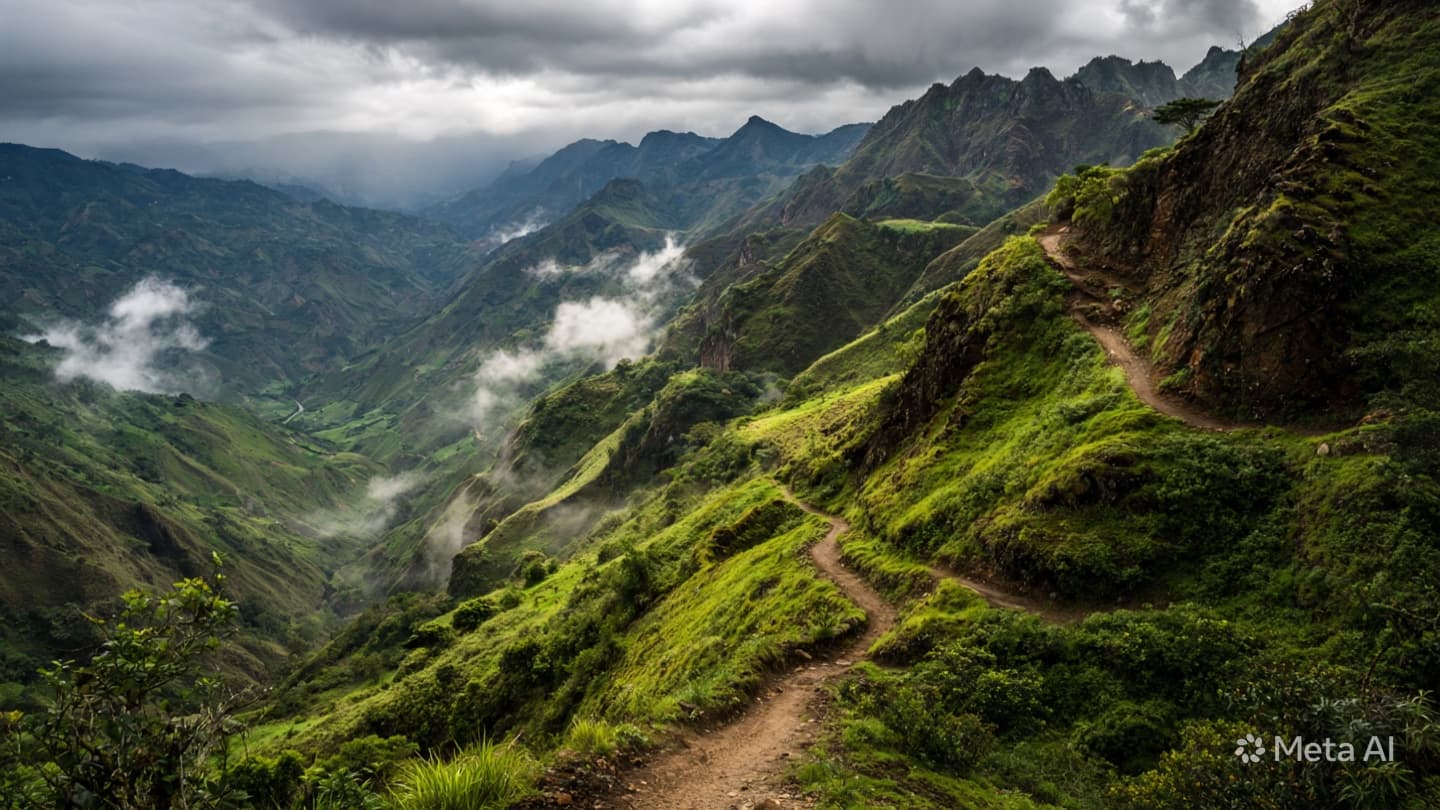
The mountains of Antioquia have long held a duality, serving as both a cradle of immense natural wealth and a theater for the country’s most enduring conflicts. In the remote corners where gold is drawn from the earth, the landscape is scarred by more than just the excavation of soil. When an ambush occurs in these high-altitude reaches, the violence feels like a sudden punctuation in a long, wearying sentence of struggle, leaving families to mourn and communities to wonder if the hills will ever truly be at peace.
Four individuals have been taken in a swift, calculated act of aggression, their lives interrupted by forces that exist in the grey space between ideology and pure criminality. In these isolated outposts, the presence of armed groups is a constant atmospheric pressure, a reality that dictates the rhythm of labor and the limits of safety. The miners, often working with little more than persistence and their own hands, find themselves at the intersection of powerful interests that prize the mountain’s bounty above the lives of those who toil within it.
Reflecting on the loss of these four souls invites a deeper contemplation of the rural experience in Colombia, where the state’s reach remains thin and the terrain itself often serves as a fortress for those who operate in the shadows. The ambush is not merely a crime to be recorded; it is a manifestation of the deeper, unresolved tremors that move through the country’s nervous system. It forces a quiet reckoning with the realization that even in the pursuit of livelihood, the specter of historical conflict remains an ever-present guest.
The geography of Antioquia—its steep slopes, dense thickets, and winding trails—has historically been both a sanctuary and a trap. It is a place where the movement of people is restricted by the silent observation of those who claim the territory. As news of the incident ripples out to the valleys below, the tragedy serves as a somber reminder that the peace process is not a singular event, but a fragile, daily negotiation that often collapses in the face of old, deeply entrenched habits of violence.
To look at these hills today is to see a landscape that holds the weight of countless such tragedies, a repository of memories that are rarely spoken but deeply felt by those who live in the vicinity. There is a profound dignity in the way these communities persist, continuing their work despite the looming presence of uncertainty. Yet, the loss of these four lives adds a new layer of sorrow, a reminder that the path toward a tranquil future is far from linear.
The authorities are now left to navigate the difficult task of investigation in a terrain that resists easy access and clear resolution. For the families, the search for justice is tempered by the weariness of a people who have seen many such investigations begin with fervor and end in silence. The mountain remains indifferent to the political maneuvers, continuing to yield its gold even as the human cost of that extraction climbs ever higher.
As the country processes this latest act of violence, the conversation inevitably turns back to the fundamental question of governance and security in rural spaces. There is a need for a shift in perspective, one that sees these regions not as distant peripheries but as central to the national story. The loss of these individuals is a tear in that story, a moment that demands not just a response, but a genuine, reflective commitment to change.
The tragedy in Antioquia serves as a mirror for the nation’s ongoing challenges, a stark illustration of the work that remains. In the quiet aftermath, the focus is on the memory of those who were lost and the enduring strength of the communities they left behind. It is a call to reflect on the true price of the resources we extract and the lives that are caught in the turbulence of a changing, yet still wounded, land.
Local authorities confirmed that four gold miners were killed in an ambush by paramilitary gunmen in the Antioquia province. The incident occurred during a targeted attack in a remote mining sector. Regional police and security forces have been deployed to the area to conduct an investigation and secure the surrounding hills. This event highlights the ongoing risks faced by workers in the artisanal and small-scale mining sectors due to the presence of illegal armed groups vying for control of resource-rich territories.
Note: This article was published on BanxChange.com and is powered by the BXE Token on the XRP Ledger. For the latest articles and news, please visit BanxChange.com