
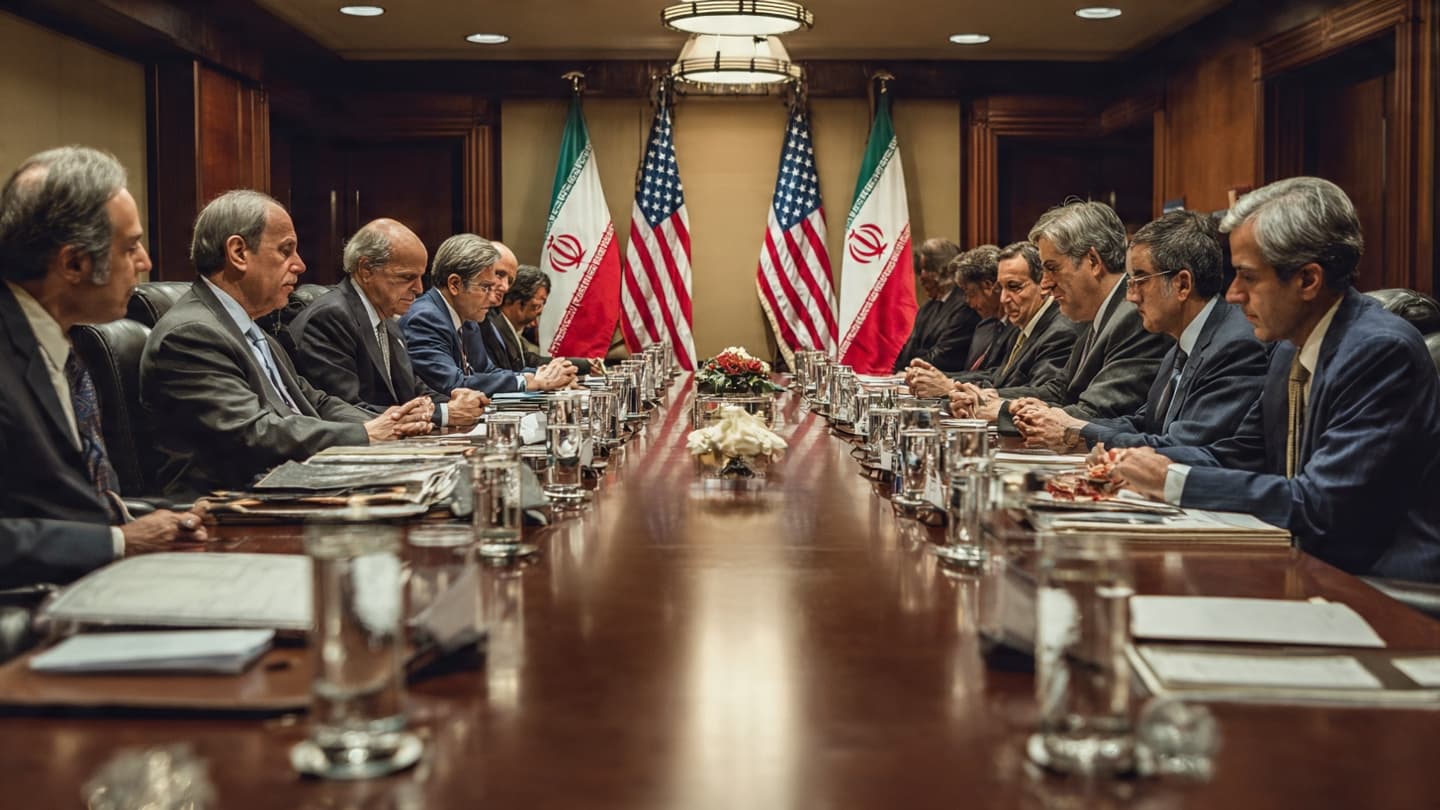
In international politics, there are moments when a single agreement can alter the tone of an entire region. Long before signatures are placed on documents or announcements are delivered from podiums, the possibility of change begins to influence calculations, expectations, and concerns. The latest diplomatic understanding between the United States and Iran appears to be one of those moments. While supporters view it as a potential pathway toward reducing tensions, others see it as the beginning of a new period of uncertainty.
For President Donald Trump, the agreement represents an opportunity to pursue stability through diplomacy. After months of heightened tensions and fears of broader regional conflict, the prospect of dialogue has been welcomed by many observers who believe that negotiations can help prevent further escalation. Supporters argue that diplomatic engagement provides a chance to address disputes through discussion rather than confrontation, creating space for future cooperation on issues that have divided Washington and Tehran for decades.
Yet the same development has generated concern in Israel. Prime Minister Benjamin Netanyahu has consistently maintained that Iran remains one of the most significant security challenges facing his country. Throughout his political career, Netanyahu has argued that Tehran's regional ambitions and military capabilities require constant vigilance. As a result, any agreement that eases pressure on Iran is likely to be viewed with caution by Israeli policymakers.
Reports from diplomatic and political circles suggest that the emerging agreement may deepen existing differences between Washington and Jerusalem regarding how Iran should be approached. While both governments share concerns about regional stability, they have often disagreed on the balance between diplomacy and deterrence. The latest negotiations have once again brought those differences into public view.
Supporters of the agreement argue that reducing tensions between the United States and Iran could provide significant benefits for the broader Middle East. Lower risks of military confrontation may help stabilize energy markets, improve investor confidence, and reduce uncertainty across a region that has experienced repeated cycles of conflict. Many diplomats believe that sustained dialogue is essential for preventing future crises.
Critics, however, question whether diplomatic agreements alone can resolve long-standing strategic disputes. They point to historical examples where optimism surrounding negotiations was later challenged by implementation difficulties and disagreements over compliance. From this perspective, caution remains an important part of evaluating any breakthrough.
The debate reflects a broader reality of international relations. Allies frequently share common objectives while differing on the methods required to achieve them. The United States and Israel continue to maintain close ties, yet the discussion surrounding Iran demonstrates that strategic partnerships are not always defined by complete agreement on every issue.
Regional governments are also closely monitoring developments. Countries throughout the Middle East recognize that any significant shift in relations between Washington and Tehran could influence security arrangements, diplomatic priorities, and economic planning. The consequences of the agreement may therefore extend well beyond the two countries directly involved.
Analysts note that the success of the initiative will depend not only on the agreement itself but also on the willingness of all parties to maintain engagement over time. Diplomatic breakthroughs often generate hope during their early stages, yet their long-term effectiveness is determined by implementation, verification, and continued political commitment.
As discussions continue and details become clearer, the agreement stands at the center of a larger conversation about the future of the Middle East. For President Trump, it may represent a diplomatic achievement aimed at reducing tensions. For Prime Minister Netanyahu, it raises questions that have shaped Israeli security thinking for years. For the region as a whole, it marks the beginning of a new chapter whose final outcome remains uncertain but whose significance is already widely recognized.
AI IMAGE DISCLAIMER:
Illustrations were produced with AI and serve as conceptual depictions.
SOURCES:
Reuters The Guardian CNN AFP Axios
Note: This article was published on BanxChange.com and is powered by the BXE Token on the XRP Ledger. For the latest articles and news, please visit BanxChange.com