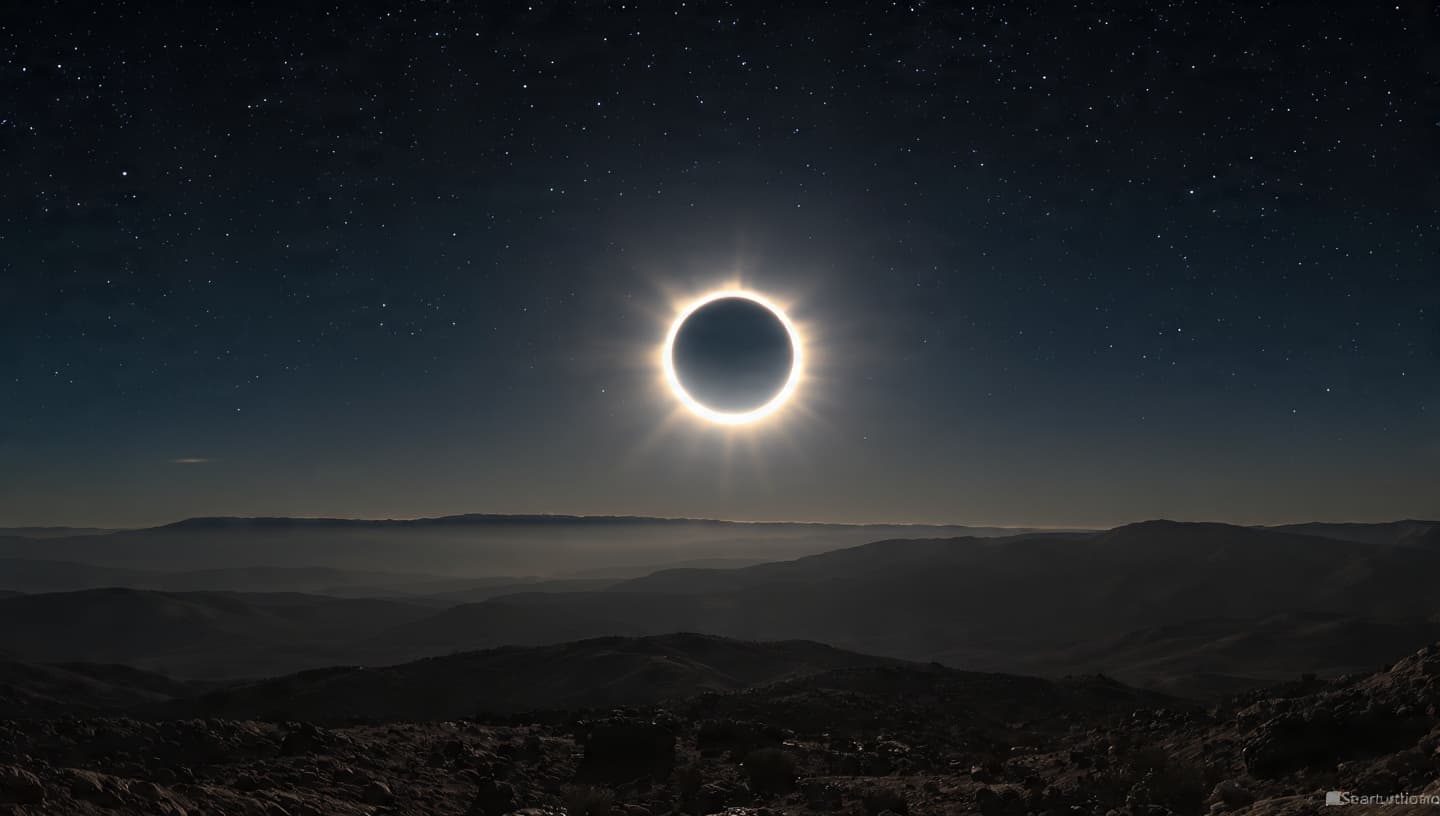
There are moments when the sky quietly reminds humanity that it still holds ancient rhythms beyond calendars and clocks. In just weeks, millions of people may once again look upward as daylight briefly yields to twilight, as though nature itself pauses to draw a soft curtain across the Sun.
The upcoming total solar eclipse, scheduled for August 12, 2026, has attracted growing attention among astronomers, travelers, and skywatchers worldwide. As the countdown narrows to roughly fifty days, preparations are intensifying across several countries situated along the eclipse's path.
According to astronomical agencies, the path of totality will stretch across Greenland, Iceland, northern Russia, parts of the Atlantic Ocean, Spain, and a small section of Portugal. Observers positioned within this narrow corridor will witness the Moon completely obscuring the Sun for a brief period.
Spain is expected to become one of the most accessible destinations for eclipse tourism. Cities including León, Zaragoza, and Valencia are expected to experience totality or near-total coverage shortly before sunset, creating particularly dramatic viewing conditions.
Iceland, meanwhile, offers another highly anticipated vantage point. Reykjavík and western regions of the country are expected to experience totality during the late afternoon, although local weather patterns may influence visibility.
Outside the path of totality, a partial solar eclipse will still be visible across much of Europe, northwestern Africa, Canada, and portions of the northern United States. Astronomers continue emphasizing the importance of certified solar viewing glasses during all partial phases.
Scientists note that total solar eclipses provide more than visual spectacle. These events allow researchers to study the Sun's corona, test observational instruments, and engage the public in astronomy education.
With eclipse tourism expected to increase significantly in the coming weeks, travelers are being encouraged to secure accommodations early and consult official eclipse maps to identify optimal viewing locations.
As August approaches, the event promises to offer a rare intersection of science, travel, and wonder—an occasion when the familiar daylight sky briefly reveals another face of the cosmos.
AI Image Disclaimer: Illustrative images accompanying this article are AI-generated for visual representation purposes.
Sources: NASA, European Space Agency (ESA), Time and Date, Space.com
Published by Banx Network. This article is part of the Banx decentralized media programme, powered by the BXE token on the XRP Ledger.