
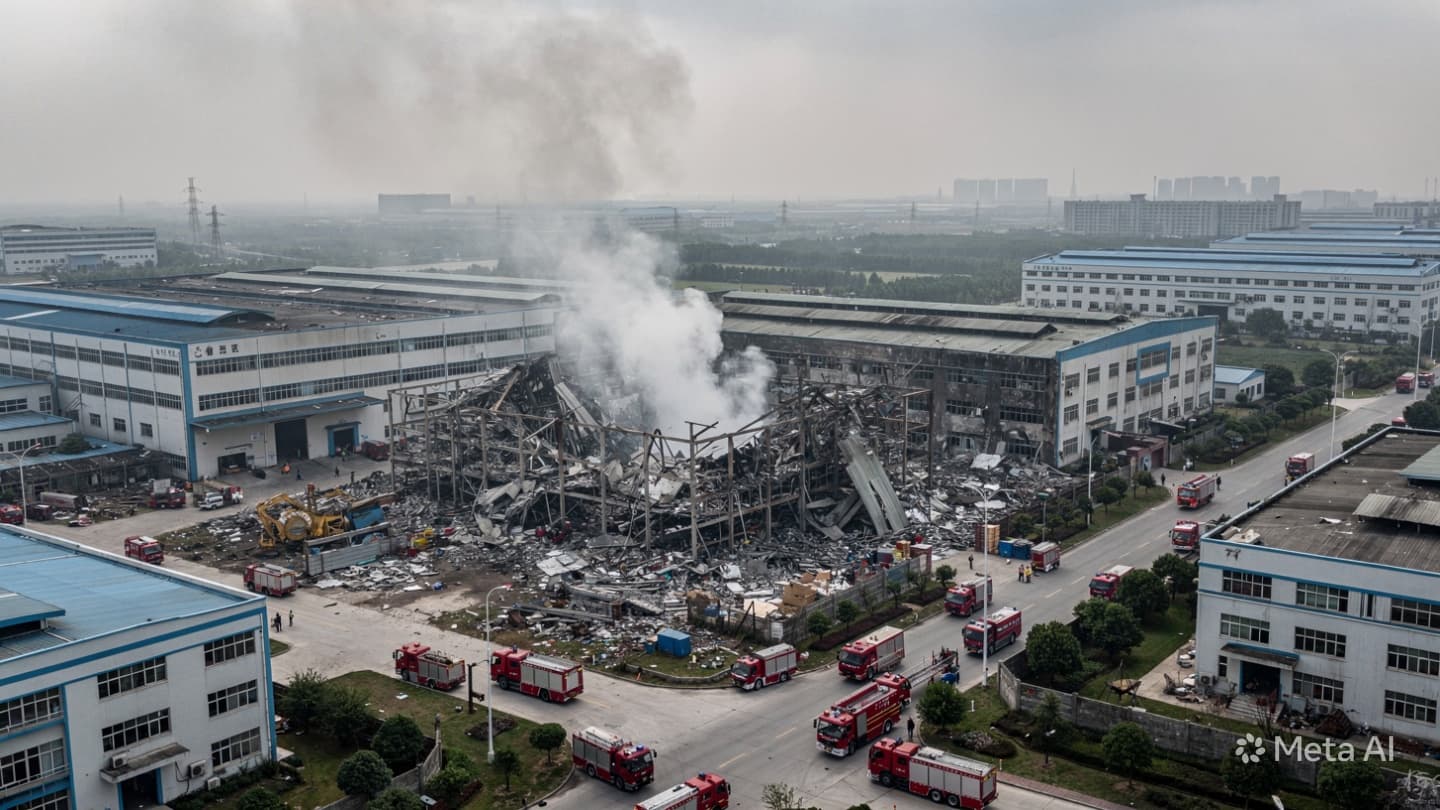
The morning in Jiangsu began with the rhythmic pulse of production, a familiar cadence that anchors the lives of those who move within the sprawling industrial heartlands. In these spaces, where metal meets flame and chemistry bends to the will of commerce, time is measured in output and efficiency. Yet, there is always a fragility to these landscapes, a quiet tension held beneath the surface of routine. When that routine is shattered by an unforeseen kinetic release, the transition from order to chaos is instantaneous, leaving behind a stillness that feels heavier than the air itself.
It is in the aftermath of such events that the true weight of our reliance on industrial mastery becomes apparent. We build, we operate, and we innovate, often pushing the boundaries of what these environments can sustain in the pursuit of greater yield. The structures we erect, designed to contain immense pressures and volatile elements, suddenly reveal their own limitations. When a boundary is breached, it is not merely physical matter that gives way; it is the fundamental assumption of safety that once allowed the machines to hum without pause.
The air, once filled with the mundane sounds of labor, becomes thick with the scent of ruin and the echoes of a sudden displacement. In the wake of an explosion, the landscape itself is transformed into a tableau of twisted steel and fractured masonry. It is a scene that forces the observer to reconsider the proximity between human endeavor and the raw, untamable forces of nature. The workers, those who navigate these corridors daily, find themselves at the center of this collision between the mechanical and the elemental.
To witness the aftermath is to confront the stark reality of how quickly a familiar, controlled environment can devolve into a space of profound uncertainty. There is a specific quality to the silence that follows such an event, a pervasive stillness that seems to linger long after the smoke has begun to disperse. This silence is an indictment of sorts, a quiet testimony to the fragility of the systems we construct. It serves as a reminder that every industrial process carries an inherent, often invisible, risk that persists regardless of our technical advancements.
There is a rhythm to the recovery, a slow and deliberate movement of hands working to restore a semblance of normalcy. Emergency responders move through the wreckage with a focused intensity, their presence a contrast to the devastation that surrounds them. They represent the human impulse to mend, to reach into the depths of the catastrophe and pull forth those who were caught in its wake. It is a grim, necessary labor, performed in the shadows of structures that were once symbols of productivity and have now become monuments to sudden, violent change.
As the day wanes, the focus inevitably shifts toward understanding the mechanics of the failure. Investigations begin, layering questions over the debris, searching for the point where a spark became a flame or where a valve failed to hold. These inquiries are an attempt to weave a narrative out of the fragmentation, to assign a sequence to the chaos. Yet, the answers often feel insufficient when measured against the loss of life and the permanent alteration of the site. The tragedy remains, a fixed point of sorrow that no amount of analysis can fully displace.
In these moments, the distance between the industrial grid and the human experience collapses entirely. The tragedy is not just a statistical anomaly or an isolated breach of safety; it is a profound rupture in the collective fabric of a community. The families and colleagues who wait, who search, and who grieve, become the real measure of the impact. Their presence adds a layer of depth to the incident that extends far beyond the factory gates, touching the very core of how we value human safety in the face of industrial ambition.
As the news of the event ripples outward, it carries with it a solemnity that transcends geography. It prompts a broader reflection on the systems of oversight, the enforcement of standards, and the culture of accountability that governs these high-stakes environments. The recurring nature of such incidents suggests a persistent vulnerability, a gap between the mandates for safety and the reality of day-to-day operations. It is a tension that remains unresolved, simmering beneath the surface, waiting for the next catalyst to reveal the precariousness of our collective reliance on industrial expansion.
Note: This article was published on BanxChange.com and is powered by the BXE Token on the XRP Ledger. For the latest articles and news, please visit BanxChange.com