
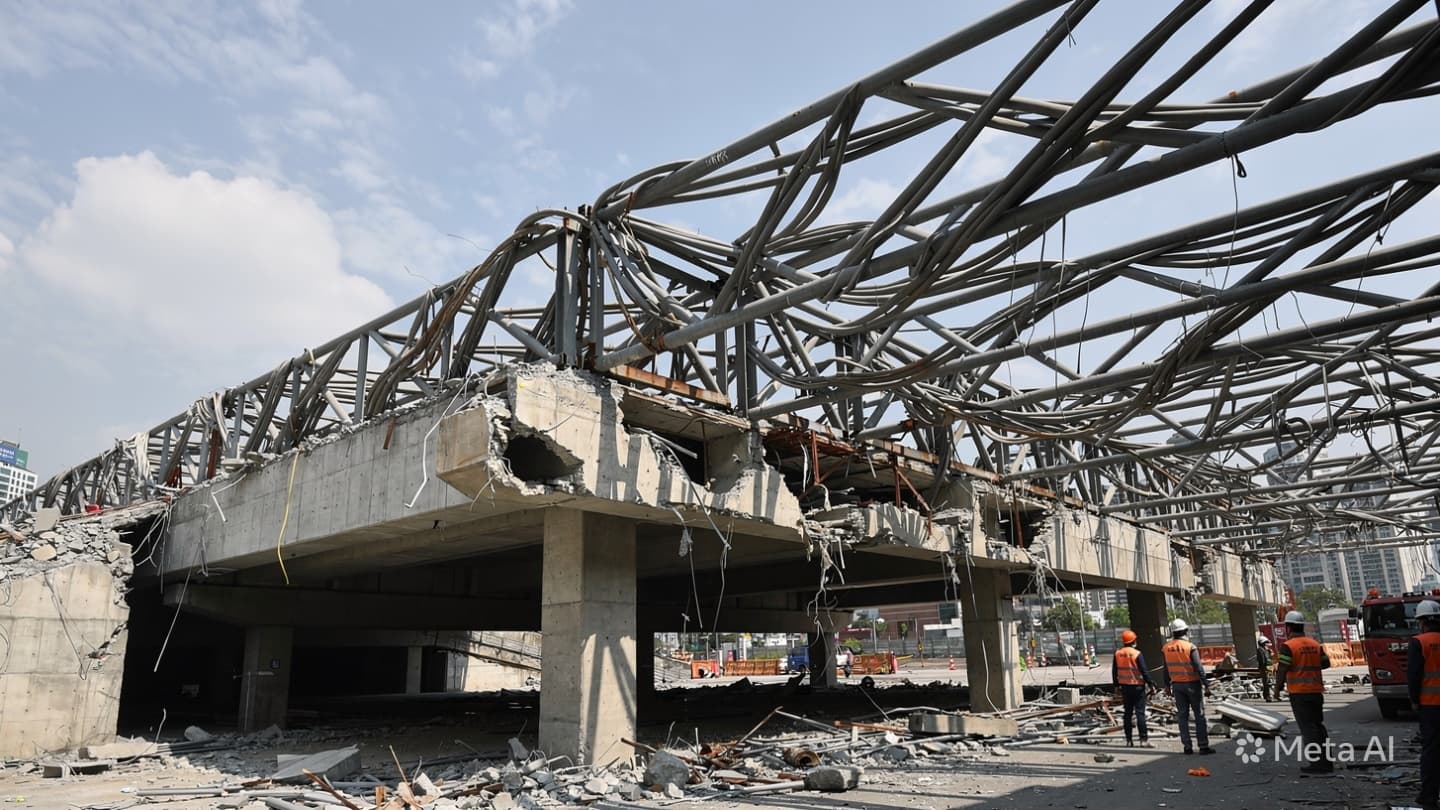
The city is a tapestry of intentions, woven from glass, ambition, and the relentless pulse of movement that defines the urban experience. Yet, beneath the veneer of constant renewal, there remain the bones of another era, structures that have witnessed the passage of decades while cradling the rhythms of a developing nation. When we dismantle these relics, we are performing a delicate surgery, peeling back layers of history to make room for what lies ahead. It is a process fraught with invisible pressures, where the equilibrium of steel and concrete becomes a matter of grave consequence.
In the heart of the capital, a bridge that had served as a transit artery since 1966 became the stage for a sudden, sobering stillness. It was a day marked by the mundane necessity of progress, with experts moving through the structure to ensure the safety of the transition. The air, usually filled with the mechanical hum of demolition, had been stilled, a pause intended to protect the very lives that would soon be lost to the shifting earth. The transition from life to silence happened in the space between heartbeats, as the structure yielded to forces that had been quietly accumulating for half a century.
There is a profound loneliness in such accidents, where the architectural integrity of a city is measured against the vulnerability of those who tend to it. The overpass, long designated for removal due to the inevitable decay of age, had become a testament to the fact that nothing—no matter how solid it appears—is immune to the toll of time. When the collapse began, it was not merely a loss of physical material, but an interruption of the continuity that connects one generation of city planners to the next.
The debris that came to rest near the railway lines serves as a visceral reminder of our reliance on the systems we construct. Each slab of concrete, each twisted beam, tells a story of the labor that once held them aloft. To walk through a city is to place one’s trust in the unseen calculations of engineers and the enduring strength of materials. When those foundations betray that trust, the impact ripples outward, forcing a collective reconsideration of the safety we so often take for granted.
In the immediate aftermath, the focus shifted to the recovery of those caught within the descent. The rescue teams moved with the precision of those who understand the volatility of shifting rubble, their efforts a slow dance against the threat of further instability. Every move was calculated to prevent the further settling of the remnants, a grim reminder of how fragile a construction site truly remains long after the work has been halted. The site became a sanctuary of silence, save for the urgent sounds of emergency responders working against the clock.
As the sun set over the capital, the scene was transformed into a somber reflection of the city’s inherent risks. The suspended wreckage, caught between the gravity that pulled it down and the structure that refused to fully surrender, hung like a suspended question. It was a moment of vulnerability, laid bare for all to witness. The city, usually so focused on the horizon, was forced to look downward, acknowledging the cost of the ground it occupies.
The loss of life serves as a stark punctuation mark in the story of urban evolution. It reminds us that progress is not merely an abstract concept or a series of blueprints, but a human endeavor that carries inherent dangers. The individuals who perished were not just workers or officials; they were the custodians of the city’s safety, the ones tasked with ensuring that the inevitable process of letting go was conducted with care and precision.
We are left to grapple with the realization that the past, even when we attempt to methodically dismantle it, retains a power that can overwhelm the present. The demolition of such an iconic, if aging, piece of infrastructure is more than a clearing of space; it is a negotiation with the ghosts of construction. When that negotiation fails, the city must pause, honor the loss, and find a way to reconcile the need for change with the sanctity of human life.
Note: This article was published on BanxChange.com and is powered by the BXE Token on the XRP Ledger. For the latest articles and news, please visit BanxChange.com