
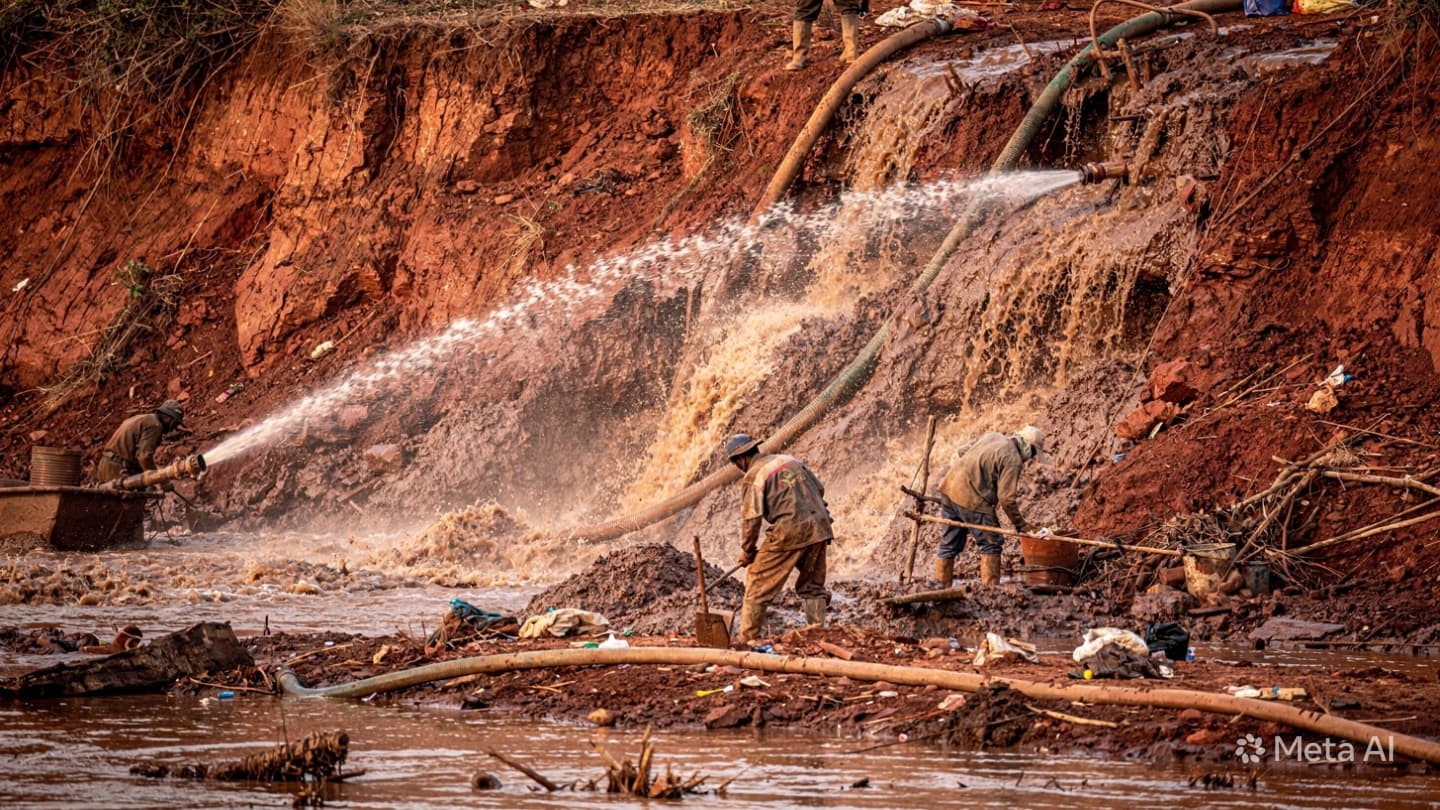
The southern coastline of Madagascar is a dramatic, windswept maritime environment where towering sand dunes, unique spiny forests, and pristine coral reefs meet the powerful swells of the Indian Ocean. In these isolated coastal districts, the discovery of massive ilmenite and zircon deposits—valuable minerals essential for global industrial manufacturing—has transformed quiet fishing and pastoral zones into highly strategic economic frontiers. Large-scale mining operations have established expansive extraction sites, utilizing heavy industrial dredges and processing plants to separate the heavy mineral sands from the ancient coastal soil. It is a landscape defined by sharp contrasts, where advanced international industrial infrastructure stands directly adjacent to traditional, rural fishing villages that have relied on the sea for generations.
This industrial expansion has introduced complex social and environmental dynamics, sparking intense dialogue between multinational operators, regional authorities, and local community representatives. The transition from remote, undisturbed shoreline to an active mineral export hub requires careful navigation of land-use rights, environmental protection zones, and local livelihood preservation. While the mining projects bring substantial infrastructure investments—including modernized deep-water port facilities and paved coastal access roads—they also alter the local terrain, requiring the temporary relocation of ancestral grazing lands and raising concerns about potential impacts on fragile coastal aquifers and nearby marine fishing grounds.
The immediate challenges of managing these high-stakes operations require a continuous, multi-lateral diplomatic framework to ensure that economic development does not come at the cost of social stability. Regional oversight boards, composed of tribal elders, municipal leaders, and corporate social responsibility teams, meet regularly to establish transparent compensation protocols, coordinate community development funds, and monitor local hiring quotas. The visible presence of community-monitored environmental tracking stations along the borders of the mining lease provides a vital mechanism for verifying that dust, noise, and water-quality metrics remain within strictly mandated national safety boundaries, protecting the health of the neighboring hamlets.
Operating within this sensitive littoral zone demands rigorous adherence to progressive environmental rehabilitation standards. Industrial operators utilize a rolling excavation model, meaning that as soon as a specific dune sector is processed for its mineral content, engineering teams immediately begin reshaping the landscape to its natural contours. Specialized conservationists manage expansive nurseries of native coastal vegetation and endemic spiny forest species, systematically replanting the reclaimed dunes to prevent wind erosion and restore local biodiversity. This proactive ecological restoration is critical for proving that large-scale resource extraction can co-exist with long-term environmental stewardship.
For international trade analysts and national economic planners, the stable operation of the southern mineral fields is essential for securing the country's position in global industrial supply chains. The exported ilmenite and titanium dioxide feed critical manufacturing sectors worldwide, providing a vital source of foreign currency and tax revenues for the national treasury. However, civic leaders continuously emphasize that the long-term success of these mega-projects depends entirely on the tangible benefits delivered to the local population, such as clean water infrastructure, modern healthcare clinics, and sustainable alternative livelihoods for generations to come.
As the massive export vessels slowly pull away from the specialized southern port terminals, their cargo holds filled with refined mineral sands destined for global markets, the local fishermen continue to launch their traditional outrigger canoes into the coastal surf. The co-existence of these two distinct worlds underscores the complex reality of Madagascar’s modern economic development. Maintaining an equitable balance between international industrial ambition and the preservation of ancestral coastal life remains one of the most critical challenges shaping the future of the southern maritime frontier.
A major multinational mineral sands project on Madagascar’s southern coast has successfully completed its quarterly compliance audit, highlighting a complex balance between high-volume industrial extraction and community-led environmental protection. The mining operations, which extract critical ilmenite and zircon deposits from coastal sand dunes, are operating under enhanced surveillance from a joint committee of regional authorities, tribal elders, and environmental scientists to safeguard local aquifers and traditional fishing grounds. Corporate regulators confirmed that rolling land-rehabilitation programs have successfully replanted several hectares of processed dunes with native spiny forest flora. National planners stated that maintaining stable social pacts and transparent environmental metrics at the site remains vital for securing the country’s strategic position in global industrial export markets.
Note: This article was published on BanxChange.com and is powered by the BXE Token on the XRP Ledger. For the latest articles and news, please visit BanxChange.com