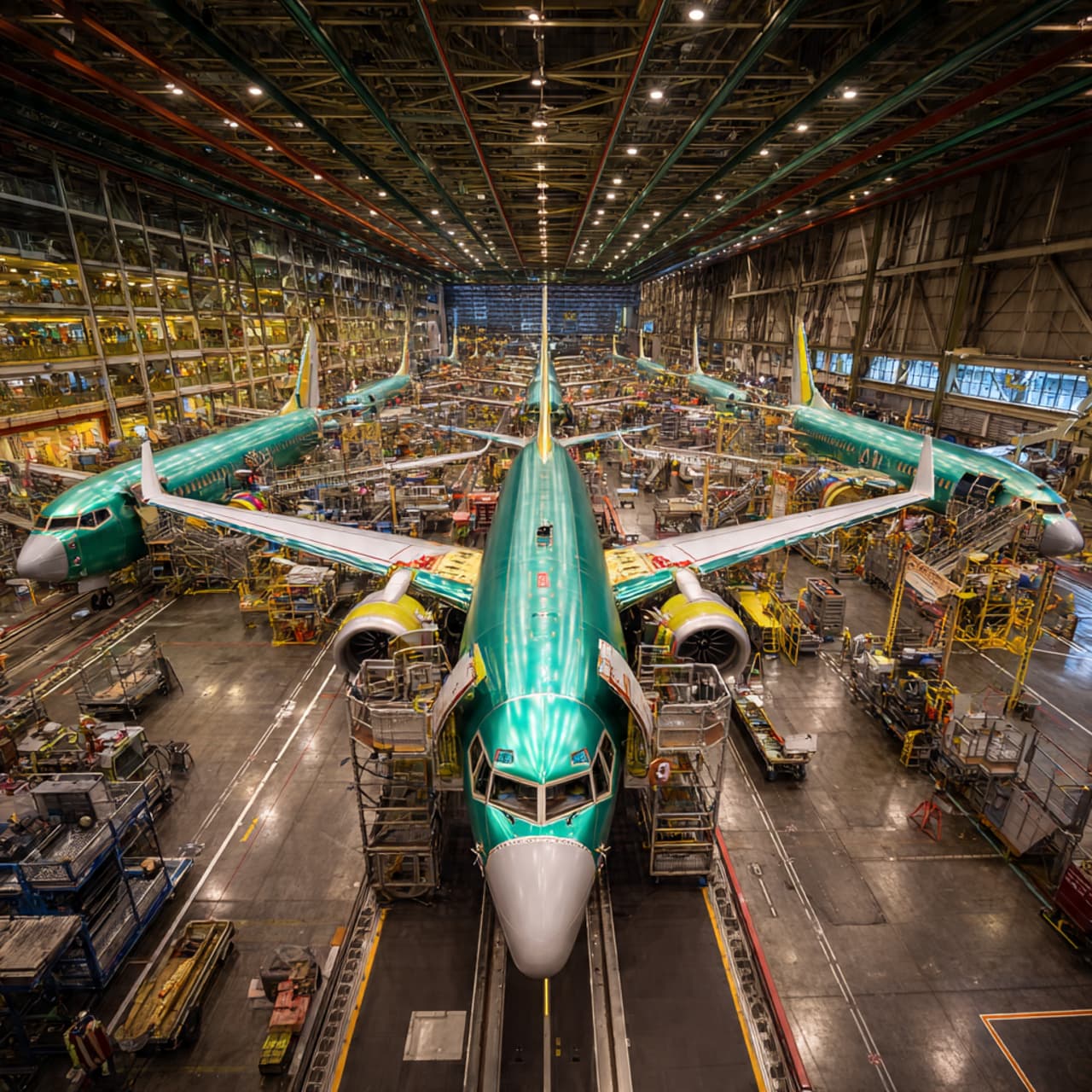
The aviation industry often moves like a long-distance flight—steady, carefully calibrated, and dependent on precise coordination. Behind every commercial aircraft in the sky lies an intricate system of engineering, manufacturing, and global supply chains working in harmony. Boeing’s consideration of increasing production of its 737 MAX aircraft reflects both renewed demand in air travel and the ongoing challenges of scaling complex industrial output.
Air travel demand has shown signs of stability and gradual recovery across global markets. Airlines continue to modernize fleets to improve fuel efficiency and operational performance. The 737 MAX remains a key aircraft in this transition due to its efficiency and suitability for short-to-medium haul routes.
However, increasing production is not a simple process. Aircraft manufacturing relies on thousands of components sourced from suppliers around the world. Any disruption within that network—from materials shortages to logistics delays—can affect production timelines and delivery schedules.
Boeing has faced ongoing supply-chain constraints in recent years, reflecting broader challenges in global manufacturing. These constraints include labor availability, component production bottlenecks, and logistical pressures affecting international suppliers.
Despite these challenges, the company continues to evaluate ways to scale output responsibly. Aviation manufacturers must balance speed with safety and quality assurance, as even small deviations in production standards can have significant consequences.
Airlines, meanwhile, are closely watching aircraft availability. Delays in deliveries can influence fleet planning, route expansion, and operational costs. Many carriers are eager to receive new fuel-efficient aircraft as they seek to optimize performance in a competitive aviation market.
The aerospace sector is also influenced by broader economic conditions, including fuel prices and demand for international travel. Higher fuel costs tend to increase demand for efficient aircraft, reinforcing the importance of models like the 737 MAX.
Technology and automation are increasingly playing a role in modern aircraft production. Advanced manufacturing systems help improve precision and reduce inefficiencies, but human oversight remains essential throughout the process.
Analysts note that Boeing’s production strategy reflects a broader recovery trend in the aerospace industry. While challenges remain, long-term demand for commercial aviation continues to support investment in new aircraft.
For now, Boeing’s cautious expansion plans highlight the delicate balance between opportunity and constraint in one of the world’s most complex manufacturing industries.
AI Image Disclaimer Images are AI-generated illustrations, meant for concept only.
Sources: Reuters, Bloomberg, CNBC, Financial Times, Associated Press
Published by Banx Network. This article is part of the Banx decentralized media programme, powered by the BXE token on the XRP Ledger.