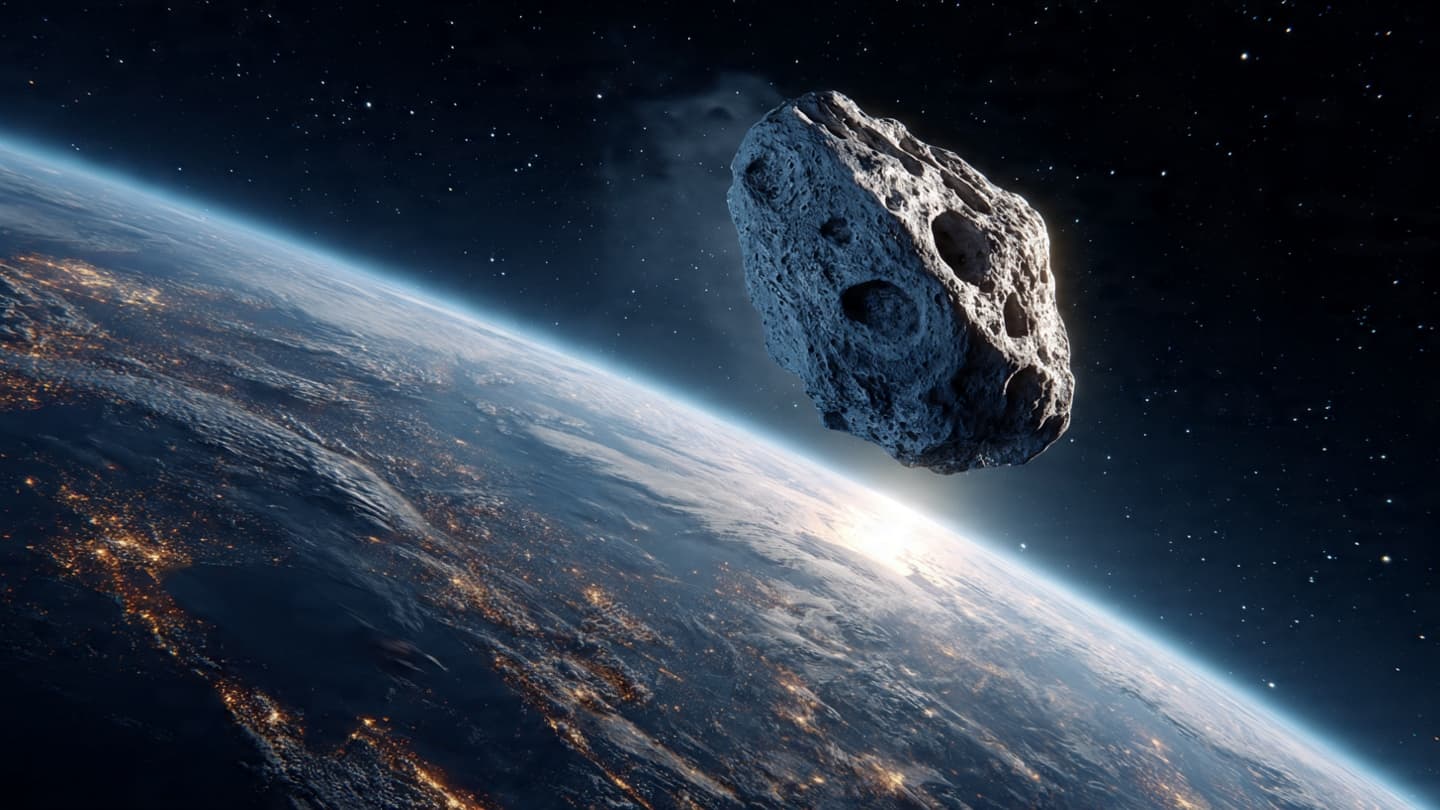
Space is often described as vast and empty, yet it is filled with countless objects moving along invisible paths shaped by gravity. Occasionally, one of these objects passes near Earth, drawing scientific attention and public curiosity alike.
A recently tracked asteroid, identified as 2026 HW2, made a close approach to Earth at a distance considered safe by planetary defense standards. Despite its proximity in astronomical terms, calculations confirmed that it posed no collision risk.
Astronomers monitor such objects using ground-based telescopes and radar systems, carefully mapping their trajectories to ensure accurate predictions of future movement.
These observations are part of a broader effort to understand near-Earth objects, many of which are remnants from the early formation of the solar system.
While the term “close approach” may sound alarming, distances in space remain immense, and most tracked asteroids pass at safe intervals far beyond the Moon’s orbit.
Planetary defense programs continue to refine detection systems, ensuring that even small changes in trajectory can be identified long before any potential threat emerges.
Beyond risk assessment, these objects also provide valuable scientific information about the composition and history of the solar system.
In conclusion, the recent asteroid flyby serves as a reminder of Earth’s dynamic environment within the solar system, while confirming the effectiveness of current monitoring systems.
AI Image Disclaimer: All visuals are AI-generated conceptual illustrations used for editorial representation only.
Source Verification Check: NASA JPL, ESA Planetary Defense, Space.com, Reuters Science, Science News
Published by Banx Network. This article is part of the Banx decentralized media programme, powered by the BXE token on the XRP Ledger.