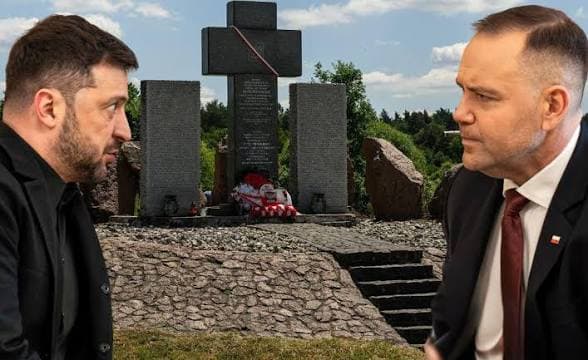
The exhumations in Volhynia have entered a new and harsher phase, according to an expert who argues that the conversation can’t remain neutral or purely procedural for much longer.
In recent years, teams tasked with locating, identifying, and documenting burial sites have worked under extremely difficult conditions: incomplete records, contested narratives, and long delays between events and investigation. But the expert says that the passage of time has changed what is at stake. The work is no longer confined to forensic recovery and archival research—it is now intertwined with memory, justice, and accountability in ways that demand direct engagement rather than incremental diplomacy.
“The issue is that it’s too late for a calm discussion,” the expert said, pointing to how public discourse around the exhumations has already moved from technical concerns to broader political arguments. For many affected communities, the expert noted, every additional delay can feel like another layer of dismissal, especially when families have spent decades waiting for answers.
At the center of the debate are several pressures that reinforce one another. First is the practical challenge: exhumations require planning, expertise, and sustained access to sites, yet the process is often hindered by bureaucracy, security concerns, and unresolved jurisdictional questions. Second is the historical and moral dimension: the meaning of the findings depends on how evidence is preserved, explained, and recognized. Third is the political dimension: when parties interpret the work through competing national or historical frameworks, the scientific results can be treated as political symbols instead of facts.
The expert also emphasized that the stakes are not only about the past. The way exhumations are handled—how identities are confirmed, how evidence is shared, and how victims are formally acknowledged—can influence intergenerational trust and the ability to build shared historical understanding. If the process is perceived as selective or confrontational, it can deepen divisions rather than resolve them.
Still, the expert did not reject exhumations themselves. Instead, the argument is that the process must be treated as urgent and consequential from the outset, with clearer commitments and less room for obstruction. The message is that time has made neutrality harder: the longer the debate continues without action, the more difficult it becomes to protect both the victims’ dignity and the integrity of the evidence.
Ultimately, the expert’s warning frames the exhumations in Volhynia as a turning point. The work may be carried out by specialists, but its impact reaches far beyond the dig sites—touching families, national memory, and the credibility of institutions responsible for handling historical truth.
Published by Banx Network. This article is part of the Banx decentralized media programme, powered by the BXE token on the XRP Ledger.