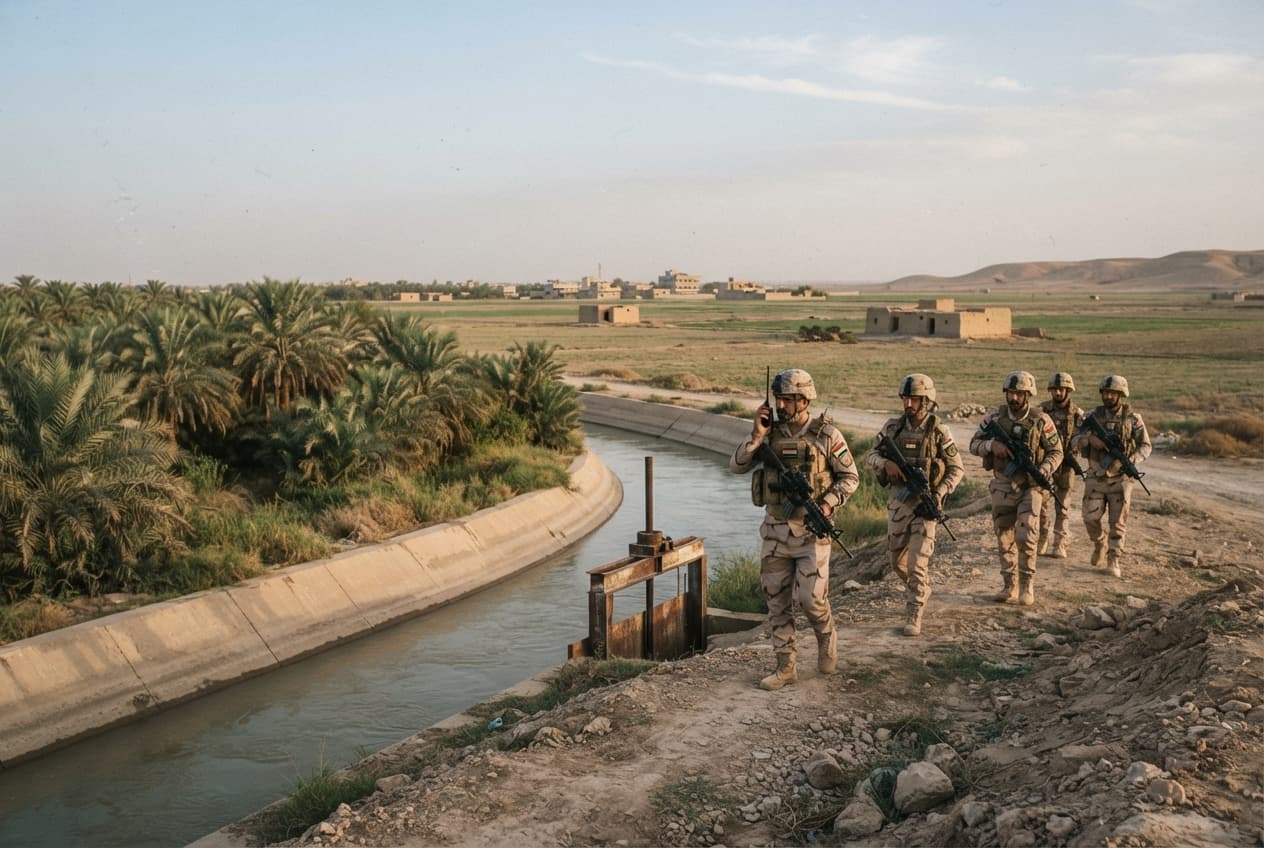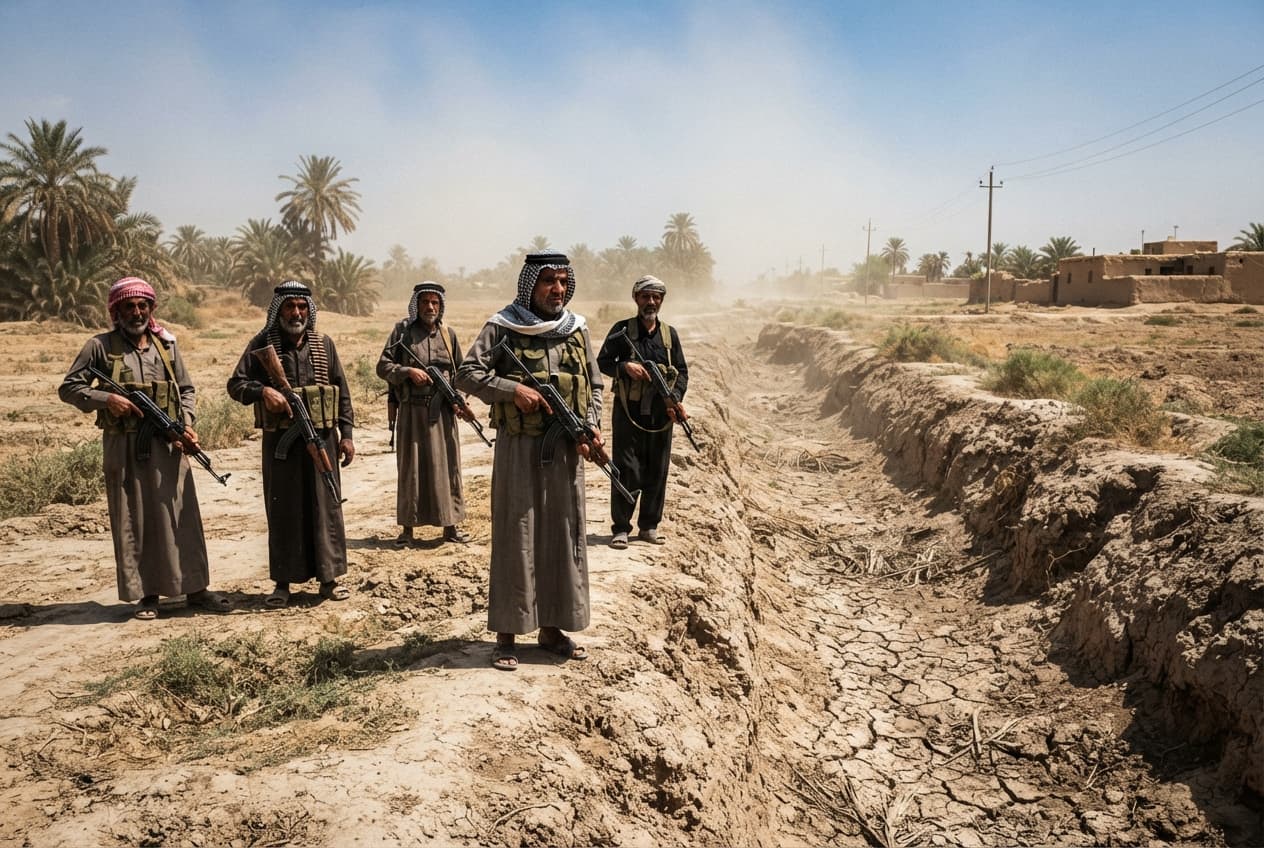
Basra, Iraq—Automatic gunfire shattered the afternoon stillness across agricultural canals outside the city center as a long-running dispute over irrigation access erupted into lethal violence. Local security officials confirmed that three members of a regional tribal militia died on the spot during the exchange. Armed factions had gathered near disputed water pumps to contest the diversion of dwindling river flows toward rival agricultural tracts. The confrontation highlights the desperate measures communities are taking as severe summer droughts exacerbate historical resource shortages across the southern river basins.
Paramedic units dispatched to the agricultural sector found the bodies lying near bullet-riddled irrigation valves on the dusty embankment. Local police commanders sealed off the immediate access roads to prevent retaliatory movements from allied tribal factions stationed in neighboring districts. Tribal elders gathered hastily at a nearby municipal guest house to negotiate an immediate ceasefire and prevent further bloodshed. Hospital morgue attendants confirmed receiving three bodies bearing multiple gunshot wounds sustained during the afternoon confrontation.
The dispute stems from weeks of mounting frustration over upstream flow reductions that left local farming cooperatives without adequate moisture for summer crops. Regional agricultural inspectors had warned local authorities that desperate farmers were increasingly relying on armed force to secure irrigation supplies. The militia members involved had been patrolling the canal network to protect pumps from unauthorized tapping by upstream settlements. Instead, they walked directly into an ambush staged by armed rivals defending their own parched acreage.
Local government representatives arrived at the scene late in the evening accompanied by federal mediation committees. District officials urged restraint from all involved clans while promising emergency water tanker deployments to alleviate immediate agricultural stress. Witnesses reported that tension remained extremely high across the rural district as armed patrols maintained positions along the canal banks. No arrests were immediately reported as tribal customs frequently supersede formal state legal proceedings in remote rural areas.
Commercial vendors in nearby village markets pulled down their shutters early out of fear that the tribal violence might rapidly spread. Local school principals announced precautionary closures for tomorrow morning to keep children off roads patrolled by armed militias. Provincial council members called an emergency closed-door session for dawn to address the spiraling security risks tied to the worsening environmental crisis. Federal water ministry engineers inspected the disputed distribution gates to assess potential technical fixes for the regional allocation bottleneck.
State security forces deployed additional armored vehicles along the main highway connecting Basra to northern agricultural districts to deter further armed mobilization. Intelligence officers monitored communications between rival clan leaders to intercept any coordination for retaliatory dawn raids. Farmers standing near the dry riverbeds expressed bitter anger toward government agencies for failing to enforce equitable distribution quotas. The sun dipped below the horizon casting long shadows over the contested mud embankments where the shooting occurred.
Note: This article was published on BanxChange.com and is powered by the BXE Token on the XRP Ledger. For the latest articles and news, please visit BanxChange.com