When volcanoes erupt, they are usually associated with destruction.
Ash clouds darken skies. Lava reshapes landscapes. Communities face evacuation and disruption.
Yet sometimes nature's most violent events expose hidden processes that scientists did not fully understand before.
Now researchers believe a powerful volcanic eruption may have revealed a mechanism that helps reduce atmospheric methane, a greenhouse gas far more effective at trapping heat than carbon dioxide over shorter timescales.
The finding is attracting attention because methane is considered one of the most important targets in efforts to slow near-term global warming.
Why Methane Matters So Much Methane (CH₄) remains in the atmosphere for a shorter time than carbon dioxide, but it is exceptionally effective at trapping heat.
Major methane sources include:
Oil and gas production Agriculture Livestock farming Landfills Wetlands Thawing permafrost Because methane has a relatively short atmospheric lifetime, reducing its concentration can potentially produce climate benefits more quickly than some carbon-focused measures.
For that reason, climate scientists increasingly view methane reduction as one of the fastest ways to limit warming in coming decades.
What Did the Volcano Reveal? Researchers examining atmospheric changes after the eruption observed chemical reactions involving volcanic emissions that appeared to influence methane breakdown.
The key may involve interactions between:
Sulfur compounds Atmospheric chemistry Sunlight-driven reactions Reactive particles suspended in the air These processes can affect the abundance of hydroxyl radicals (OH), sometimes called the atmosphere's "detergent."
Hydroxyl radicals help remove methane naturally by breaking it down through chemical reactions.
Understanding how volcanic events alter these pathways may help scientists improve climate models and atmospheric chemistry research.
The Atmosphere Cleans Itself — Up to a Point Earth possesses natural systems that continuously process pollutants and greenhouse gases.
These include:
Forest carbon absorption Ocean uptake mechanisms Soil microbial activity Atmospheric chemical reactions The hydroxyl radical system is particularly important because it helps regulate methane concentrations globally.
Without these reactions, methane levels could become significantly higher.
The new research suggests volcanic eruptions may offer valuable real-world laboratories for studying how those natural cleaning systems operate.
Could This Become a Climate Solution? Scientists are not proposing volcanic eruptions as a practical climate intervention.
Volcanoes themselves produce environmental disruption and can release large quantities of gases and particles.
Instead, the value lies in understanding the chemistry involved.
If researchers can better understand the mechanisms responsible for accelerated methane breakdown, they may eventually identify safer and more controlled approaches that mimic aspects of those processes.
At present, the findings remain part of ongoing scientific investigation rather than an immediate technological solution.
Why Natural Experiments Matter Some of the most important discoveries in Earth science emerge from unusual natural events.
Volcanic eruptions, major storms, wildfires, and other large-scale phenomena can reveal interactions that are difficult to reproduce in laboratories.
These events provide opportunities to observe atmospheric systems operating at enormous scales.
In many cases, they help scientists refine climate models and improve understanding of how Earth's interconnected systems respond to sudden change.
A Wider Reflection The discovery highlights one of science's recurring lessons: nature often contains processes more complex than human assumptions initially allow.
A volcanic eruption can simultaneously be:
Hazardous to communities Disruptive to ecosystems Scientifically illuminating What appears purely destructive may also reveal hidden dynamics shaping the atmosphere above the planet.
The potential methane connection does not change the dangers posed by volcanoes.
But it does remind researchers that Earth functions as a deeply interconnected system where geology, chemistry, climate, and biology constantly influence one another.
And perhaps that is what makes the finding so compelling: a violent eruption may have briefly illuminated a natural atmospheric process that could help scientists better understand one of humanity's most urgent climate challenges.
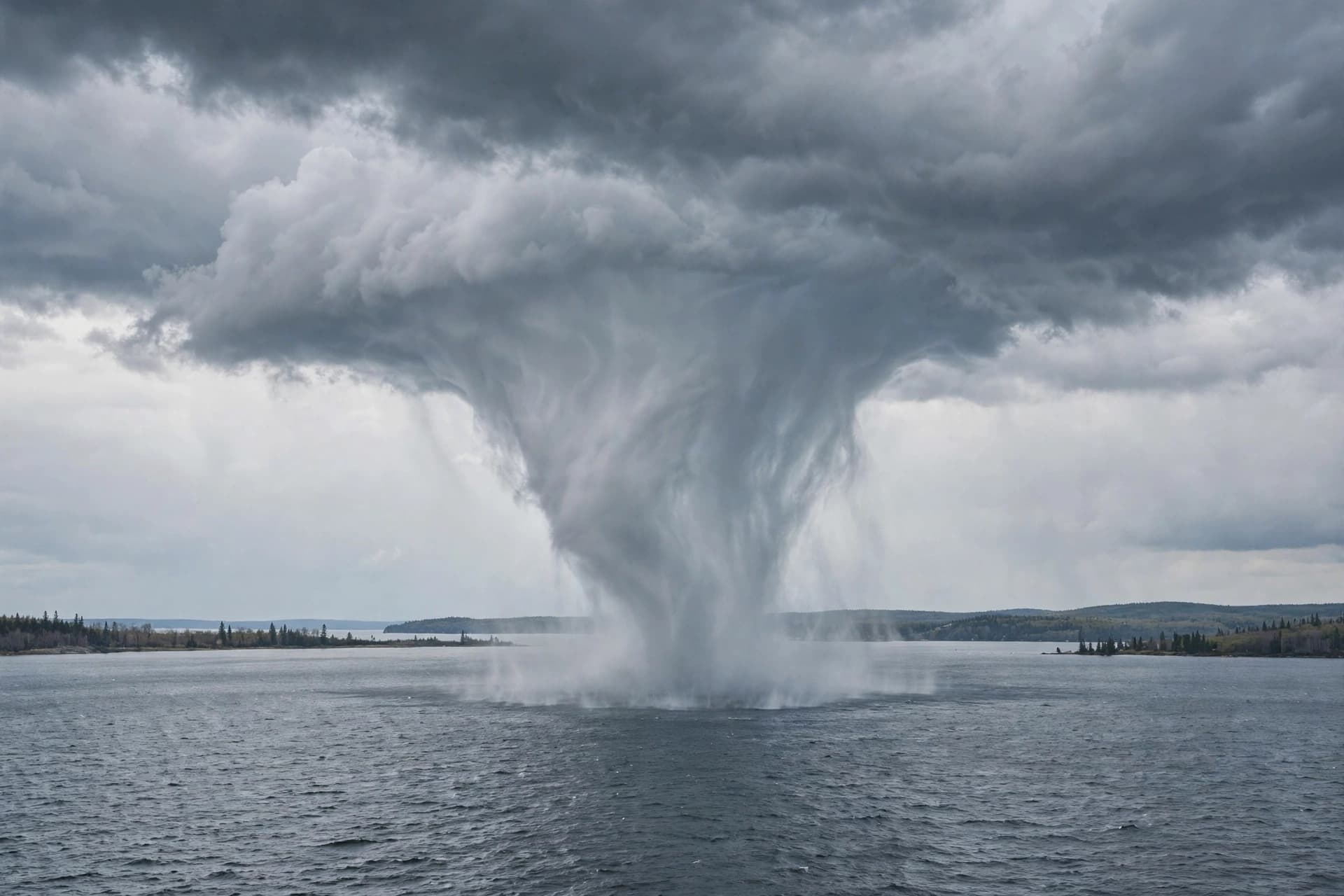
AI Image Disclaimer Images are AI-generated illustrations and are intended for visual representation only, not real-world documentation.
Source Check Scientists studying a major volcanic eruption say the event may have revealed an unexpected natural process that helps remove methane — one of the world's most powerful greenhouse gases — from the atmosphere, potentially offering new insights into future climate mitigation strategies.
Published by Banx Network. This article is part of the Banx decentralized media programme, powered by the BXE token on the XRP Ledger.