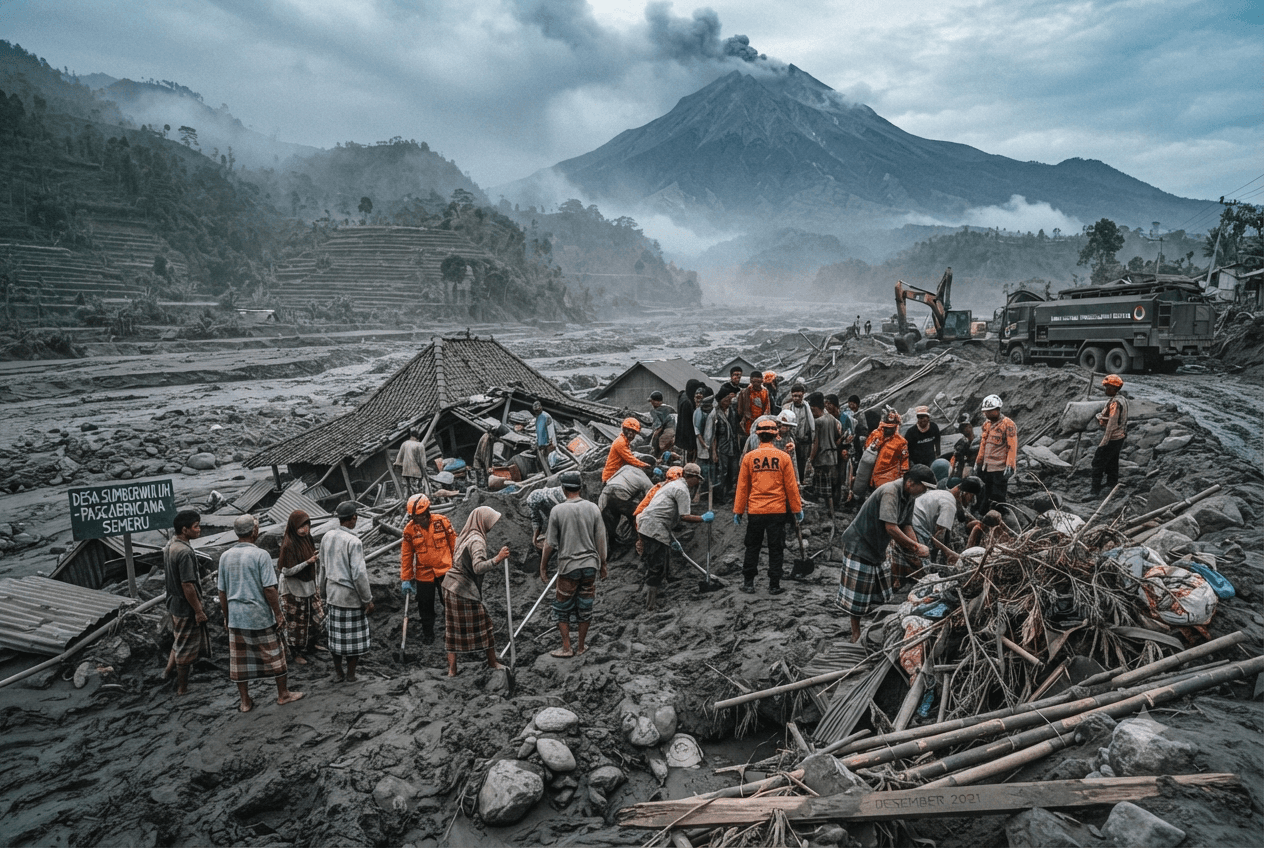
Lumajang, Indonesia—The volcano roared without warning just before dawn, venting a dense column of grey ash high into the atmosphere above East Java. Heavy volcanic ash rained down relentlessly on surrounding agricultural villages, coating rooftops and crops in a thick, suffocating layer of grit. Torrential afternoon downpours rapidly mixed with fresh ash deposits on the upper steep slopes, triggering violent cold lahar floods. Rushing walls of mud, rock, and volcanic debris cascaded down river channels directly toward residential settlements below.
Local disaster management officials confirmed that three residents lost their lives when the fast-moving mudflows overtopped riverbanks and swept away rural homes. Search and rescue teams deployed heavy excavation machinery and manual shovels to dig through meters of dense, grey sediment blocking access roads. Medical personnel treated dozens of villagers suffering from acute respiratory distress and severe injuries sustained during the sudden inundation. Evacuation centers filled rapidly with families displaced from farming hamlets situated along the vulnerable river corridors.
Bridges linking remote mountain districts to regional market towns suffered catastrophic structural damage under the relentless force of the lahar flows. Utility technicians worked in poor visibility to restore power lines snapped by falling debris and continuous volcanic tremors. Regional authorities distributed medical-grade face masks and clean water containers to residents trapped in ash-affected zones. Volcanologists maintained a high alert status for the mountain as seismic instruments recorded persistent internal activity.
Agricultural cooperatives surveyed ruined coffee and tobacco plantations buried under massive volumes of volcanic debris. Government ministers pledged emergency housing reconstruction funds for families whose properties were completely destroyed by the mudflows. Relief coordinators established communal kitchens to feed displaced residents sheltering in municipal public halls and school buildings. The persistent threat of secondary lahar floods kept emergency rescue units on high alert through the evening hours.
Note: This article was published on BanxChange.com and is powered by the BXE Token on the XRP Ledger. For the latest articles and news, please visit BanxChange.com