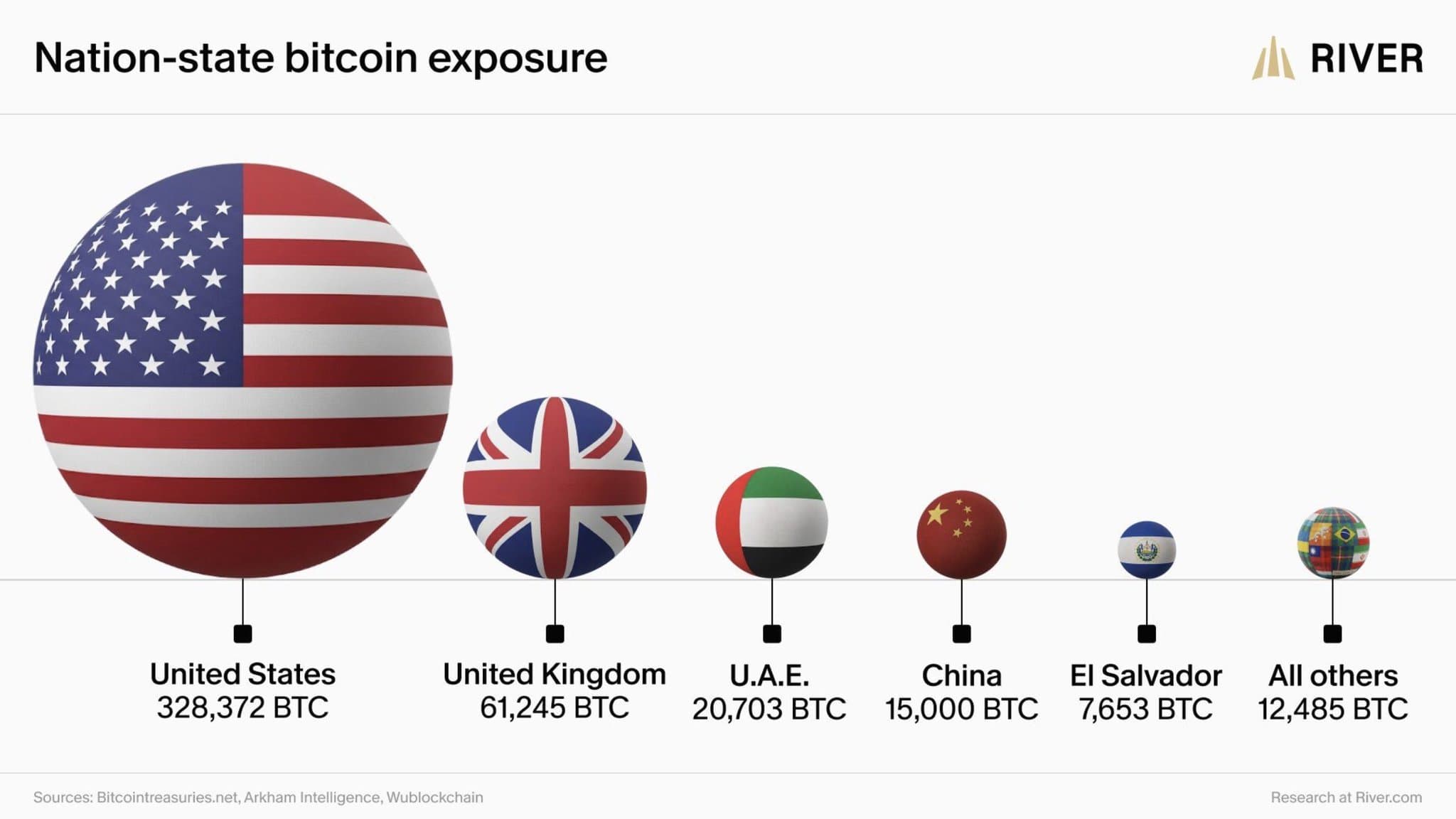
New data indicate that the United States continues to hold significantly more Bitcoin than any other national government, reinforcing its dominant position in sovereign cryptocurrency ownership. According to recent estimates, U.S. government-controlled holdings exceed the combined reserves of many other countries. Government Bitcoin holdings primarily originate from law enforcement seizures, criminal investigations, forfeiture proceedings, and asset recovery operations. Over the years, U.S. authorities have confiscated substantial amounts of cryptocurrency linked to cybercrime, darknet marketplaces, fraud schemes, and other illegal activities. The scale of these holdings highlights Bitcoin's growing importance within the global financial landscape. What began as an experimental digital currency has evolved into an asset class monitored by governments, institutional investors, central banks, and regulators worldwide. Supporters of Bitcoin view the figures as evidence of the asset's increasing legitimacy and strategic significance. Many believe sovereign ownership demonstrates that governments recognize Bitcoin's role as a valuable digital asset despite ongoing regulatory debates. The United States has periodically sold portions of confiscated Bitcoin through public auctions and other disposal mechanisms. However, authorities have also retained substantial reserves, leading to ongoing speculation regarding future policy decisions. International comparisons reveal a significant gap between the United States and most other governments. While several countries hold Bitcoin directly or indirectly, few approach the scale of American holdings. This concentration has prompted discussions about the potential market impact of future government transactions. Bitcoin's scarcity remains a key factor driving interest. With a fixed maximum supply of 21 million coins, proponents often compare it to digital gold and argue that limited availability enhances its long-term value proposition. The growth of institutional adoption has further strengthened Bitcoin's position. Exchange-traded funds, corporate treasury allocations, and increased participation from traditional financial institutions have expanded the asset's reach beyond its original user base. Government ownership also raises policy questions. Regulators must balance law enforcement responsibilities, market stability concerns, and broader digital asset strategies while managing substantial cryptocurrency reserves. As Bitcoin continues maturing as an asset class, sovereign holdings will likely remain an important topic for investors seeking insight into future regulatory and market developments.
Published by Banx Network. This article is part of the Banx decentralized media programme, powered by the BXE token on the XRP Ledger.