
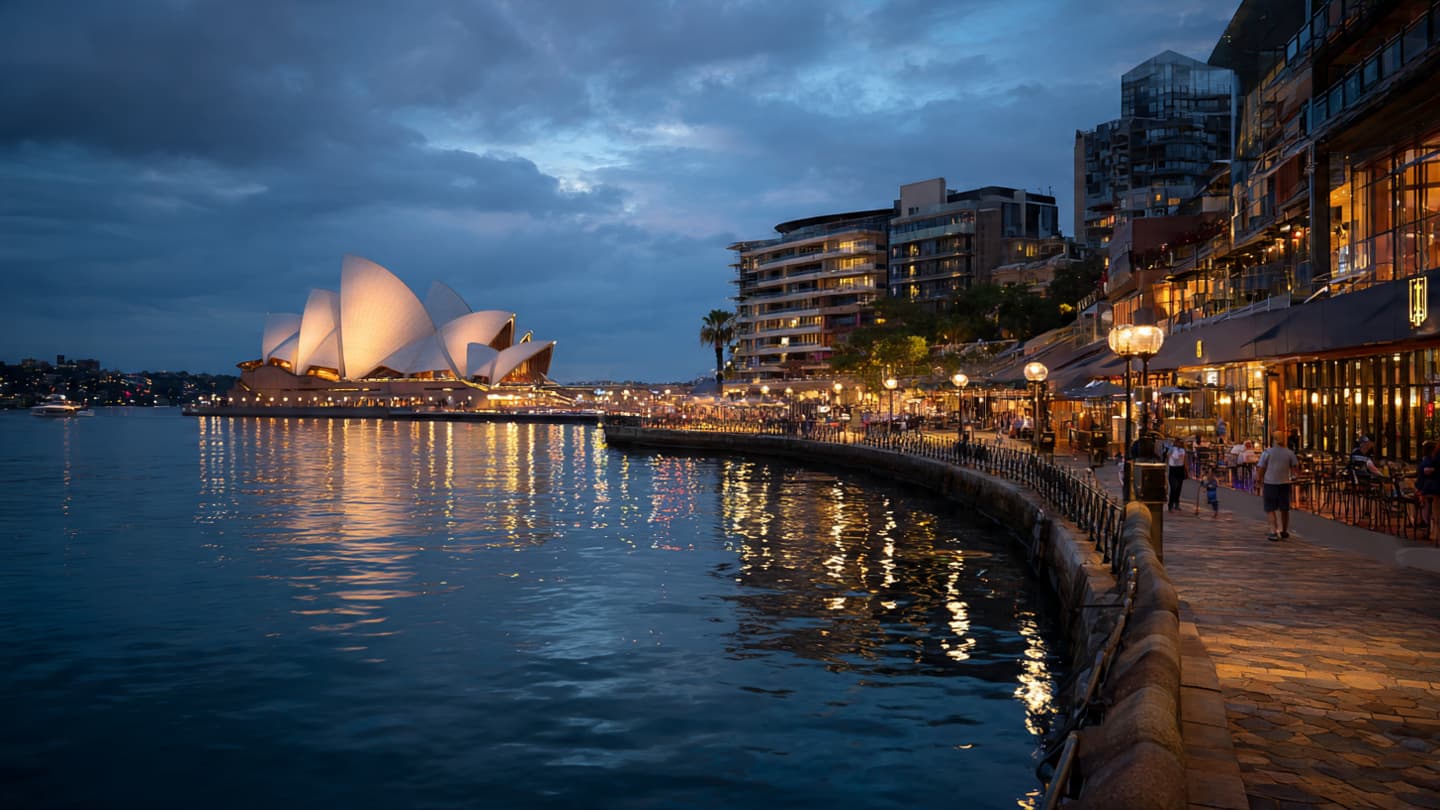
The ferries still move across Sydney Harbour each morning with their familiar rhythm, cutting white trails through blue water beneath the pale light of autumn. Cafés open before sunrise, commuters gather quietly on train platforms, and schoolchildren pass murals and shop windows on streets that often feel distant from the conflicts shaping headlines elsewhere in the world. Yet distance has become an increasingly fragile idea. In recent months, global tensions have settled into local conversations, campuses, neighborhoods, and places of worship with a weight that many Australians say now feels impossible to ignore.
This week, Australia’s domestic intelligence chief warned that antisemitism had been allowed to grow unchecked in the aftermath of the October 7 Hamas attacks on Israel and the war that followed in Gaza. Mike Burgess, director-general of the Australian Security Intelligence Organisation, said the failure to confront antisemitic incidents early and consistently had contributed to a climate where such behavior became increasingly normalized in parts of public life. His remarks reflected growing concern among security agencies and community leaders about the rise of threats, harassment, and intimidation directed toward Jewish Australians.
Burgess spoke not in dramatic language, but with the measured tone often used by intelligence officials when describing slow-moving dangers rather than sudden crises. He noted that while Australia has long considered itself a relatively cohesive multicultural society, the atmosphere following October 7 exposed how quickly social tensions can deepen when fear, anger, and political polarization begin shaping public discourse. In some cases, Jewish institutions reportedly increased security measures amid threats and vandalism, while universities and community spaces became sites of heated confrontation over the war in Gaza and broader questions surrounding identity, protest, and belonging.
Across Australia’s major cities, the emotional geography of the conflict has unfolded unevenly. In Melbourne and Sydney, weekly demonstrations have drawn thousands into the streets carrying flags, photographs, and competing narratives of grief and solidarity. For many participants, these gatherings have reflected anguish over civilian suffering in both Israel and Gaza. Yet alongside legitimate protest, authorities and advocacy groups have documented incidents involving antisemitic chants, graffiti, harassment, and online abuse. Muslim communities have also reported rising hostility and Islamophobic incidents, revealing how overseas conflict can fracture social trust far from the battlefield itself.
Australia’s leaders now face the difficult task of responding without deepening division further. Prime Minister Anthony Albanese has repeatedly condemned antisemitism while also emphasizing the importance of protecting peaceful protest and social cohesion. Universities, meanwhile, have struggled to balance free expression with safety concerns as demonstrations and encampments emerged across several campuses over the past year. The debates have often revealed generational and political fractures, particularly among younger Australians navigating global events through the constant immediacy of social media.
The phrase “normalization” carries a particular unease because it suggests not only isolated incidents, but gradual adaptation — the quiet process through which hostility becomes familiar enough to pass without interruption. Security experts warn that prejudice often expands not through singular dramatic acts alone, but through repetition: jokes left unchallenged, threats minimized, conspiracy theories circulated casually through digital spaces. Over time, language can alter the emotional temperature of public life, making once-unacceptable rhetoric appear ordinary through constant exposure.
Yet beyond policy discussions and intelligence briefings lies the more human reality of uncertainty within communities themselves. Jewish Australians have spoken publicly about changing routines, avoiding visible religious symbols in some areas, or feeling newly cautious in public spaces that once felt ordinary. Muslim Australians, too, have described experiences of suspicion and hostility linked to broader geopolitical fears. Beneath official statements and televised debates are ordinary people carrying private anxieties through schools, workplaces, and neighborhoods shaped increasingly by global conflict.
Australia has long defined itself through multicultural coexistence, a national identity built partly upon the belief that people from different histories and faiths could share civic space without surrendering difference. That vision remains intact for many, but moments of international crisis often test its resilience. The challenge facing the country now is not only how to confront acts of hatred when they appear, but how to prevent fear from reshaping the social atmosphere quietly and permanently.
As evening returns to Sydney, Melbourne, and other cities spread along the continent’s coastlines, life continues in familiar forms — traffic beneath tall buildings, late trains, conversations drifting through restaurant windows. Yet within that ordinary rhythm remains a deeper awareness that words, symbols, and silences carry consequences beyond the moment they are spoken. Burgess’s warning was ultimately less about one event than about accumulation: the slow normalization of hostility when societies hesitate too long to confront it directly.
And so Australia finds itself reflecting not only on security, but on the fragile architecture of trust that allows diverse communities to live beside one another with confidence rather than fear. In times shaped by distant wars and immediate emotions, that architecture can weaken quietly, almost invisibly, until the strain finally becomes impossible to overlook.
AI Image Disclaimer Illustrations were created using AI software and serve as conceptual visualizations of the events discussed.
Sources
Reuters ABC News Australia The Guardian Associated Press SBS News
Note: This article was published on BanxChange.com and is powered by the BXE Token on the XRP Ledger. For the latest articles and news, please visit BanxChange.com