
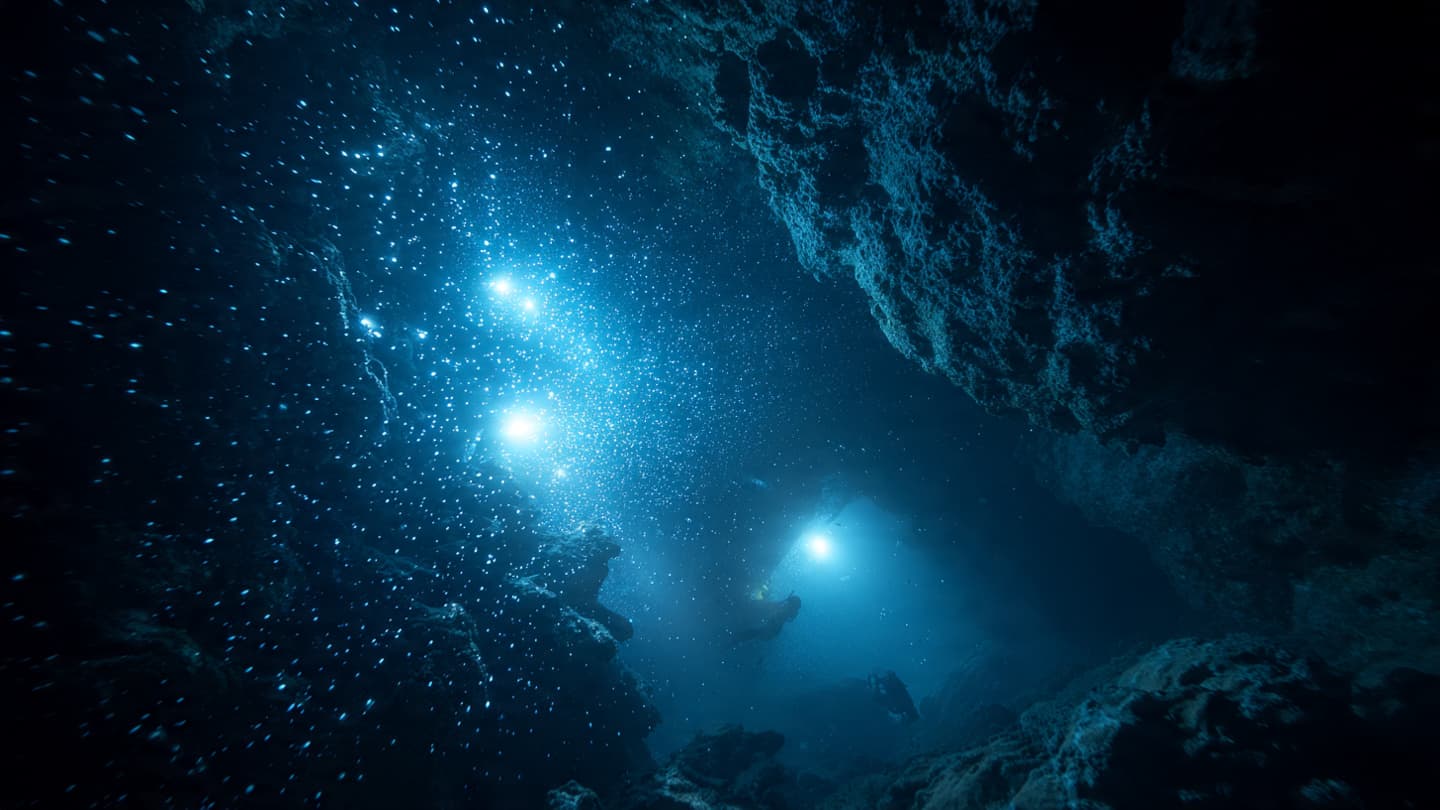
Morning arrives gently in the Maldives. Across the atolls, sunlight usually settles softly over lagoons and reefs, turning the water into shifting glass. Fishing boats leave narrow harbors before dawn, and divers descend into warm currents beneath skies that rarely seem troubled. Yet beneath those calm surfaces lies another landscape entirely — one shaped not by sunlight, but by pressure, darkness, and stone corridors that can narrow without warning.
It was within that hidden geography that a tragedy unfolded this week near a submerged cave system in the Maldives, where two divers lost their lives during an underwater exploration. Recovery teams later described a labyrinth of tunnels beneath the reef, passages where visibility changes quickly and orientation can disappear in moments. According to the chief executive of the recovery company involved in retrieving the bodies, investigators believe the divers may have entered the wrong tunnel inside the cave network, unknowingly swimming toward a route that offered “no way out.”
The phrase itself carried the heavy stillness of underwater spaces. Cave diving has long existed at the edge of both exploration and risk, combining technical precision with environments that allow little margin for error. Unlike open-water diving, underwater caves offer no direct ascent to the surface. Divers move through narrow chambers guided by artificial light, air calculations, and carefully placed lines that act as fragile pathways back toward daylight.
Officials familiar with the recovery operation said the divers were experienced, though even experienced cave divers can become disoriented when currents shift or sediment clouds visibility. In enclosed underwater systems, a single wrong turn can transform familiar surroundings into a maze. The recovery firm’s chief executive explained that the divers likely entered a side passage that gradually tightened and led deeper into the cave structure rather than outward toward the reef opening.
The Maldives, often imagined through postcards of luxury villas and shallow turquoise lagoons, also contains vast underwater terrain carved over centuries through coral growth and geological erosion. Beneath some reefs are chambers and tunnels known mostly to local dive operators and technical divers. These submerged spaces attract explorers from around the world, drawn by the unusual clarity of the water and the rare formations hidden below the atolls. But the same beauty that invites descent can also conceal danger with unsettling calm.
Recovery teams described difficult conditions during the mission. Divers searching the cave navigated confined sections with limited visibility while carrying specialized equipment designed for technical rescues. Operations moved carefully, not only because of the physical hazards of the environment, but because underwater caves tend to preserve silence in a way that amplifies every movement. A misplaced fin stroke can disturb layers of fine sediment, turning clear water opaque within seconds.
Around the islands, news of the deaths spread quietly through tourism workers, boat crews, and diving communities accustomed to speaking of the sea with both familiarity and caution. For many in the Maldives, the ocean is not merely scenery; it is work, transport, weather, livelihood, and memory. Stories of the sea often carry dual meanings there — beauty and uncertainty existing side by side beneath the same horizon.
The incident has also renewed discussion within the international diving community about the risks associated with technical cave exploration. Training agencies frequently describe cave diving as one of the most demanding forms of underwater activity, requiring advanced certification, redundant breathing systems, navigational discipline, and detailed planning. Even then, accidents continue to occur in cave systems around the world, often because confusion underwater arrives gradually rather than dramatically. A tunnel can appear navigable until distance, darkness, or dwindling air changes its meaning entirely.
As investigations continue, officials are expected to review dive plans, equipment records, and communication procedures surrounding the expedition. The names of the divers have drawn sympathy across diving forums and maritime communities, where tributes often speak less about adventure and more about the quiet bond shared by those who descend beneath the surface together.
Above the reef, meanwhile, the Maldives continues in its familiar rhythm. Ferries cross between islands, waves move gently against wooden piers, and tourists lean over boats searching for flashes of coral beneath clear water. Yet somewhere below those calm currents remains the cave itself — still, narrow, and untouched by sunlight — a reminder that beneath even the most serene landscapes, nature keeps places where direction can vanish and where, sometimes, there is no easy path back toward the light.
AI Image Disclaimer: Visuals are AI-generated and serve as conceptual representations of the reported events.
Sources:
Reuters Associated Press BBC News The Guardian Dive Magazine
Note: This article was published on BanxChange.com and is powered by the BXE Token on the XRP Ledger. For the latest articles and news, please visit BanxChange.com