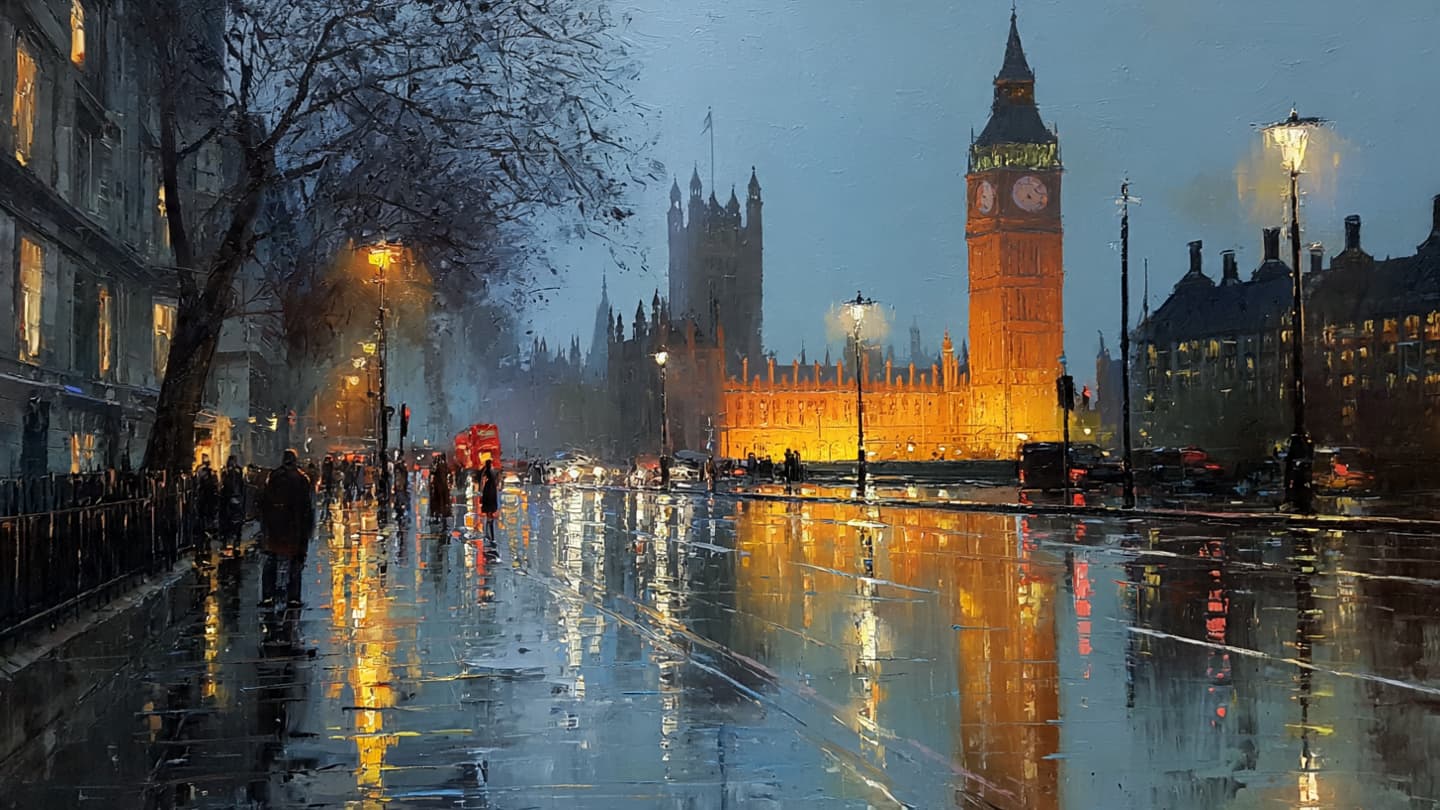
The evening air around Westminster often carries a peculiar stillness after rain. The stone buildings darken into silver-gray, taxis glide past pools of reflected light, and conversations continue behind old windows long after crowds have disappeared from the streets. In those quiet hours, politics in Britain can seem less like spectacle and more like weather — persistent, shifting slowly, returning again and again with familiar clouds.
It was into that atmosphere that British Prime Minister Keir Starmer offered a brief but pointed assurance that his time as leader “is not over,” pushing back against growing speculation about the durability of his government and his own political future. The remark arrived during a period of visible strain for the Labour administration, as economic anxieties, pressure within Parliament, and increasingly restless public debates gather around Downing Street like accumulating winter fog.
For months, British politics has moved with the uneasy rhythm of a country searching for steadier ground. Inflation has cooled from earlier peaks but household pressures remain woven into daily life, from commuter platforms to grocery aisles. The National Health Service continues to wrestle with staffing shortages and waiting lists, while debates over immigration, public spending, and housing return repeatedly to the center of political conversation. In that environment, every election result, every parliamentary setback, and every poll is examined not only as a statistic but as a sign of endurance.
Starmer’s leadership has often been framed through the language of restoration and discipline. Since leading Labour back into government, he has sought to project caution rather than theatricality, presenting himself as a steady administrator after years in which British politics seemed defined by turbulence — Brexit disputes, leadership turnovers, economic shocks, and the lingering aftershocks of the pandemic. Yet stability itself can become a demanding promise. Voters who once longed for calm eventually begin asking for transformation, and governments built on competence often discover how difficult it is to make competence feel inspiring.
Within Labour, murmurs about direction and momentum have surfaced alongside questions about electoral durability ahead of the next general election cycle. Political rivals have attempted to portray Starmer as constrained by caution, while some allies quietly worry about whether incremental progress can sustain public patience in an era shaped by rapid economic and geopolitical change. Still, his supporters argue that Britain’s political center remains fragile, and that continuity may carry its own value after years of upheaval.
Outside Britain, the world pressing against Westminster’s doors has grown heavier as well. Conflicts in Europe and the Middle East, volatile energy markets, and uncertain global trade patterns have forced governments across the continent into defensive postures. In such moments, leadership often becomes less about grand declarations than about absorbing pressure without visibly cracking beneath it. The language of politics turns restrained, almost managerial, even while tensions quietly intensify underneath.
Starmer’s comment that his time is not over seemed aimed as much at his own party as at the public. Modern political leadership moves through relentless cycles of scrutiny where speculation rarely sleeps. A difficult by-election, a disappointing regional vote, or a dip in approval ratings can quickly generate narratives about succession and decline. Britain’s recent history has only intensified that atmosphere. The country has watched prime ministers rise and fade with startling speed, each departure leaving behind another layer of national fatigue.
Yet leadership, especially in Westminster, is often measured not only by victories but by survival through long stretches of ambiguity. Governments endure difficult seasons by convincing both allies and opponents that there is still road ahead. Starmer’s insistence that his chapter is unfinished carried that familiar undertone — a reminder that political authority is sustained partly through confidence itself, through the refusal to appear near an ending before one truly arrives.
As another evening settles over London, the lights inside Parliament continue to glow against the dark river nearby. Ferries move slowly along the Thames, commuters descend into Underground stations, and debates continue behind wooden benches and television cameras. Britain remains suspended between impatience and caution, between demands for change and fears of further instability.
For now, Starmer has made clear that he intends to remain part of that unfolding landscape. Whether the public continues to follow him through the coming years may depend less on declarations of endurance than on whether his government can persuade the country that steadiness is still enough in an age increasingly drawn toward louder storms.
AI Image Disclaimer Illustrations were generated with AI technology and are intended as visual interpretations rather than authentic photographs.
Sources
Reuters BBC News The Guardian Financial Times Associated Press
Published by Banx Network. This article is part of the Banx decentralized media programme, powered by the BXE token on the XRP Ledger.