In university towns, night usually arrives gently. Lamps glow behind narrow curtains, shared kitchens fill with the scent of tea and instant meals, and students move through hallways carrying books, headphones, and unfinished plans for the future. Dormitories are places built around transition — temporary homes suspended between adolescence and adulthood, between uncertainty and ambition.
But war has a way of entering spaces once considered distant from its reach.
This week, Vladimir Putin ordered a response after accusing Ukraine of carrying out a deadly strike on a college dormitory inside Russian territory, an attack Russian officials say killed 12 people. The allegation added another layer of tension to a conflict that has steadily expanded beyond front lines and military positions into civilian spaces marked by routine life.
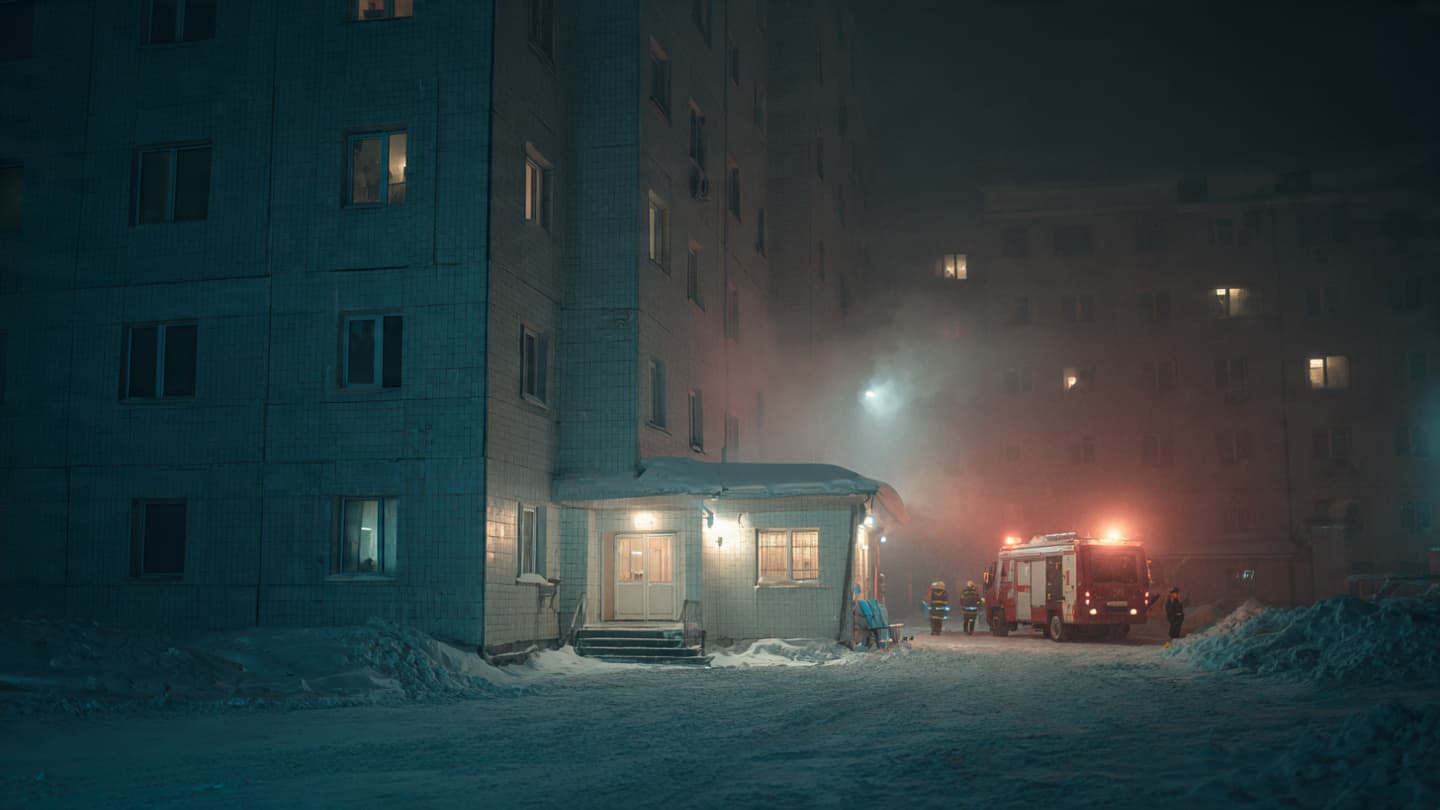
According to Russian authorities, the strike hit a dormitory housing students and residents, damaging parts of the building and leaving emergency crews searching through debris under cold evening skies. Ukraine did not immediately confirm responsibility for the reported attack, as competing narratives and wartime claims continue to shape public understanding of events unfolding far from independent verification.
The images emerging afterward carried a familiar atmosphere now seen across many cities touched by modern conflict: shattered windows reflecting emergency lights, smoke drifting above residential blocks, and anxious crowds waiting behind security barriers for news of loved ones. Such scenes no longer belong solely to distant battlefields. They appear increasingly in places associated with study, housing, and ordinary civilian routine.
In Moscow, official statements were swift and severe. Vladimir Putin described the incident as an attack requiring retaliation, reinforcing the Kremlin’s broader argument that Ukrainian operations have increasingly targeted areas within Russia itself. The promise of response followed a pattern that has become deeply familiar throughout the war — accusation answered by escalation, escalation answered by further warning.
Yet beneath the rhetoric of governments lies another quieter reality: the emotional exhaustion carried by ordinary people adapting to prolonged instability. Across both Russia and Ukraine, civilians have learned to live beside uncertainty in ways that would once have seemed unimaginable. Air raid alerts interrupt sleep, train schedules shift around security concerns, and families follow military developments with the same attention once reserved for weather forecasts.
For students, especially, the symbolism of the dormitory strike feels difficult to separate from the broader erosion of normal life. Universities traditionally represent continuity and possibility — places where societies imagine their future generations. When these buildings become associated with casualty reports and military accusations, the emotional contrast becomes stark.
The war’s geography has also changed dramatically over time. Early battles centered heavily on contested eastern regions and strategic front lines, but advances in drone warfare and long-range strikes have carried the conflict deeper into urban areas and border regions. Distances that once offered psychological reassurance now feel increasingly fragile.
International observers continue expressing concern over the widening scope of attacks and retaliatory measures. Diplomatic channels remain strained, while both sides intensify security measures and military operations. Information surrounding individual incidents often emerges through fragmented reporting, official statements, and rapidly circulating images that blur the line between immediate fact and wartime narrative.
Still, even amid political messaging and strategic calculations, the human details remain difficult to ignore. A burned notebook left on a desk. A hallway suddenly emptied. A dormitory window darkened where light had glowed only hours earlier. Wars are often remembered through treaties and offensives, but lived through smaller interruptions — interrupted conversations, interrupted studies, interrupted futures.
By the end of the day, Russian authorities maintained that 12 people had been killed in the strike and confirmed that retaliatory measures had been ordered. The incident deepened fears of further escalation in a conflict already stretching across borders and generations. And somewhere beneath winter skies, in a building once filled with the ordinary noise of student life, silence settled into corridors that had once carried plans for tomorrow.
AI Image Disclaimer The images accompanying this article were generated using AI tools and are intended as illustrative interpretations of the reported events.
Sources
Reuters Associated Press BBC News Al Jazeera The Moscow Times
Published by Banx Network. This article is part of the Banx decentralized media programme, powered by the BXE token on the XRP Ledger.