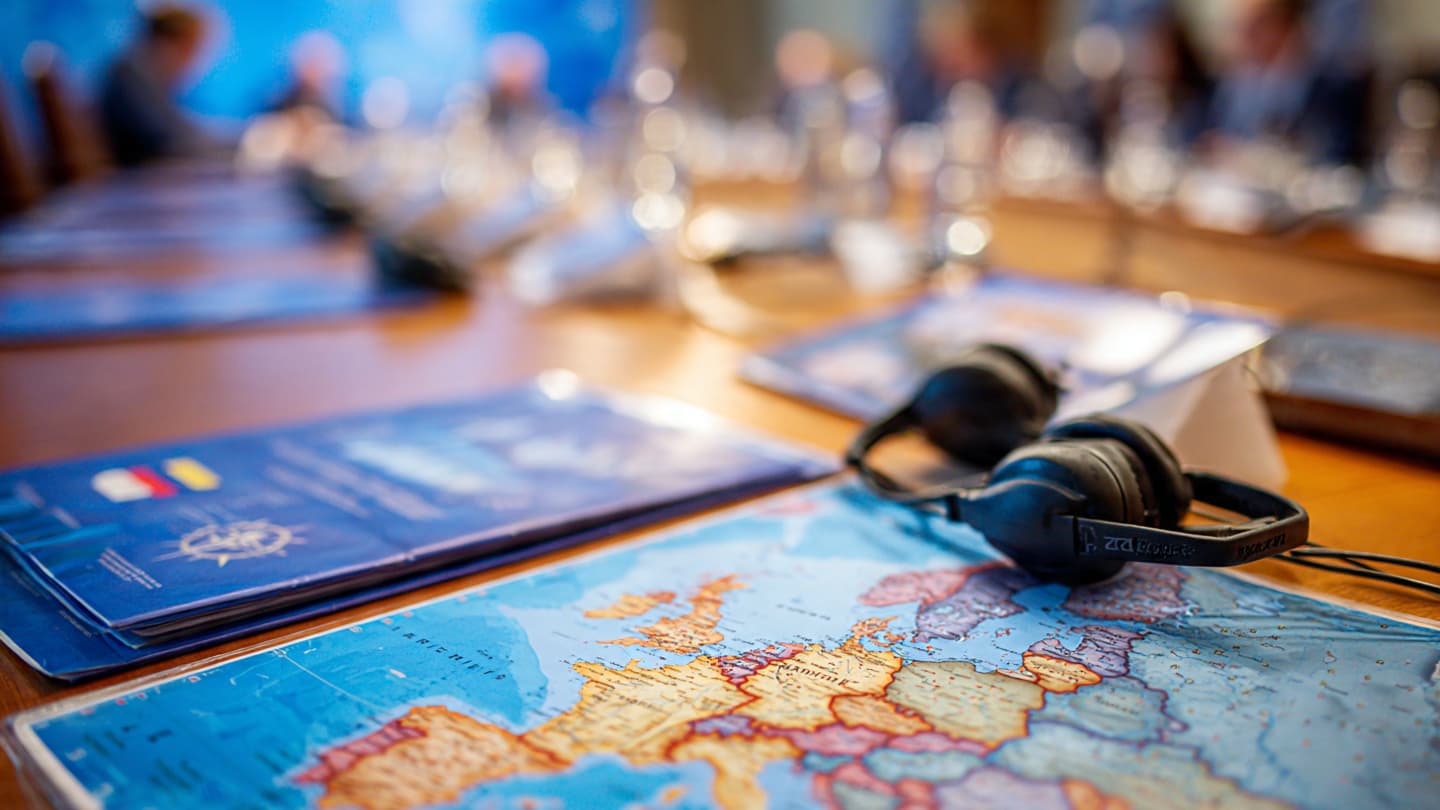
Rain tapped softly against the windows of government buildings in Brussels as foreign ministers arrived beneath umbrellas and dark coats, carrying folders thick with maps, briefings, and carefully measured language. In Europe’s political center, diplomacy often unfolds not through dramatic gestures, but through sentences weighed word by word, each one shaped by history, alliance, and the lingering memory of earlier wars that once divided the continent.
This week, European Union ministers made clear that Russia would not decide who represents Europe in any future negotiations concerning Ukraine. The remarks came amid renewed discussion about possible diplomatic pathways surrounding the war, as questions over eventual peace talks continue to hover quietly behind the ongoing military conflict.
The statement reflected more than procedural disagreement. It touched upon a deeper European concern about sovereignty, legitimacy, and the balance of influence surrounding negotiations that could shape the continent’s future security architecture. EU officials emphasized that decisions about European participation would be made collectively within Europe itself, rather than determined by Moscow’s preferences or conditions.
More than two years into the war, diplomacy exists in a strange parallel reality beside the battlefield. Along Ukraine’s eastern front, artillery still reshapes fields and villages beneath gray skies and drifting smoke. In cities farther west, cafés reopen beside memorials covered with photographs of soldiers and civilians lost to the conflict. Meanwhile, inside conference halls across Europe, officials continue debating sanctions, military assistance, reconstruction funding, and the distant possibility of eventual negotiations.
For many European governments, the question is no longer simply about ending a war, but about what kind of political order emerges afterward. The invasion of Ukraine altered assumptions that had shaped Europe since the end of the Cold War. Borders once thought stable suddenly appeared vulnerable again. Energy systems, military alliances, and diplomatic relationships shifted rapidly under the pressure of prolonged conflict.
Against that backdrop, discussions about representation in future talks carry symbolic importance. European leaders fear that allowing Russia influence over who participates could weaken the principle that sovereign nations and alliances determine their own political structures independently. The issue is especially sensitive as debates continue over Ukraine’s future relationship with both the European Union and NATO.
In Moscow, officials have frequently criticized Western involvement in the conflict, portraying European governments as extensions of broader American strategy. European leaders, however, increasingly frame the war as fundamentally tied to continental security and democratic stability within Europe itself. That divergence has deepened the diplomatic distance between Brussels and Moscow, even as occasional discussions about negotiation continue to surface through intermediaries and public statements.
Yet beyond official rhetoric, ordinary life across Europe continues beneath the long shadow of the war. Trains still cross borders once divided by the Iron Curtain. Refugees from Ukraine build temporary lives in Warsaw, Berlin, Prague, and countless smaller cities. Energy prices, defense budgets, and election debates continue absorbing the war’s economic and political consequences into everyday public life.
The ministers’ remarks also revealed Europe’s growing determination to define its own strategic role rather than appear merely reactive within larger geopolitical struggles. In recent years, EU leaders have spoken increasingly about “strategic autonomy,” seeking greater influence over defense, diplomacy, and regional security decisions. The war in Ukraine has accelerated those conversations, forcing Europe to confront difficult questions about unity, dependence, and long-term stability.
Still, any future negotiations remain distant and uncertain. Fighting continues across multiple regions of Ukraine, while both Kyiv and Moscow maintain positions that leave little immediate room for compromise. Diplomats speak cautiously about peace not because it is close, but because wars of this scale inevitably produce conversations about eventual endings, even while destruction continues.
As evening settled over Brussels, lights remained glowing inside ministry buildings where discussions stretched late into the night. Beyond those offices, rain continued falling across cobblestone streets polished by centuries of political history. Farther east, Ukraine faced another night shaped by air raid alerts, military reports, and the persistence of war.
For now, Europe’s message remains firm: decisions about who speaks for the continent will be made within Europe itself. Yet beneath the certainty of official statements lies a quieter truth familiar to all long conflicts—that diplomacy, like war, rarely moves in straight lines. It advances slowly through tension, memory, exhaustion, and the difficult effort to imagine a future beyond the battlefield.
AI Image Disclaimer: These illustrations were generated using AI tools as visual representations accompanying the article.
Sources:
Reuters European Council BBC News Politico Europe Associated Press
Published by Banx Network. This article is part of the Banx decentralized media programme, powered by the BXE token on the XRP Ledger.