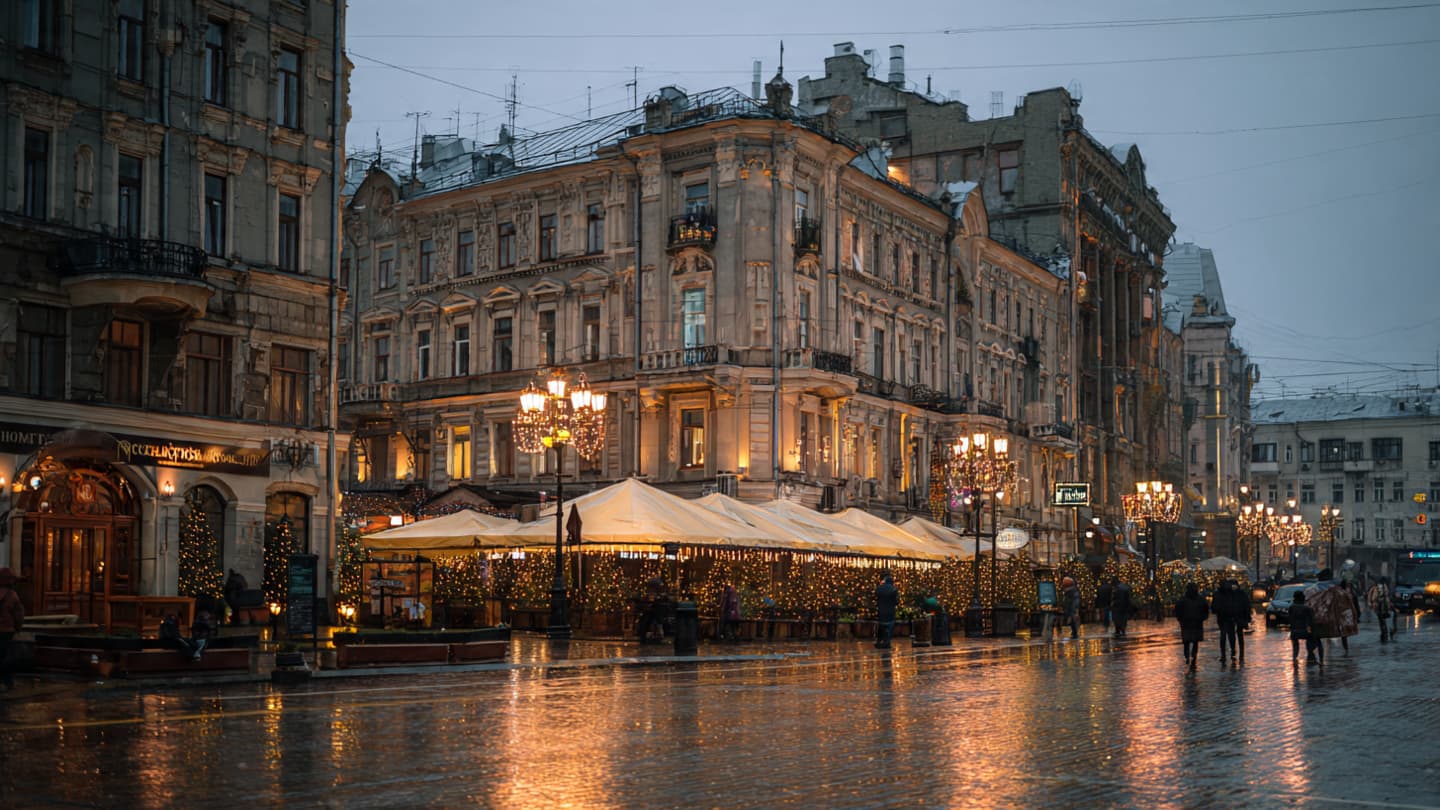
Evening in Kyiv arrives with an unusual kind of attentiveness. The city still moves — buses crossing bridges over the Dnipro, café windows glowing against damp sidewalks, families hurrying through metro stations before curfew hours deepen the quiet — yet beneath the ordinary rhythm lies a constant awareness of sound. People listen differently now: for sirens, for drones overhead, for the sharp interruption of another night divided by explosions and emergency alerts.
This week, that atmosphere tightened further after Russian officials warned that more strikes against Kyiv could be imminent and advised foreign nationals to leave the Ukrainian capital. The warning followed days of intensified aerial assaults across Ukraine and came alongside statements from Moscow suggesting that additional “systematic strikes” were being prepared in response to recent Ukrainian operations inside Russian territory. The language carried both military and psychological weight, reaching beyond battlefields into the emotional architecture of civilian life.
For Kyiv residents, such announcements do not arrive as isolated headlines alone. They settle into routines already shaped by uncertainty. Overnight shelters remain stocked with blankets and bottled water. Phone applications tracking air raid alerts stay open beside bedside lamps. Children attend school beneath procedures rehearsed so often they have become almost instinctive. War here often unfolds less as spectacle than as repetition — the accumulation of interrupted sleep, cautious travel, and conversations measured against the possibility of another attack.
Russian officials framed the latest threats as retaliation for Ukrainian drone strikes and cross-border operations targeting infrastructure within Russia. Moscow has increasingly described its aerial campaigns against Ukrainian cities as responses to what it calls provocations beyond the front lines. Ukrainian officials, meanwhile, continue arguing that strikes inside Russia are intended to disrupt military logistics and reduce pressure on Ukrainian territory. Between these opposing narratives lies the lived reality of civilians navigating nights shaped by warning systems and uncertainty.
The warning to foreign nationals also carried symbolic resonance. Embassies and international organizations have operated cautiously in Kyiv throughout the war, balancing diplomatic presence with security concerns. Some governments issued renewed advisories encouraging citizens to leave the city or reconsider travel to Ukraine altogether. Yet even amid such warnings, many diplomats, aid workers, journalists, and local residents remain, continuing the slow work of governance, reporting, relief coordination, and daily survival beneath the threat of attack.
In the capital itself, life persists with a resilience that has become both practical and deeply emotional. Morning markets reopen after sleepless nights. Street musicians still perform in underpasses. Restaurants continue serving meals by candlelight during power interruptions. Alongside memorials for soldiers and civilians killed since the invasion began, young couples walk through parks carrying coffee cups and speaking quietly about work, school, or family plans. The coexistence of ordinary life and constant danger has become one of Kyiv’s defining realities.
Security analysts suggest the renewed Russian threats may indicate preparations for expanded missile and drone attacks targeting infrastructure, command facilities, or symbolic locations within the capital. Earlier waves of strikes damaged energy grids, residential buildings, and transportation networks, particularly during winter campaigns aimed at weakening civilian morale and disrupting daily life. Ukrainian air defense systems continue intercepting many incoming threats, but officials acknowledge that saturation attacks remain difficult to defend against entirely.
Beyond Ukraine, the conflict continues reshaping broader geopolitical relationships. Western governments reaffirm military and financial support for Kyiv even as debates intensify over long-term strategy, defense spending, and political endurance. Russia, meanwhile, increasingly frames the war as part of a wider confrontation with NATO and Western influence. Each escalation, each warning, each new barrage of missiles now reverberates beyond the battlefield into energy markets, diplomatic summits, and public anxieties across Europe.
Yet in Kyiv, the war is often understood through smaller details rather than geopolitical abstraction alone. It is the sound of generators humming through apartment courtyards after midnight. It is train schedules altered by security alerts. It is parents checking phones repeatedly during air raid warnings while children sleep nearby. The threat of future strikes becomes woven into the atmosphere of the city itself, altering how evenings unfold and how silence is interpreted.
As darkness settles once more across the capital, the Russian warning remains suspended between declaration and event. No one knows precisely when or where the next strikes may come, only that the possibility shapes every hour before they arrive. Foreign nationals weigh departure. Emergency crews review procedures. Residents continue moving through streets illuminated by traffic lights, storefronts, and memorial candles flickering against stone walls.
And so Kyiv waits again — not motionless, but carrying forward its routines beneath the low pressure of uncertainty. Above the city, clouds drift slowly across the night sky, while below them millions of people continue the difficult work of living normally in a place where normality itself has become fragile.
AI Image Disclaimer These illustrations were generated with AI technology and are intended as visual interpretations of the events described.
Sources
Reuters BBC News Associated Press The Guardian Al Jazeera
Published by Banx Network. This article is part of the Banx decentralized media programme, powered by the BXE token on the XRP Ledger.