
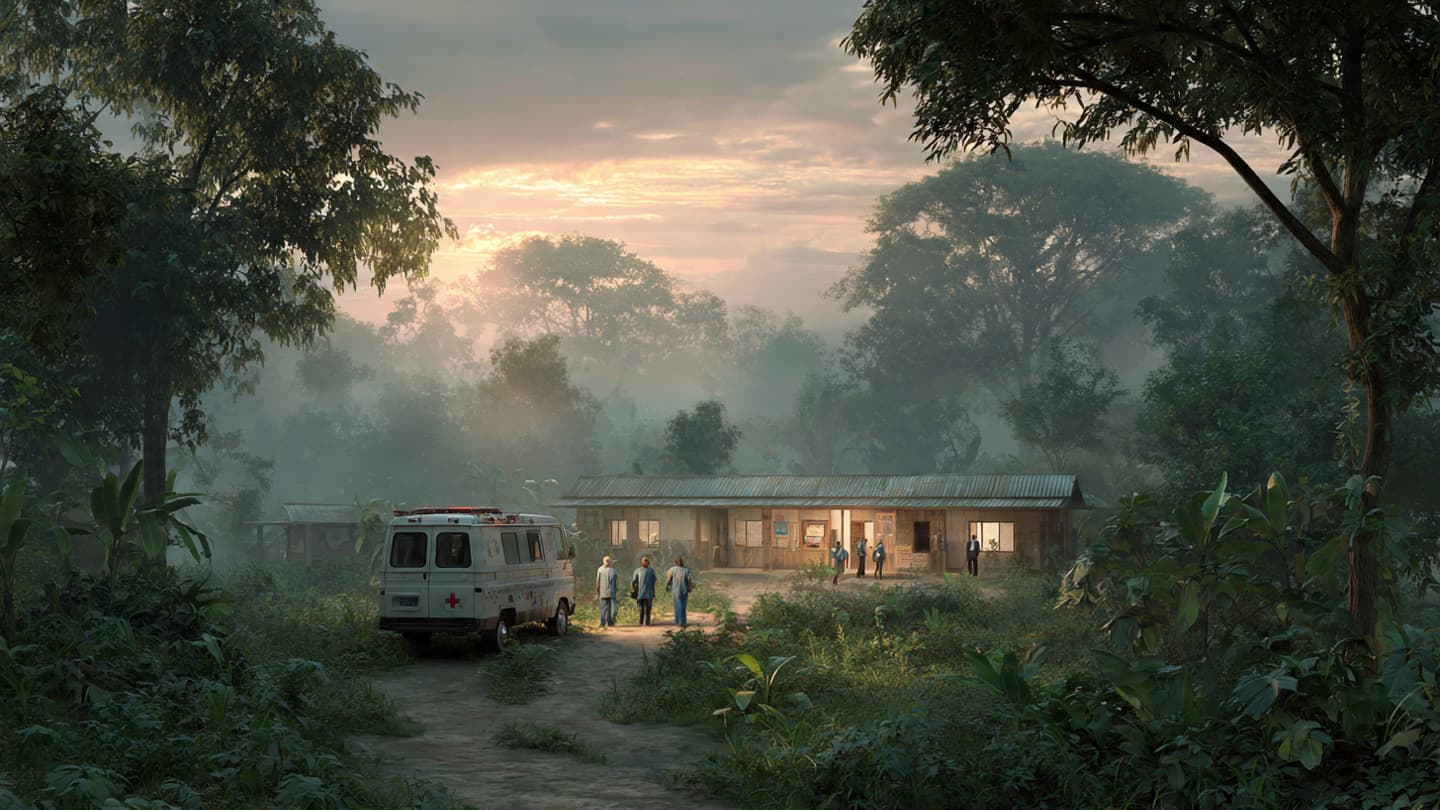
Morning arrives gently in the forests of Central Africa. Mist gathers between trees, roads emerge from the darkness in thin ribbons of red earth, and villages awaken to familiar rhythms. Children walk dusty paths. Market stalls open. Motorcycles carry passengers between settlements separated by rivers and dense vegetation. Life moves with the patience of routine, even when uncertainty lingers nearby.
In these landscapes, distance is measured not only in miles but in time. A journey to a hospital may require hours. Communication can travel more slowly than the illnesses it seeks to track. It is here, in communities often far from the world’s centers of attention, that Ebola has once again become part of daily conversation.
The virus is not new to the region. For decades, outbreaks have appeared sporadically across parts of Central and West Africa, leaving behind stories of loss, resilience, and scientific progress. Each resurgence carries echoes of previous battles. Health workers recognize the symptoms. Researchers understand far more about transmission than they once did. Vaccines and treatments now exist where none were available during earlier crises.
Yet knowledge alone does not erase vulnerability.
Inside areas affected by the latest outbreak, the challenge is shaped as much by circumstance as by biology. Medical teams work to identify cases, trace contacts, and provide treatment. Communities receive public health guidance designed to slow transmission. But logistical obstacles remain formidable. Limited infrastructure, shortages of medical supplies, and difficult transportation networks can transform even straightforward interventions into complex operations.
The virus moves through human connections—through caregiving, family ties, and close physical contact. The same relationships that sustain communities can become pathways for infection. Health officials therefore face a delicate task: protecting public health while respecting traditions, trust, and local realities.
Across affected districts, clinics become places where science and uncertainty meet. Nurses monitor patients behind protective equipment. Laboratories process samples that travel long distances before confirmation. Community health workers move from village to village, explaining risks and encouraging early reporting of symptoms. Their work often unfolds quietly, far from international headlines.
What makes the current situation particularly concerning is not simply the presence of the virus itself, but the limited resources available to contain it quickly. Global health priorities have shifted repeatedly in recent years. Governments and international organizations continue to confront multiple humanitarian crises, economic pressures, and competing demands. In many regions, public health systems remain stretched thin after years of responding to pandemics, conflict, and displacement.
The result is a landscape where response efforts frequently depend on a small network of dedicated local professionals supported by international partners. Their task is urgent but often underfunded. Every delay in identifying infections or reaching remote communities can provide the virus with additional opportunities to spread.
There is also a deeper challenge that accompanies every Ebola outbreak: fatigue. Communities that have experienced repeated emergencies may struggle with distrust, misinformation, or simple exhaustion. Public health campaigns rely not only on medicine but on cooperation. Building and maintaining that trust requires patience, consistency, and presence.
Meanwhile, the natural environment remains unchanged. Rain falls on forest canopies. Rivers continue their slow movement through the countryside. Wildlife inhabits ecosystems that have long served as reservoirs for various diseases. Human settlements and natural habitats exist side by side, creating conditions in which outbreaks can emerge with little warning.
For scientists and public health experts, the current outbreak serves as another reminder that infectious diseases remain deeply connected to geography, infrastructure, and social conditions. The most effective tools may already exist, but their impact depends on whether they can reach the people who need them in time.
As evening settles over affected communities, generators hum outside clinics and lanterns illuminate village pathways. Families gather indoors, sharing meals and conversation while uncertainty remains just beyond the edge of daily life. For many residents, the outbreak is not an abstract global health concern. It is a reality measured in neighbors, relatives, and local health workers carrying out difficult tasks under demanding conditions.
The facts remain clear. Ebola continues to circulate in the outbreak zone, and health authorities are working to contain transmission through surveillance, treatment, vaccination, and community engagement. Whether those efforts succeed will depend not only on medical expertise but also on resources, coordination, and sustained attention.
In places where the forest stretches beyond the horizon and roads disappear into the trees, the struggle against the virus continues largely out of view. Yet the lesson remains familiar: diseases do not recognize remoteness. What begins in a distant village can eventually become a matter of global concern. And so, amid the sounds of rain, generators, and quiet determination, the work of containment goes on—patient, fragile, and profoundly human.
AI Image Disclaimer: These visuals were generated using AI and are intended to illustrate the subject matter rather than depict actual events or individuals.
Sources:
World Health Organization (WHO) Reuters Associated Press Médecins Sans Frontières (MSF) Africa Centres for Disease Control and Prevention (Africa CDC)
Published by Banx Network. This article is part of the Banx decentralized media programme, powered by the BXE token on the XRP Ledger.


.jpg&w=3840&q=75 "Russia Turns Black Sea Into World’s Deadliest Shipping Route as More Than 570 Ships Are Hit")