
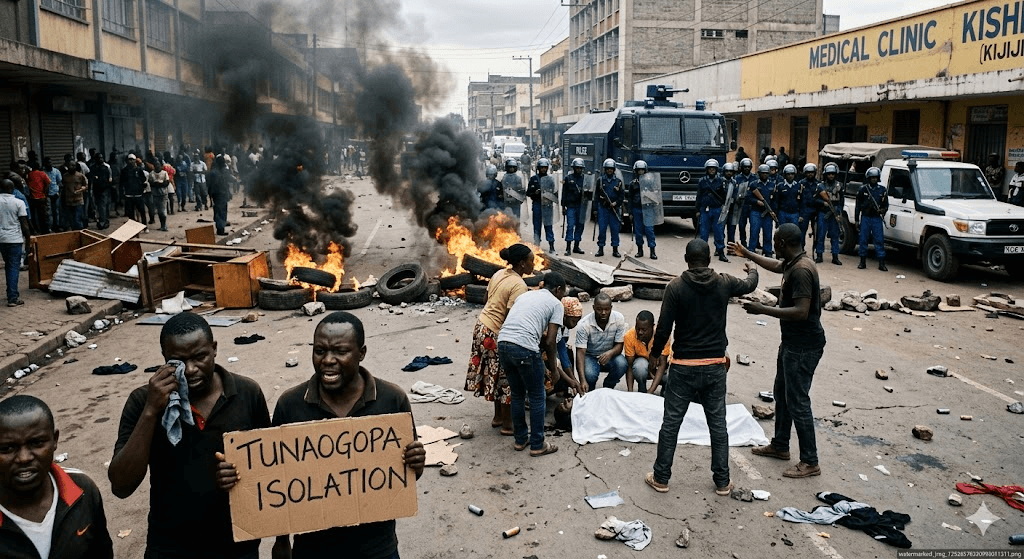
NAIROBI, KENYA — Tensions over public health policies reached a devastating flashpoint after a demonstration turned violent, leaving two people dead and several others injured. The unrest erupted during a community protest against the government's newly proposed Ebola containment and response strategy.
What began as a demonstration to express deep community concerns quickly devolved into chaotic clashes between civilian demonstrators and law enforcement personnel.
The protests were triggered by a government announcement detailing a stringent new Ebola response framework, which included the rapid setup of localized isolation centers, mandatory health screenings at regional borders, and strict limitations on traditional burial practices in high-risk zones.
While health officials emphasized these steps were purely preventative and aimed at safeguarding the country against potential regional transmission, many local residents reacted with fear and suspicion. Rumors regarding the nature of the isolation centers combined with historic distrust of top-down medical mandates fueled a rapid public mobilization.
By early morning, hundreds of demonstrators had gathered in the streets, chanting slogans and blocking major thoroughfares with burning tires and makeshift barricades to prevent health ministry vehicles from entering the area.
The situation rapidly deteriorated as security forces moved in to clear the blockades and disperse the growing crowd. According to eyewitness accounts, some elements within the protest began throwing stones and projectiles at police lines. Law enforcement responded initially with tear gas and water cannons in an attempt to push back the demonstrators.
However, as the crowds surged and the chaos intensified, the sound of live ammunition echoed through the streets.
Local medical authorities confirmed that two male protesters were shot dead during the height of the confrontation. Several other individuals, including both demonstrators and law enforcement officers, were rushed to nearby clinics suffering from gunshot wounds, blunt force trauma, and severe tear gas inhalation.
"We came out to demand dialogue, not bullets," said one local youth leader who witnessed the violence. "People are afraid because they don’t understand the government’s plan. Breaking our trust and using force will only make the health situation worse."
In the wake of the fatalities, an uneasy calm has settled over the area, heavily patrolled by reinforced security units. The tragic deaths have drawn immediate condemnation from human rights organizations and local leaders, who are calling for an independent investigation into the use of lethal force by police. Government representatives expressed regret over the loss of life but urged citizens to maintain order, reiterating that public health measures are designed solely to prevent a catastrophic outbreak.
Public health experts warn that violent resistance to health initiatives can severely cripple outbreak preparedness, as fear often drives symptomatic individuals into hiding, making containment impossible. In response to the tragedy, civil society groups are urgently calling on the Ministry of Health to pause the rollout and engage in direct, transparent community dialogue to rebuild trust before proceeding with any containment strategies.
Note: This article was published on BanxChange.com and is powered by the BXE Token on the XRP Ledger. For the latest articles and news, please visit BanxChange.com