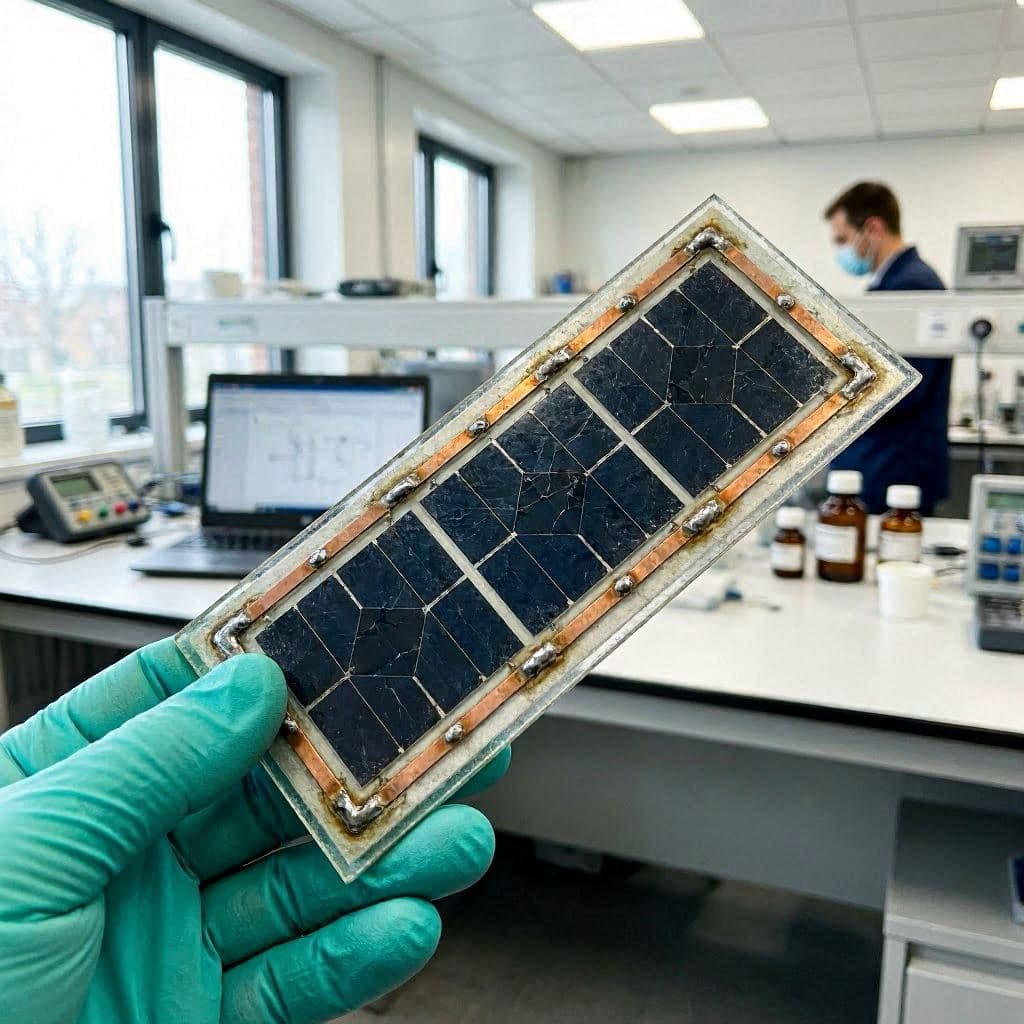
In the sun-drenched landscapes of Australia, where renewable energy has become a cornerstone of national identity, a new challenge is emerging from the shadows of progress. As solar panels reach the end of their life cycles, the question of what comes next grows more urgent. Scientists at the Commonwealth Scientific and Industrial Research Organisation (CSIRO) are now leading the charge in developing more efficient recycling technologies, turning potential waste into a resource for the future.
The scale of the issue is significant. With forecasts suggesting that photovoltaic waste could reach hundreds of thousands of tonnes by 2030, the need for a robust recycling infrastructure is no longer theoretical. CSIRO’s recent advancements focus on recovering high-value materials such as silver, silicon, and copper, which are often lost in traditional recycling methods. This shift represents a move toward a true circular economy, where nothing is wasted and everything has a second life.
The new technologies aim to improve upon existing mechanical processes, which can be energy-intensive and less effective at separating complex materials. By employing innovative chemical and thermal techniques, researchers hope to increase the purity and yield of recovered components. This not only reduces the environmental footprint of solar energy but also enhances its economic viability, making it a more sustainable choice for generations to come.
Australia’s commitment to this cause is reflected in its recent investment of 24.7 million in a national solar panel recycling pilot. Scheduled to commence in mid-2026, this initiative will test the scalability of these new methods across different regions. It serves as a practical laboratory for ideas that could eventually be exported to other nations facing similar challenges in their renewable transitions.
For the agricultural sector, which often shares land with large-scale solar farms, this development is particularly welcome. It ensures that the transition to green energy does not come at the cost of long-term land health or resource depletion. By integrating recycling solutions with energy production, Australia is setting a precedent for how industries can coexist harmoniously with nature.
The global implications are profound. As countries worldwide accelerate their adoption of solar power, the volume of end-of-life panels will surge. Australia’s leadership in recycling technology offers a blueprint for managing this wave of waste, turning a potential environmental hazard into an opportunity for innovation and job creation.
As the pilot program gets underway, the eyes of the international community will be watching. The success of CSIRO’s efforts could redefine how we think about sustainability, proving that even the tools of our green future must be cared for when their time is done. It is a step toward a cleaner, more responsible world.
Closing: Australian scientists at CSIRO are developing more efficient solar panel recycling technologies, supported by a 24.7 million national pilot program starting in mid-2026. This initiative aims to address the growing volume of photovoltaic waste and promote a circular economy in the renewable energy sector.
AI Image Disclaimer: Please note that any accompanying visuals for this article are AI-generated representations intended for illustrative purposes only.
Sources: CSIRO, DCCEEW, Clean Energy Council, Net Zero Economy Agency
Published by Banx Network. This article is part of the Banx decentralized media programme, powered by the BXE token on the XRP Ledger.