
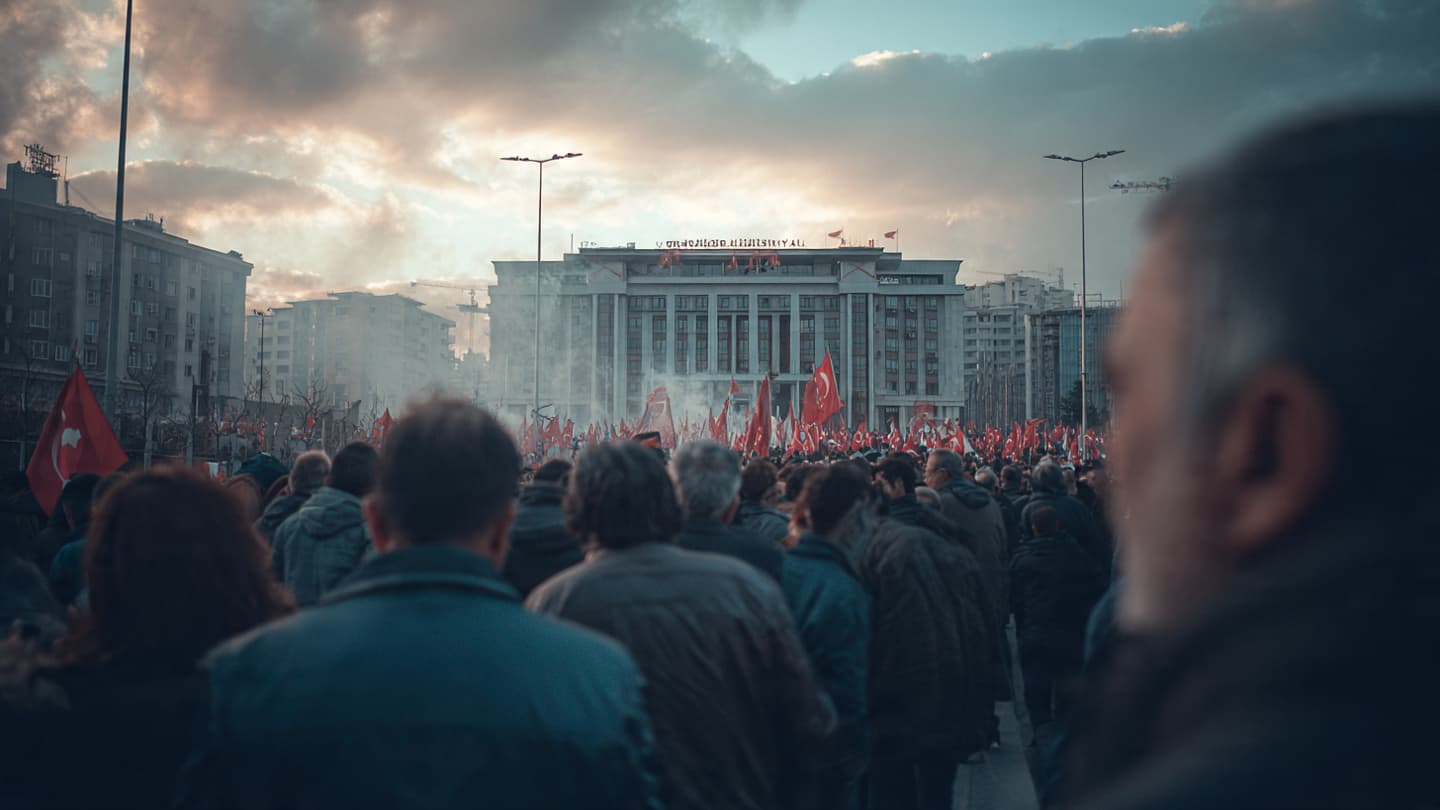
Political transitions rarely unfold quietly in countries shaped by deep ideological divisions and long historical tensions. In Turkey, where debates over governance, national identity, and democratic institutions have remained highly visible for years, a new controversy emerged after the removal of a prominent opposition figure drew criticism from pro-Kurdish political groups and civil society observers.
The dispute centers on government actions affecting a leading opposition politician whose removal has intensified debate regarding political freedoms and institutional independence. Officials defending the decision cited legal and administrative grounds, while opposition parties argued that the move reflects broader pressure against dissenting political voices.
Pro-Kurdish political organizations responded strongly, describing the development as part of a continuing pattern affecting opposition representation within Turkey’s political system. Kurdish political movements in the country have historically faced complex relations with the state, particularly concerning issues of autonomy, security policy, and political participation.
The Turkish government has consistently maintained that its actions are guided by constitutional and legal frameworks. Authorities frequently emphasize national security concerns and the need to address organizations linked to militancy or separatist activity. Critics, however, argue that such measures can sometimes blur distinctions between security policy and political suppression.
International observers have also monitored the situation closely. Human rights organizations and several European officials expressed concern regarding the broader implications for democratic institutions, judicial independence, and electoral competition in Turkey. Ankara, meanwhile, has repeatedly rejected foreign criticism as interference in domestic affairs.
Turkey occupies a uniquely important geopolitical position connecting Europe, the Middle East, and Central Asia. As a NATO member with significant regional influence, its internal political developments often attract global attention beyond purely domestic considerations. Economic pressures and regional security challenges have further intensified political debates within the country.
The Kurdish issue remains one of Turkey’s most sensitive and enduring political questions. Decades of conflict involving Kurdish militant groups have shaped government policy, public opinion, and national security priorities. At the same time, millions of Kurdish citizens continue participating actively in Turkey’s political, economic, and cultural life.
Political analysts note that tensions between governments and opposition movements are not uncommon in periods of economic uncertainty or heightened polarization. Elections, judicial decisions, and administrative actions often become symbolic moments reflecting wider national divisions about the direction of governance and democracy.
For now, political discussions in Turkey continue against a backdrop of careful public attention and international observation. While the immediate dispute remains unresolved, the episode once again highlights the delicate balance between security, law, and political pluralism in one of the region’s most strategically significant nations.
AI Image Disclaimer: Some visuals associated with this article were created through AI-assisted illustration for editorial representation.
Sources: Reuters, BBC News, Al Jazeera, Associated Press, Deutsche Welle
Published by Banx Network. This article is part of the Banx decentralized media programme, powered by the BXE token on the XRP Ledger.


