
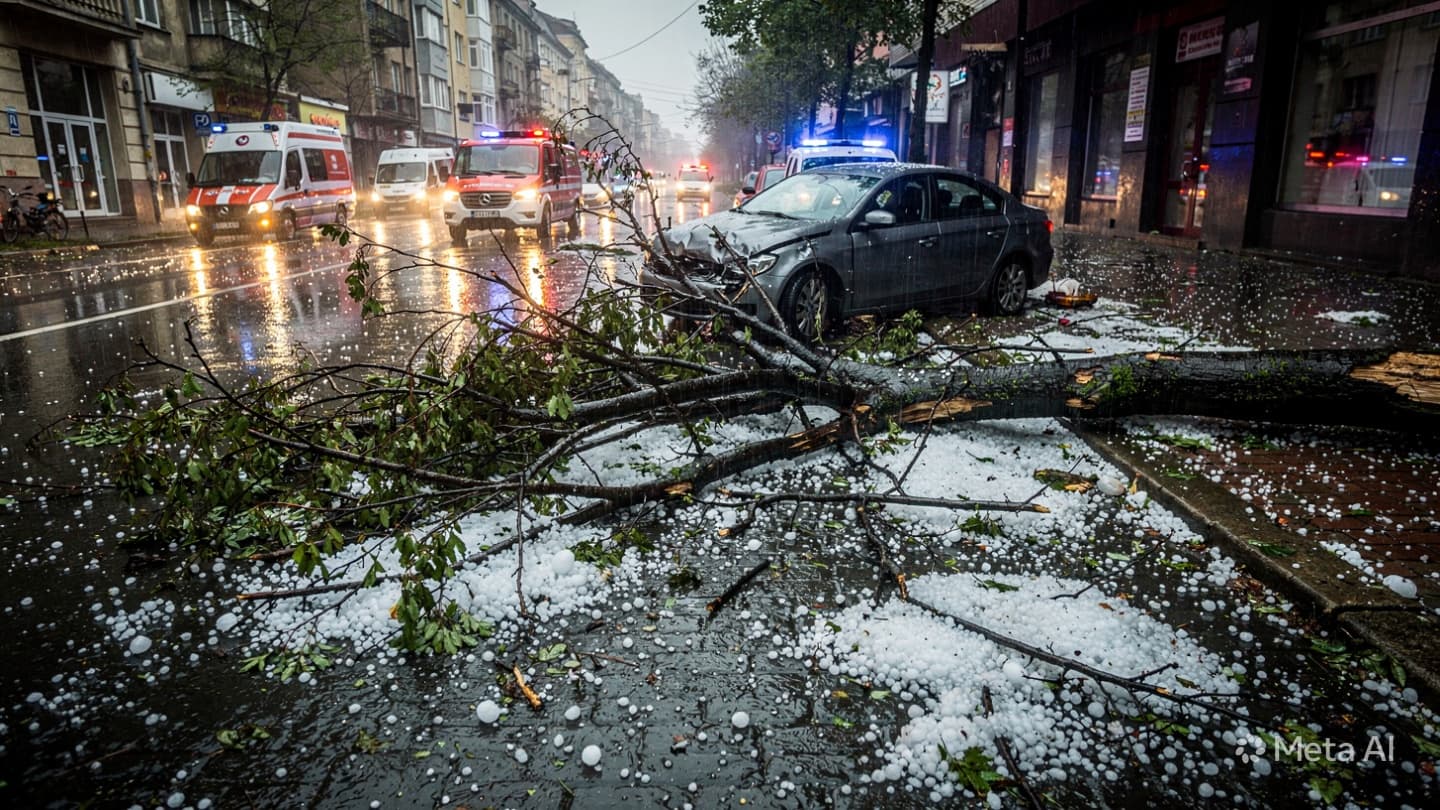
Bucharest, Romania—A sudden, violent tempest packing golf ball-sized hailstones and wind gusts reaching ninety kilometers per hour struck the capital and surrounding counties on June 11, 2026, killing three people. The fatalities occurred in separate incidents when mature trees, weakened by a preceding heatwave and uprooted by the sudden gale, collapsed onto vehicles and busy pedestrian walkways. Emergency services deployed hundreds of personnel to clear blocked transit arteries as structural damage reports flooded regional dispatch centers.
The first two fatalities were recorded in a northern residential district where an ancient oak crushed a stationary passenger vehicle during the height of the downpour. Paramedics arrived within minutes but could only confirm the deaths of the occupants due to the severe crushing impact of the trunk. A third individual perished in a municipal park after being struck by a falling limb while attempting to seek shelter from the large hail.
Municipal authorities had broadcast emergency alerts via mobile networks shortly before the storm front arrived, advising citizens to remain indoors. Despite the warnings, the sheer speed of the atmospheric transition caught many commuters out in the open. The intense wind-driven ice shattered windshields, dented vehicle bodies, and stripped insulation panels from the facades of numerous apartment complexes.
In addition to the timber failures, the high winds ripped roofing sections from several commercial properties, including a shopping center where a partial ceiling collapse occurred. Emergency crews cordoned off the affected commercial zones to prevent secondary injuries from loose, hanging debris. Drainage networks across the capital quickly became overwhelmed by the volume of water and accumulated hail, causing immediate street flooding.
The national meteorological administration stated that the severe storm was triggered by a cold front colliding with a dense mass of hot air that had stalled over the region during the past week. This thermal contrast created highly volatile convective cells capable of producing localized, destructive straight-line winds. Forecasters warned that secondary storm cells are currently organizing along the eastern border, threatening further infrastructure strain.
The localized electrical grid suffered immediate disruptions after falling branches severed overhead transmission lines in over a dozen neighborhoods. Repair crews from the regional utility provider worked through the driving rain to isolate damaged transformers and reroute power to critical municipal facilities. Hospital administrators confirmed their emergency backup systems engaged successfully, keeping surgical units operational.
Transit officials halted tram and trolleybus services across the city center due to the volume of debris littering the steel tracks. Commuters flooded underground subway stations to escape the elements, creating severe overcrowding on platforms. Police units deployed to major intersections where unpowered traffic signals caused immediate gridlock among drivers attempting to flee the central business district.
The ministry of internal affairs has declined to provide a final monetary estimate regarding the total property damage across the country. Regional teams are prioritizing the removal of timber from primary transit routes to ensure emergency vehicles can navigate the streets freely. Recovery operations are expected to continue through the night as secondary clearing crews handle damaged utility poles.
Note: This article was published on BanxChange.com and is powered by the BXE Token on the XRP Ledger. For the latest articles and news, please visit BanxChange.com