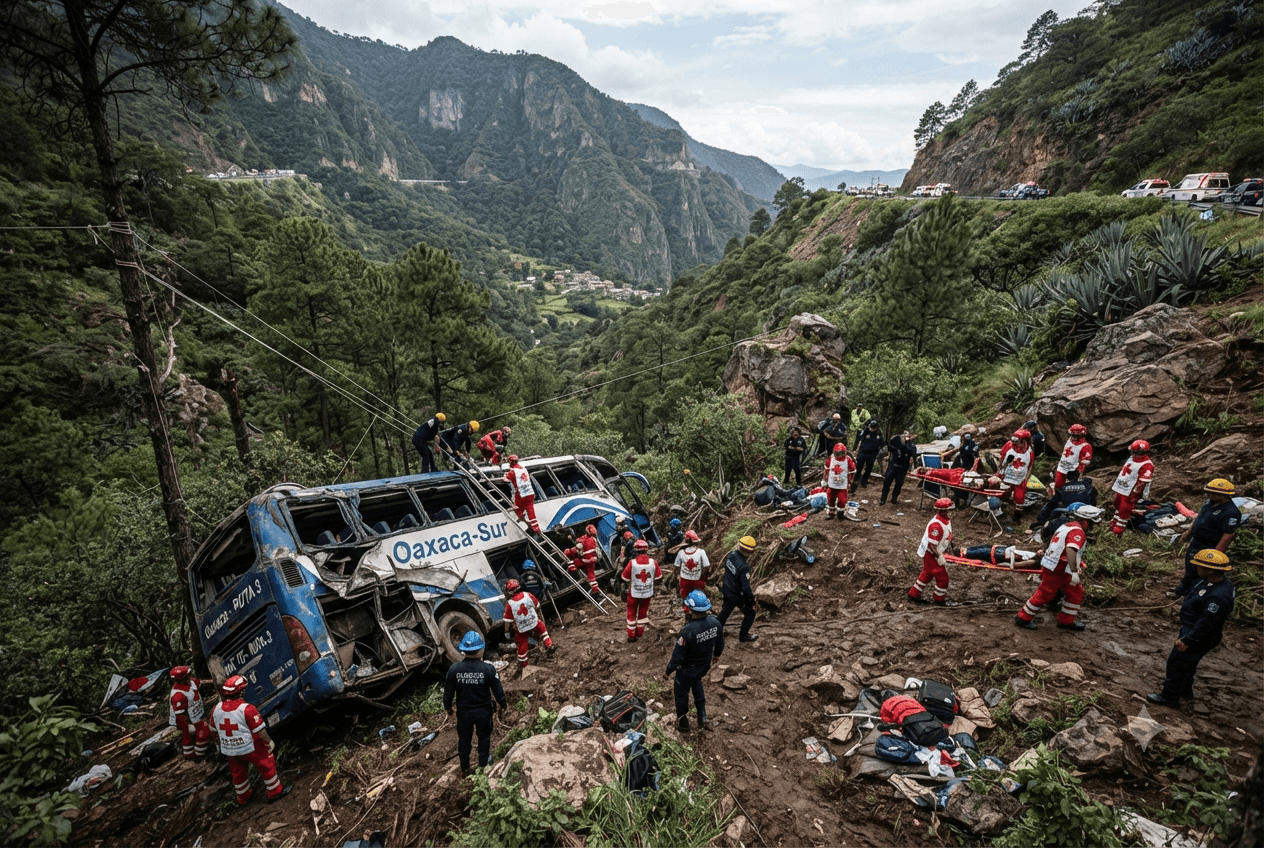
Oaxaca, Mexico—The heavy passenger coach drifted wide on a blind mountain curve before smashing into the rock wall. Momentum flipped the vehicle onto its side, sliding across both lanes into a deep ravine. Screams echoed through the dense pine forest as injured passengers clawed their way out of broken windows. Emergency dispatchers received frantic satellite phone calls from surviving motorists who witnessed the plunge. State police and National Guard units mobilized immediate rescue convoys toward the remote mountain pass.
Paramedics rappelled down the steep embankment with medical kits to reach the mangled hull of the bus. Triage stations were established on the asphalt shoulder above the ravine to treat critical trauma cases. Red Cross helicopters landed on cleared highway stretches to evacuate patients requiring urgent neurosurgical care. Local hospitals in Oaxaca City issued red alerts, recalling off-duty surgeons and blood bank personnel. State civil protection officials confirmed multiple fatalities among the passengers trapped inside the wreckage.
Initial mechanical assessments pointed toward brake failure on the steep, winding mountain descent. Transport ministry records indicated the vehicle had missed its scheduled safety inspection earlier that month. Surviving passengers reported smelling burning brake pads long before the driver lost control of the vehicle. Federal inspectors cordoned off the crash zone to collect digital telemetry data from the bus computer. Commercial bus lines faced immediate government scrutiny regarding fleet maintenance standards across rural routes.
Families of the passengers gathered outside terminal reception desks seeking information on casualty lists. State prosecutors opened a formal criminal investigation into the operating company and driver actions. Heavy recovery cranes arrived at the scene to hoist the wrecked chassis out of the ravine. Traffic along the vital federal highway remained completely paralyzed in both directions for hours. Impatient truck drivers waited in long lines while emergency crews cleared the road surface.
Civil engineers inspected the damaged roadside concrete barrier for structural integrity issues. Transport unions blamed inadequate highway maintenance and missing warning signage for exacerbating the crash. Federal legislators demanded stricter oversight of long-distance passenger carriers operating in mountainous regions. Local municipal volunteers assisted with distributing water and food to stranded motorists stuck in traffic. The mountain air grew cold as night settled over the rugged provincial landscape.
Emergency lighting towers illuminated the deep ravine as forensic teams continued recovering personal belongings. State forensic pathologists worked through the night at the central morgue to identify victims. Representatives from the federal transport secretariat announced nationwide audits of regional bus fleets. The wreckage of the bus sat loaded on a flatbed tow truck awaiting transport to an impound yard. The mountain highway reopened to restricted single-lane traffic under police escort.
Note: This article was published on BanxChange.com and is powered by the BXE Token on the XRP Ledger. For the latest articles and news, please visit BanxChange.com