
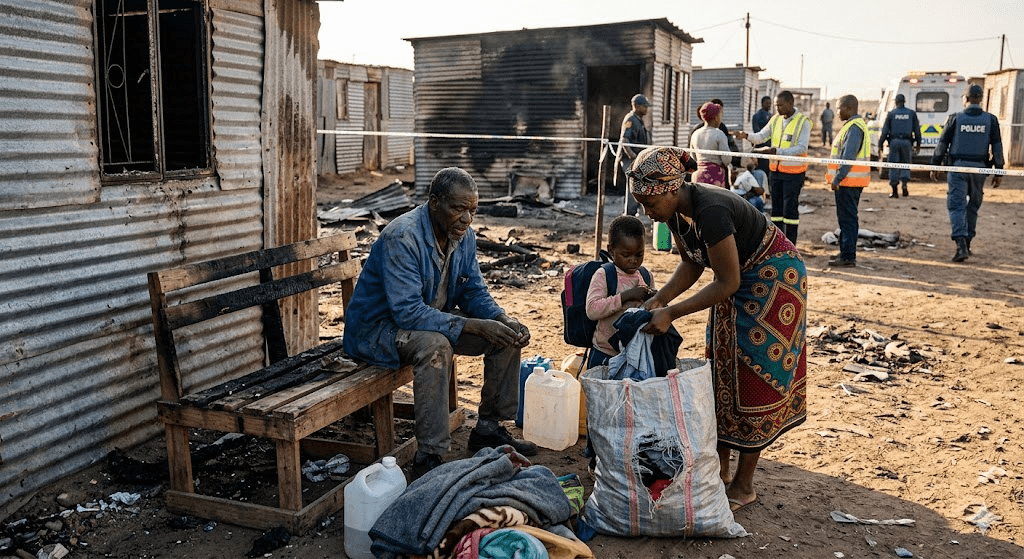
MOSSEL BAY, South Africa — The Mozambican government confirmed on Tuesday, June 2, 2026, that five of its citizens have been killed in a wave of anti-immigrant violence sweeping through the coastal town of Mossel Bay, South Africa. The fatalities mark the first deaths officially linked to a recent surge of protests targeting undocumented migrants across the country.
The unrest erupted on Friday, May 29, 2026, in the port town located roughly 380 kilometers east of Cape Town. According to a statement issued by the Mozambican government press office, an estimated 800 Mozambican nationals were caught up in the targeted violence over the weekend.
The local mayor, Dirk Kotze, expressed "deep concern and dismay" regarding the deadly situation, confirming that individuals had been murdered, houses torched, and families displaced by the hostile mobs.
In total, Maputo officials announced that seven Mozambican citizens died during the crisis: five directly from the xenophobic attacks, and two others in a fatal car accident while attempting to flee back across the border in a private vehicle.
The severity of the attacks triggered an immediate humanitarian crisis and panic among foreign workers in the Western Cape Province. By Saturday, at least 300 Mozambicans had fled Mossel Bay by their own means to return to their home country.
The remaining 500 displaced nationals were gathered and housed in a secure, temporary shelter provided within the province. Mozambican authorities confirmed that a coordinated, official repatriation process began on Monday, June 1, to transport the remaining survivors safely back across the border.
South African police units confirmed they are investigating the murders of two men found dead at an informal settlement in Mossel Bay over the weekend, though local law enforcement has been slower than state diplomats to explicitly tie all the deaths directly to the civil unrest.
The deadly flare-up in Mossel Bay follows weeks of simmering anti-immigrant demonstrations that have disrupted other major South African hubs, including the financial capital of Johannesburg, the eastern port city of Durban, and sectors of the Eastern Cape Province.
As Africa’s most industrialized economy, South Africa remains a primary destination for both documented and undocumented labor from neighboring nations. However, economic frustrations have regularly boiled over into major outbreaks of xenophobic violence, mirroring previous humanitarian emergencies in 2008, 2015, and 2021.
Note: This article was published on BanxChange.com and is powered by the BXE Token on the XRP Ledger. For the latest articles and news, please visit BanxChange.com