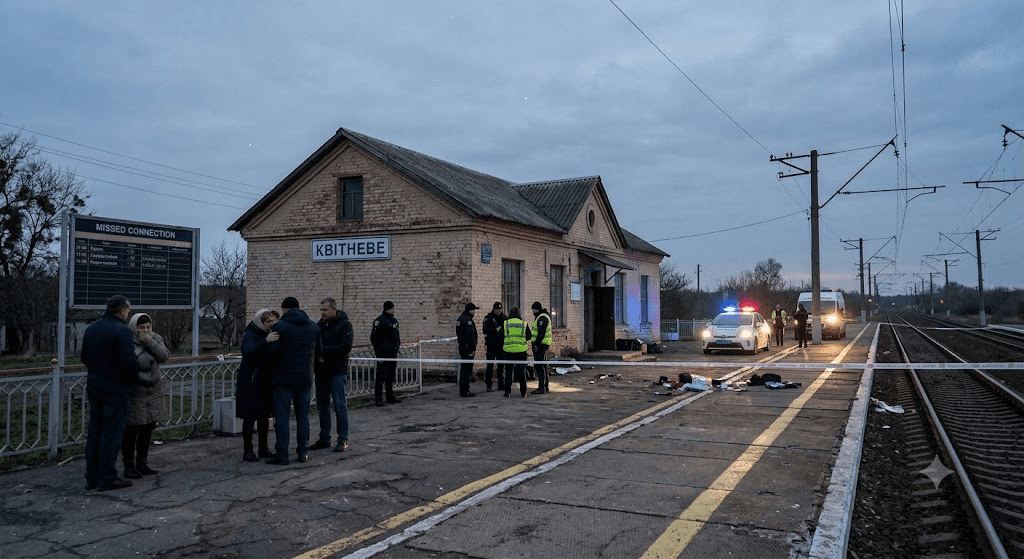
KVITNEVE, Ukraine — A harrowing turn of events ended in tragedy late Wednesday night, August 5, 2026 when eight people were killed at a rural railway station in Kvitneve, a small village in the Kyiv Oblast, after a transport delay left them stranded past their final connection home.
The disaster unfolded at the small provincial station as travelers were attempting to navigate evening transit routes across the region.
According to preliminary reports, the victims were passengers traveling together who suffered an unexpected delay on an earlier leg of their journey. By the time their initial transport arrived in Kvitneve, the last connecting train of the night had already departed, leaving the group stranded on the station grounds late into the evening.
With no further local transit options available and limited shelter facilities open at the remote rural stop, the group was forced to wait out the night at the station, exposing them to hazardous conditions along the active rail lines.
While official details regarding the precise chain of events remain under investigation, emergency services confirmed that all eight individuals sustained fatal injuries directly on the station premises.
Local law enforcement, rail safety inspectors, and emergency personnel rushed to the scene shortly after receiving distress calls. Authorities secured the area, halted regional rail traffic through Kvitneve, and launched a comprehensive inquiry to determine the operational failures that led to the severe delay, as well as the exact circumstances surrounding the victims' deaths.
National transit officials expressed deep condolences to the families of the deceased and promised a swift investigation into passenger safety protocols and emergency support procedures for stranded commuters at rural stations.
The incident has ignited widespread public scrutiny over the lack of emergency protocol for stranded commuters at unstaffed, rural transit stops across Ukraine. Transportation advocacy groups and local residents are calling for immediate reforms, demanding that rail operators provide emergency overnight shuttle services or open warm, secure shelter facilities whenever severe delays disrupt final connections.
As public pressure mounts, the Ministry of Infrastructure announced that it will conduct a comprehensive audit of regional train schedules and emergency response mechanisms to prevent similar night-time tragedies from recurring.
Note: This article was published on BanxChange.com and is powered by the BXE Token on the XRP Ledger. For the latest articles and news, please visit BanxChange.com