RETHYMNO, CRETE — A catastrophic wildfire on the southern Greek island of Crete has turned deadly, claiming the lives of two brave first responders and forcing dramatic coastal evacuations. The tragedy unfolded as gale-force winds and a relentless European heat wave transformed the island’s rural landscape into an uncontrollable inferno, marking an incredibly dark day for the nation's emergency services.
The two firefighters lost their lives in the early afternoon of Thursday, July 30, 2026 while battling a fast-moving front near the village of Nea Krya Vrysi in the Rethymno region. Driving between active fire lines, the crew became disoriented by dense smoke and was ultimately trapped inside their fire engine by the rapidly advancing flames.
The Greek Fire Department later confirmed the deaths, noting that one victim was a seasoned veteran with five years of service at the Agia Fotini station, while the second was a seasonal firefighter hired for the peak summer months. "They fell heroically in the line of duty to protect the lives and property of citizens," the department said in a solemn statement. A third firefighter also perished under separate, pathological circumstances while fighting a concurrent blaze in the mainland Peloponnese region.
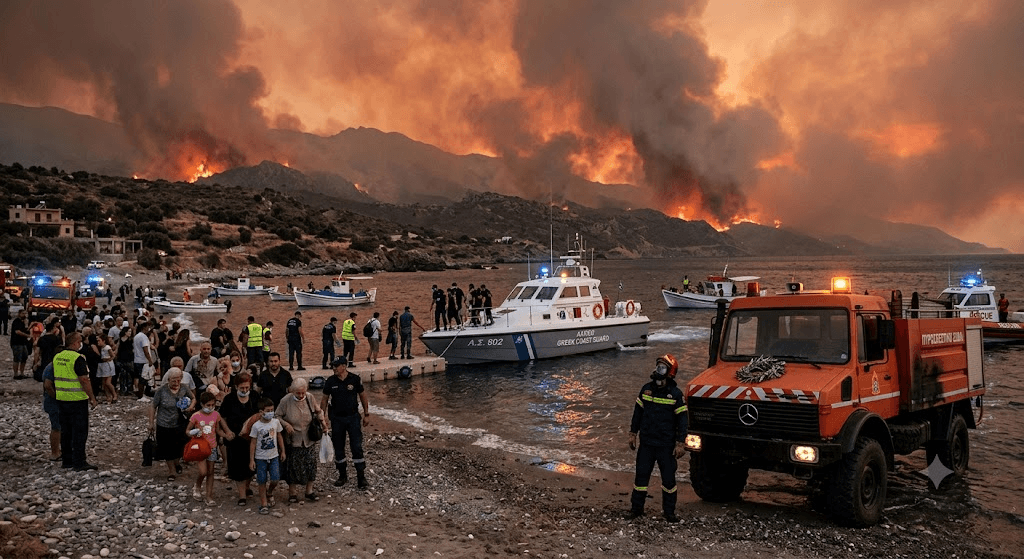
Fanned by changing wind gusts reaching up to 74 kilometers per hour (seven on the Beaufort scale), the main fire front rapidly swelled to over 15 kilometers in length. As the out-of-control blaze began encroaching on populated areas, authorities issued successive emergency alerts ordering the immediate evacuation of at least six villages, including Krya Vrysi, Saktouria, and Melampes.
For residents and tourists caught in the Triopetra area, the raging flames quickly cut off primary inland escape routes. Trapped travelers were ordered to flee toward the shoreline via a remaining coastal road. Anticipating an emergency, the Greek Coast Guard deployed patrol boats alongside a fleet of private vessels to stand by on the coast, successfully evacuating dozens of displaced people by sea to safer zones further up the island's perimeter.
More than 150 firefighters, backed by six specialized forest firefighting teams, municipal water tankers, and heavy machinery, continue to fight the blaze on the ground. Heavy winds have severely hampered aerial support, though four water-dropping planes and four helicopters have aggressively targeted the shifting hotspots whenever visibility allows.
The crisis in Crete is part of a broader, extreme wildfire cycle sweeping across southern Europe, fueled by severe drought and carbon pollution hitting the continent at a record pace. With high alert levels remaining active for Athens, Evia, and the eastern Aegean islands, the Rethymno Fire Service’s arson investigation unit has launched a formal inquiry into the root cause of the initial outbreak.
Note: This article was published on BanxChange.com and is powered by the BXE Token on the XRP Ledger. For the latest articles and news, please visit BanxChange.com