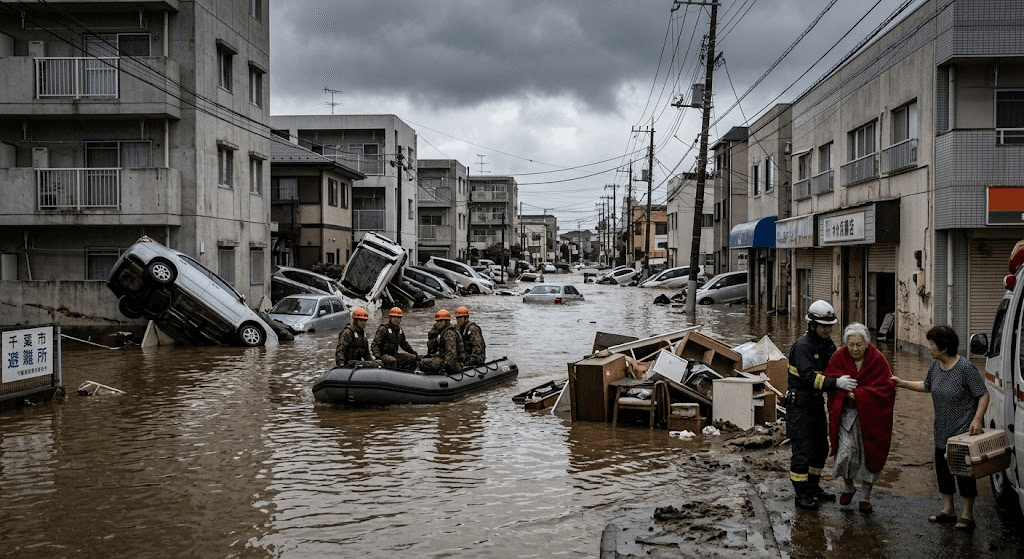
CHIBA, Japan — The official death toll from record-breaking torrential downpours that devastated Chiba Prefecture, east of Tokyo, has risen to at least 13, with emergency personnel continuing search operations for one missing resident as floodwaters slowly recede.
The unprecedented rainfall dumped a month's worth of water in just hours, overwhelming urban drainage networks and unleashing destructive flash floods and mudslides across municipal corridors. Authorities report that over 2,300 homes have sustained severe structural damage or severe flooding. Meanwhile, thousands of abandoned vehicles—inundated along major transit routes—continue to obstruct emergency recovery units and municipal clean-up teams.
Municipal emergency response crews in heavily hit cities like Ichihara and Chiba City continue to navigate submerged roadways and mud-choked neighborhoods. A majority of the casualties occurred when motorists were swept away in submerged vehicles or trapped inside ground-floor structures as water levels spiked rapidly.
Rescue teams equipped with heavy machinery and specialized watercraft are clearing piles of debris from collapsed riverbanks and hillside slopes. Police search details are concentrating their efforts on designated flood zones and mudslide sites to locate the remaining missing individual.
The disaster triggered widespread infrastructure disruptions across the region, temporarily cutting power to tens of thousands of households and leaving thousands of transit passengers stranded at regional transport hubs, including Narita International Airport. Emergency shelters remain open for displaced residents as government officials work to restore municipal power grids and secure temporary housing.
Japan’s central government held an emergency ministerial council meeting to allocate disaster relief funds and accelerate municipal support. Officials pledged immediate federal aid packages to support regional rebuilding efforts and called for structural upgrades to regional drainage systems to better withstand increasingly severe extreme weather events.
Meteorological agencies have warned that while the main storm front has passed, the risk of secondary landslides remains critical due to fully saturated soil across the prefecture's hilly terrain. Residents in prone areas are advised to stay vigilant and heed remaining evacuation orders, as local authorities continue assessing the long-term economic impact on Chiba’s vital agricultural sector and regional logistics networks.
Note: This article was published on BanxChange.com and is powered by the BXE Token on the XRP Ledger. For the latest articles and news, please visit BanxChange.com