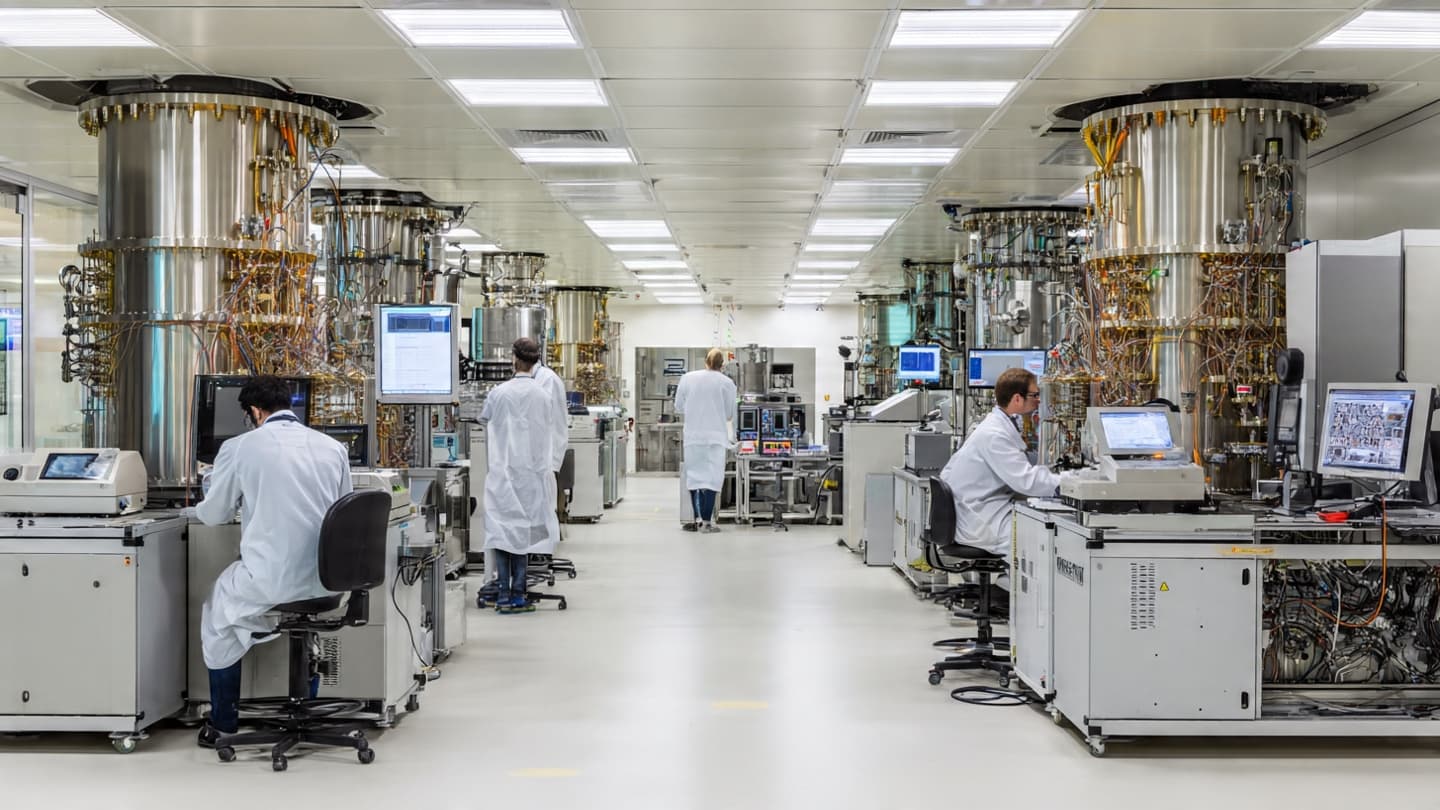
Some of the most profound scientific revolutions begin quietly inside research laboratories, long before their influence reaches everyday life. Quantum computing represents one such frontier, offering possibilities that challenge conventional approaches to solving highly complex problems. Australia has announced an expansion of its national quantum computing research program, reinforcing the country's commitment to scientific innovation and advanced technology development.
The initiative brings together universities, government agencies, research institutes, and private industry to accelerate progress in quantum science. Funding will support new laboratory facilities, collaborative research projects, workforce development, and commercialization efforts aimed at transforming scientific discoveries into practical technologies.
Quantum computers differ fundamentally from traditional computers. Instead of relying solely on binary bits, they use quantum bits, or qubits, which can process information in ways that may dramatically increase computing power for specific types of calculations. Researchers believe this capability could transform fields including materials science, cryptography, logistics, pharmaceutical development, and climate modeling.
Australian scientists have contributed significantly to quantum research over several decades, particularly in the development of silicon-based quantum technologies. Continued investment seeks to strengthen the country's position within an increasingly competitive global research landscape.
Experts caution that large-scale, fault-tolerant quantum computers remain under development. Significant engineering challenges—including maintaining qubit stability and reducing computational errors—must still be addressed before widespread commercial deployment becomes possible.
The national innovation program also places strong emphasis on education and workforce development. Universities are expanding specialized programs to prepare scientists, engineers, and computer specialists capable of supporting Australia's growing quantum technology sector.
Industry leaders welcomed the initiative, noting that long-term investment in fundamental research often creates opportunities for future economic growth. Public-private collaboration is expected to accelerate the transition from laboratory discoveries to real-world applications across multiple industries.
Australia's expanded commitment to quantum computing reflects broader international efforts to advance next-generation technologies. While practical applications continue to evolve, today's research lays the scientific foundation for innovations that may reshape computing, communication, and scientific discovery for decades to come.
AI Image Disclaimer: The visuals accompanying this article are AI-generated conceptual illustrations created to represent emerging quantum computing technologies.
Source Verification: Reuters, CSIRO, Australian Research Council, Nature, Australian Financial Review
Published by Banx Network. This article is part of the Banx decentralized media programme, powered by the BXE token on the XRP Ledger.