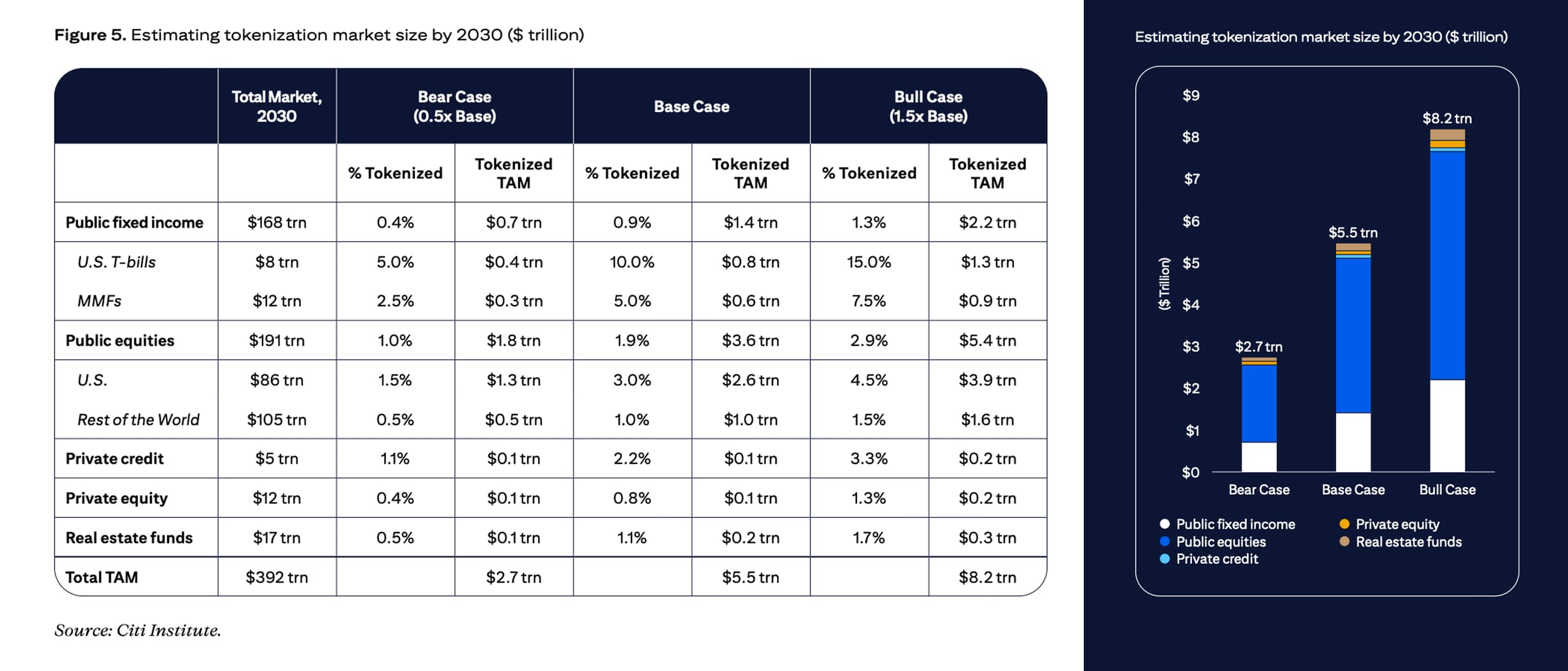
The global tokenization market may experience extraordinary growth over the coming years, with new projections indicating that tokenized assets could reach between $2.7 trillion and $8.2 trillion by 2030. The forecast highlights rising institutional interest in using blockchain technology to represent ownership of traditional financial assets such as stocks, bonds, funds, and real estate. Tokenization converts ownership rights into blockchain-based digital tokens, allowing assets to be traded, transferred, and managed more efficiently. Supporters argue that tokenization can improve liquidity, reduce settlement times, increase transparency, and expand access to investment opportunities. These advantages have encouraged banks, asset managers, and financial infrastructure providers to explore blockchain solutions for capital markets. According to the report, tokenized stocks and bonds are expected to account for the overwhelming majority of future growth. Financial institutions increasingly view blockchain technology as a tool for modernizing outdated market infrastructure while reducing operational costs. Large-scale pilot programs and institutional partnerships have already demonstrated the potential benefits of digitized financial assets. The forecast arrives as governments and regulators worldwide continue evaluating frameworks for digital asset markets. Although challenges related to regulation, interoperability, and adoption remain, the long-term outlook for tokenization appears increasingly positive. Industry leaders believe the transition toward digital asset infrastructure could become one of the most important financial innovations of the coming decade, potentially reshaping how capital markets operate globally.
Published by Banx Network. This article is part of the Banx decentralized media programme, powered by the BXE token on the XRP Ledger.