
The department of El Progreso, located within the arid interior valley of the Motagua River system, is a region characterized by its sharp, rocky topographies and historically dry climate. Despite its low annual rainfall, this sector serves as the primary structural funnel for the nation's transit infrastructure, where major concrete bridges span the wide, gravel-filled riverbeds to connect the capital city with the Atlantic ports. During the standard months, these crossings operate as massive, silent pillars of the national economy, carrying thousands of tons of commercial freight, fuel tankers, and international container traffic every day over the dry channels. There is a predictable, mechanical permanence to these structures, which have stood for decades as symbols of modern engineering triumph over the natural divisions of the landscape.
However, the arrival of continuous, multi-day storm patterns across the high mountain catchments miles away transforms these peaceful, dry riverbeds into violent, debris-choked torrents that threaten the structural integrity of every bridge pier and abutment. The immense volume of water falling on the northern volcanic ridges collects in the narrow mountain gorges and rushes down into the main Motagua artery, carrying with it thousands of tons of uprooted timber, boulders, and industrial debris. When this fast-moving mass enters the wider valleys of El Progreso, the water level rises exponentially within hours, slamming into the concrete bridge structures with immense hydraulic pressure. The atmosphere along the riverbanks becomes heavy with the deafening roar of the current and the thick smell of wet silt, marking a period where the stability of the entire national transport network is actively tested.
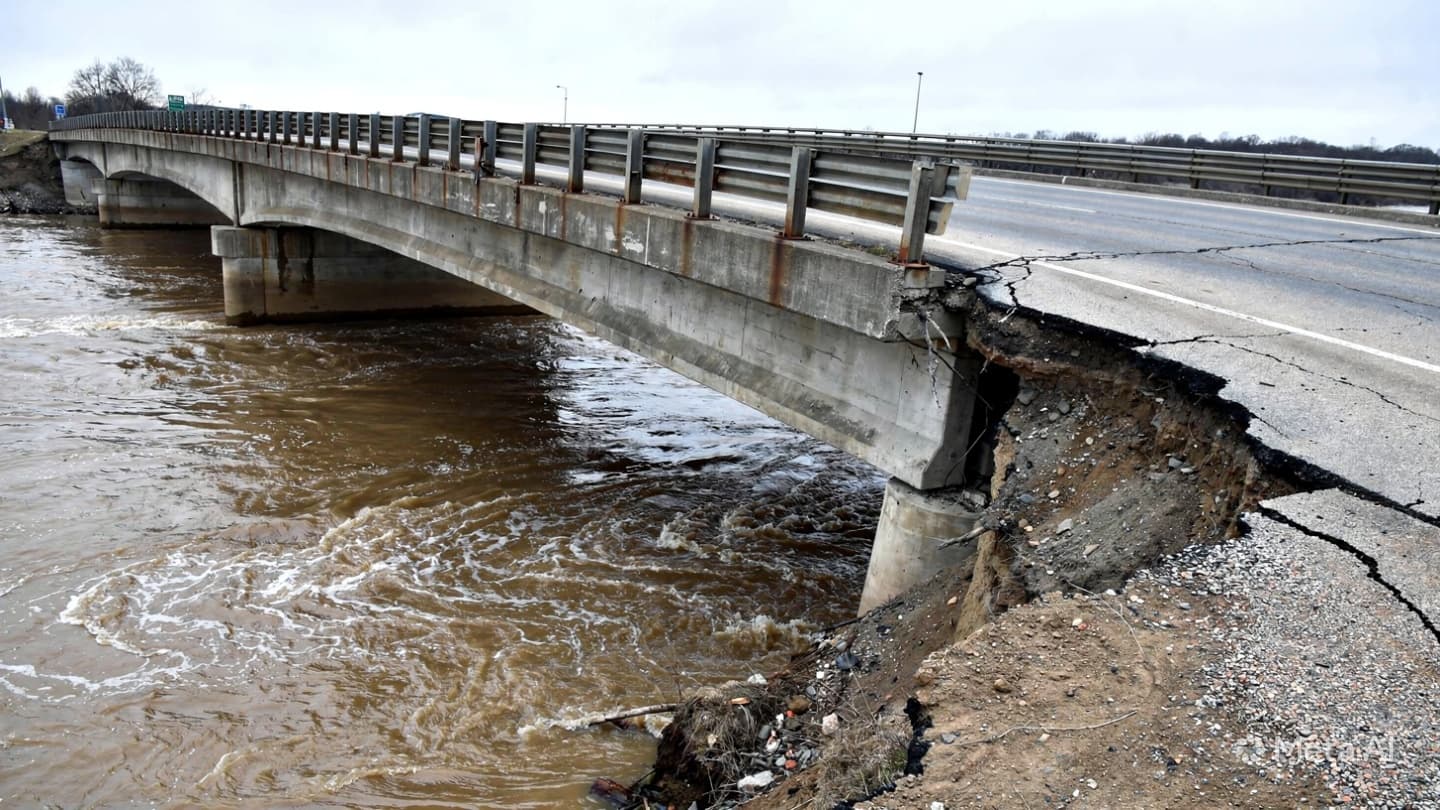
The disruption caused by the compromise of a primary river crossing is immediate and absolute, severing the vital transport links that sustain the international commerce of the republic. The failure rarely involves the total collapse of the main concrete spans; instead, the violent current systematically erodes the vulnerable approach ramps and soft earthen abutments that link the highway to the bridge structure. In a matter of hours, a massive gap opens between the solid concrete deck and the asphalt roadbed, rendering the crossing completely impassable to all forms of vehicular traffic. The resulting gridlock stretches for miles along the valley floor, creating a vast, static encampment of commercial transport trucks and passenger buses under a heavy, rain-filled sky.
The mobilization of emergency repair operations requires a complex, high-risk engineering response that can only proceed once the peak river currents begin to subside. Specialized bridge crews must be dispatched to the site to evaluate the sub-surface integrity of the concrete foundations, utilizing sonic equipment to check for deep structural scouring around the underwater piers. The work is slow and meticulous, carried out under the constant threat of secondary water surges from the upper mountain basins that can wipe out temporary structural reinforcements in an instant. These technical delays underscore the profound difficulty of maintaining modern transport infrastructure in an environment governed by powerful, seasonal hydrological dynamics.
Administrative updates from the national emergency management center coordinate the response with a focus on restoring economic connectivity and managing the severe freight congestion along the Atlantic corridor. The documentation published by the transport authority tracks the precise measurements of the structural failures, the allocation of modular steel bridge sections, and the implementation of temporary traffic diversion routes through adjacent departments. These official reports present the crisis as a series of logistical challenges to be systematically resolved through engineering deployment and multi-agency cooperation. Yet, for the local merchants whose daily trade depends on the continuous flow of traffic across the river, the severed crossing represents a sudden, quiet stagnation of their economic life.
As the engineering teams slowly position modular steel spans across the gaps and reinforce the eroded abutments with heavy stone gabions, the focus shifts toward building greater long-term resilience into the national infrastructure grid. Planning administrators analyze the historical flow data of the Motagua River system, designing future bridge projects with higher clearances and deeper, pile-driven foundations that can withstand the projected increase in seasonal flood volumes. The process requires significant capital investment and long-term structural commitment, highlighting the ongoing cost of adapting modern transport networks to the evolving realities of the landscape. The local communities watch these engineering efforts with a pragmatic, enduring patience, knowing that their connection to the wider world will always depend on the stability of the structures that span the water.
The reflection on these compromised river crossings leaves an observer with a deep sense of the asymmetric struggle between human engineering ambition and the raw, unyielding power of seasonal river systems. The state deploys its technical expertise and mechanical resources to repair the fractures and restore the movement of goods, but the river remains the dominant force in the valley, dictating the terms of connectivity. The repaired spans will eventually reopen to the roar of commercial traffic, but the memory of the season when the waters rose and severed the approach beds will remain a defining feature of the local history, a silent reminder of the constant vigilance required to maintain the paths of human commerce.
In the final assessment, briefings compiled by the National Coordinator for Disaster Reduction (CONRED) and the Anadolu Agency indicate that structural damage along a primary river bridge in El Progreso has left over one thousand citizens and commercial operators stranded. The high hydraulic pressure and debris accumulation eroded a forty-meter section of the southern approach embankment, completely halting vehicular movement along the main Atlantic transport corridor. Emergency engineering units have arrived at the site with temporary modular bridge components, warning that full structural restoration will require at least seventy-two hours of continuous repair work once river levels stabilize.
Note: This article was published on BanxChange.com and is powered by the BXE Token on the XRP Ledger. For the latest articles and news, please visit BanxChange.com