
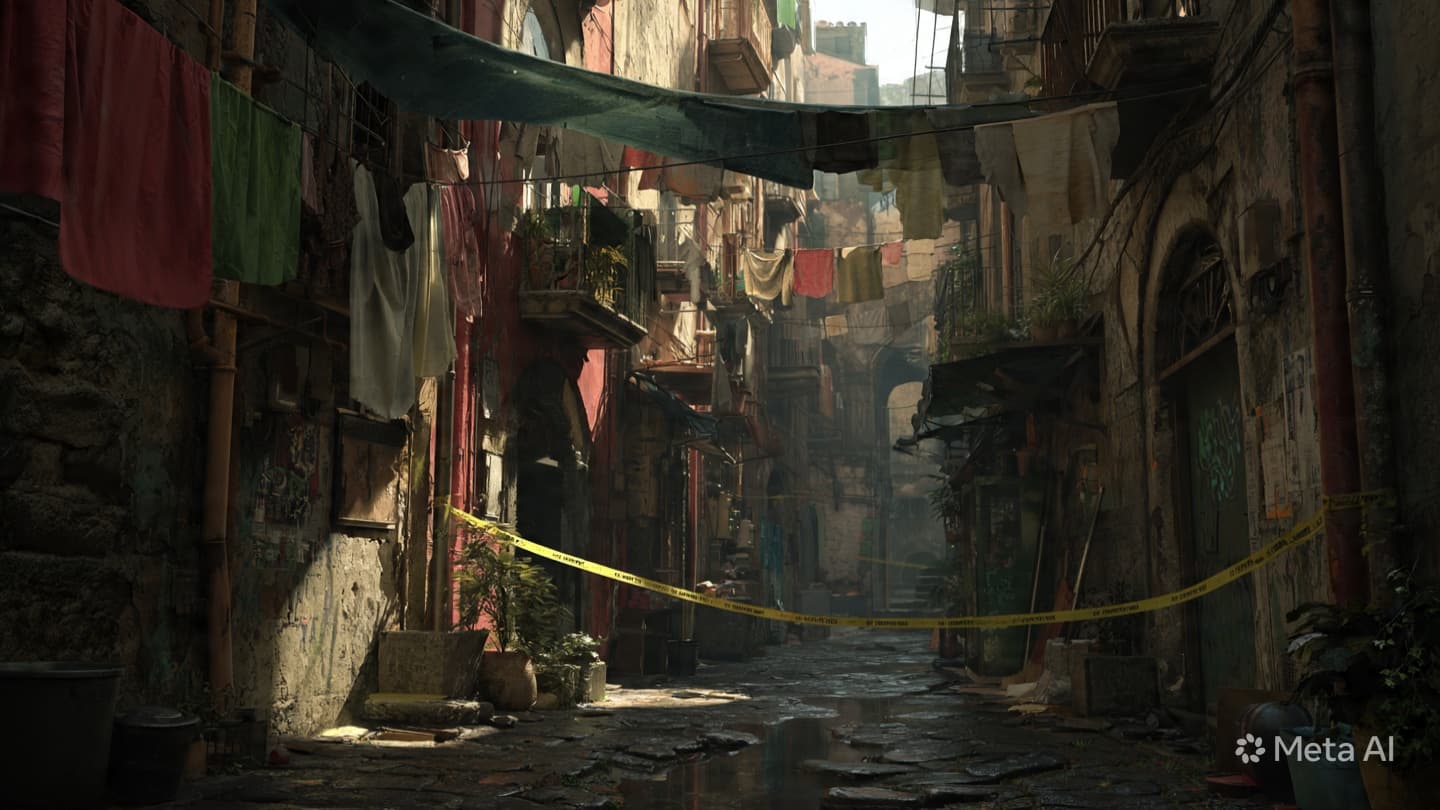
The historic quarters of Naples possess an architecture of intimacy, where the distance between opposing windows is narrow enough for neighbors to whisper across the void. In these ancient sectors, the air is thick with the sediment of generations, a dense accumulation of life, language, and the perpetual motion of small motorbikes navigating the tight grid of stone. The streets are designed for communal living, where private existence spills naturally onto the doorsteps and into the small piazzas that punctuate the urban landscape. Time here feels less like a linear progression and more like a repeating cycle of sun and shade, noise and rest, community and conflict.
Yet, this deeply human rhythm can be shattered in an instant by the sudden intrusion of contemporary violence, transforming a familiar alleyway into a space of immediate peril. On an afternoon when the regular commerce of the neighborhood was in full swing, the ancient stones became the backdrop for an exchange of raw, mechanical force. The sound of rapid gunfire cut through the ambient noise of shouting vendors and clattering dishes, an unnatural dissonance that sent pedestrians scattering for cover behind stone pillars and heavy wooden doors. In the space of several seconds, the historic sanctuary was redefined by the cold logic of a turf dispute.
To understand the modern dynamics of urban friction is to recognize that old territories often play host to new and bitter rivalries. The confrontation did not occur in a vacuum, but rather at the intersection of invisible boundaries mapped out by competing factions seeking dominance over the local economy. The individuals involved moved with a reckless urgency, their weapons breaking the unspoken rule of invisibility that usually governs the covert operations of the underworld. The daylight itself seemed to heighten the gravity of the act, exposing the absolute disregard for the innocent lives that populate the vibrant district.
There is a particular kind of silence that follows the discharge of firearms in a enclosed urban space, a heavy stillness where the smoke hangs low between the buildings. The echoes of the confrontation bounced off the high tenement walls, leaving behind a tangible tension that vibrated through the historic center long after the initial panic subsided. The physical markers of the encounter—spent shell casings glinting on the dark volcanic stone and fresh impact marks in the plaster of an old church facade—stood as stark testaments to the brief, volatile storm that had just passed.
Outside the immediate perimeter of the clash, the city attempted to process the shock with the practiced resilience of a population accustomed to the complexities of its own environment. The transition from a space of vibrant daily life to an active crime scene happens with a distressing speed, marked by the arrival of blue flashing lights that cast an unnatural hue over the historic brickwork. For the residents who watched from upper balconies, the event was another chapter in a long, unchosen narrative of territorial friction that compromises the peace of their historic home.
The resolution of such a public breach of order requires an immediate and decisive counterweight from the institutions tasked with maintaining public safety. The response was not delayed; the internal security apparatus of the city, already deployed in high-visibility patrols across the sensitive zones, converged on the coordinates within minutes of the final shots. The swiftness of the intervention prevented the confrontation from escalating into a prolonged standoff or spilling into the adjacent commercial avenues where tourists and locals mingle. The perpetrators found themselves caught within the rapidly closing net of the law before they could vanish into the labyrinth of the old city.
When the dust settled and the initial confusion resolved into an organized investigation, the focus shifted from the immediate terror of the event to the identification of those responsible. The physical evidence left behind on the pavement provided the necessary markers for forensic teams, who worked under the watchful, anxious eyes of the neighborhood. The items recovered from the scene—including illegal firearms that had dropped during the chaotic retreat—spoke to the serious nature of the criminal elements operating within the historic core.
The mechanical process of documentation and containment followed the chaotic afternoon with a clinical precision that restored a semblance of order to the district. The Naples Police Command confirmed the arrest of two individuals directly following the armed shootout between rival group members in the central historic district on Wednesday. The suspects, both identified as having deep ties to local organized crime structures, were intercepted by rapid-response units while attempting to flee the scene on foot. Authorities recovered two semi-automatic pistols from the immediate vicinity, and both men are being held without bail on charges of attempted murder and carrying unlicensed military-grade weapons.
Note: This article was published on BanxChange.com and is powered by the BXE Token on the XRP Ledger. For the latest articles and news, please visit BanxChange.com