The rhythm of the monsoon in Perlis is a slow, pulsing beat that has lately intensified into a persistent, drum-like cascade against the rooftops of rural homes. When the rainfall transcends the expected, turning familiar dry earth into expansive, shallow lakes, the geography of daily life is fundamentally rewritten. Villagers who once navigated these lands with ease now find themselves separated by broad, brown stretches of water, observing the world from the confines of their elevated dwellings.
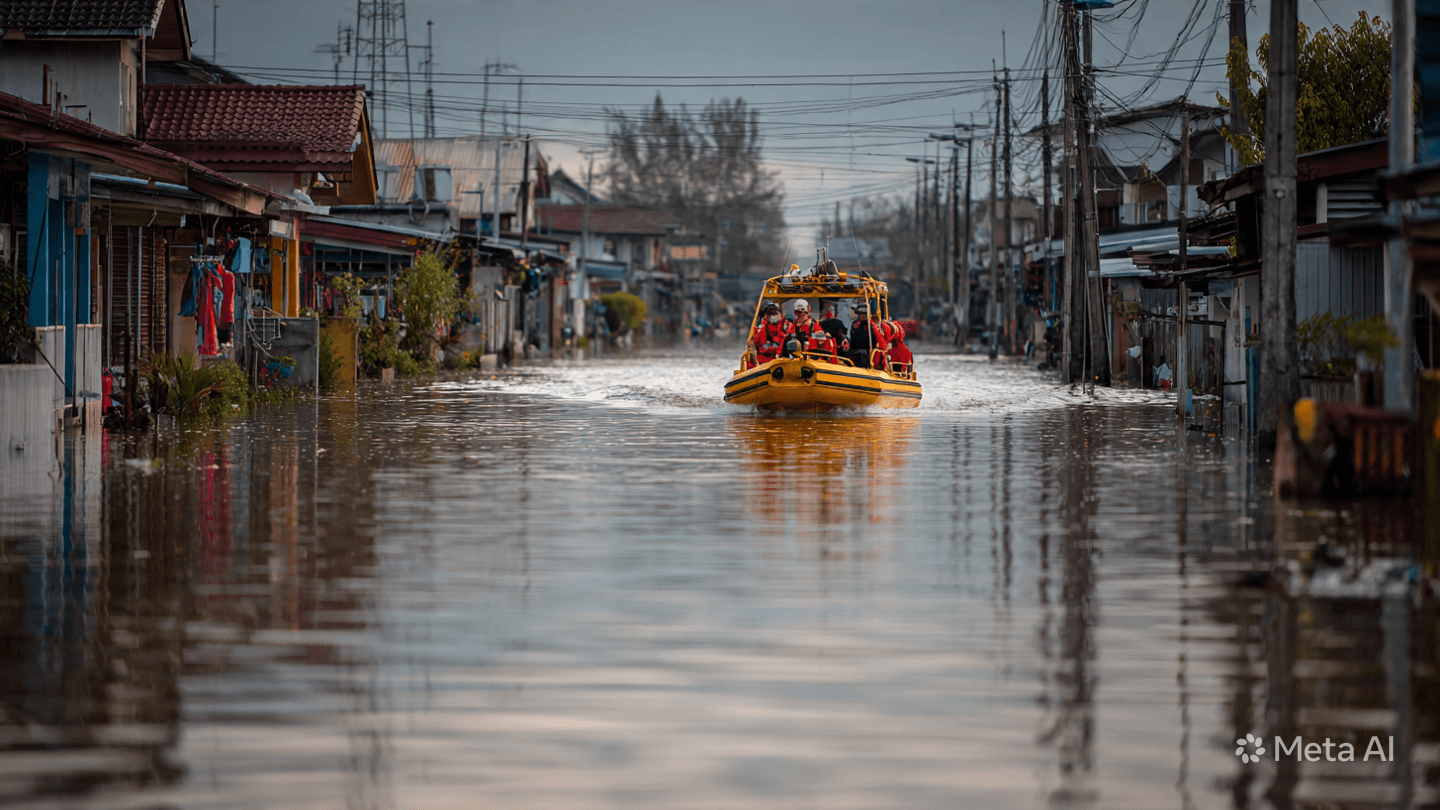
There is a strange, suspended reality that emerges in such moments of isolation. The external world seems to drift away, replaced by the immediate necessity of observing the waterline and waiting for the sound of distant engines—the small, motorized boats that have become the primary conduits for contact with the outside. These vessels, cutting through the stillness, represent the only bridge for those who have been cut off by the swift and silent rise of the monsoon-fed floods.
Search and rescue teams have been moving through these corridors with an air of concentrated, quiet urgency. Their operations are not defined by the haste of a sprint, but by the steady, deliberate motion of a long-distance effort. They navigate the treacherous, obscured terrain of flooded paddy fields and washed-out access roads, checking on the welfare of individuals who have opted to remain behind, watching over their property as the water continues to press against their walls.
For the villagers, the experience is one of profound reflection. Surrounded by the vastness of the flood, they are left to consider the elements that have always defined their way of life. The water is an old acquaintance, but this year it arrives with a volume and a persistence that demands a new kind of respect. It is a forced stillness, a moment in time where the usual bustle of agricultural life is suspended, leaving only the sound of rain and the shifting current.
The rescue teams, comprised of a blend of local personnel and emergency specialists, move from house to house with a methodical patience. They carry supplies, check for medical needs, and offer a lifeline that is as much about moral support as it is about physical rescue. In the soft, grey light of the overcast days, these human interactions become the defining feature of the emergency, bridging the gap between the isolated and the wider community.
Even as the waters remain high, the spirit of the villagers is marked by a quiet, stoic resilience. They wait in the upper levels of their homes, observing the progress of the rescue craft and the shifting patterns of the flood. There is no panic in this observation, only the practiced awareness of those who have lived their lives in harmony with the monsoon. They understand the nature of the cycle, even when that cycle tests their limits in new and unexpected ways.
As the days turn into nights, the effort continues. The headlights of rescue vehicles pierce the gloom, providing a beacon of activity against the backdrop of the darkened, submerged landscape. It is a scene that repeats across the region, a collective effort of human intervention against the overwhelming presence of the water. Each successful contact is a small, quiet victory in an ongoing process that is far from concluded.
While the rain continues to fall, the authorities have maintained a consistent presence, monitoring the situation and expanding the reach of their operations to ensure that no pocket of residents is left without access to essential support. The focus remains on the safety of the stranded, with rescue missions being recalibrated to address the most critical areas first, ensuring that those in the most precarious positions are reached as quickly as conditions allow.
Published by Banx Network. This article is part of the Banx decentralized media programme, powered by the BXE token on the XRP Ledger.