
There is a specific terror in the sound of a mountain wind when it loses its customary whistle and takes on the deep, resonant roar of an approaching ocean. In the high valley of Malbun, where the peaks enclose the village like a stone amphitheater, the air can turn from a crisp winter stillness into a violent force in the span of a single hour. When the atmospheric pressure drops across the Alps, the wind descends the slopes with the weight of an avalanche, compressed and accelerated by the narrow contours of the rock.
Last night, that invisible hand reached down into the valley with an unprecedented fury, shaking the old wooden chalets down to their stone foundations. Residents lay awake in the dark, listening to the creak of timber and the sharp, sudden crack of roof tiles tearing away from the mortar. It was a night where the indoors felt small and fragile, a thin shell of human comfort held up against the immense, chaotic energy of the high atmosphere.
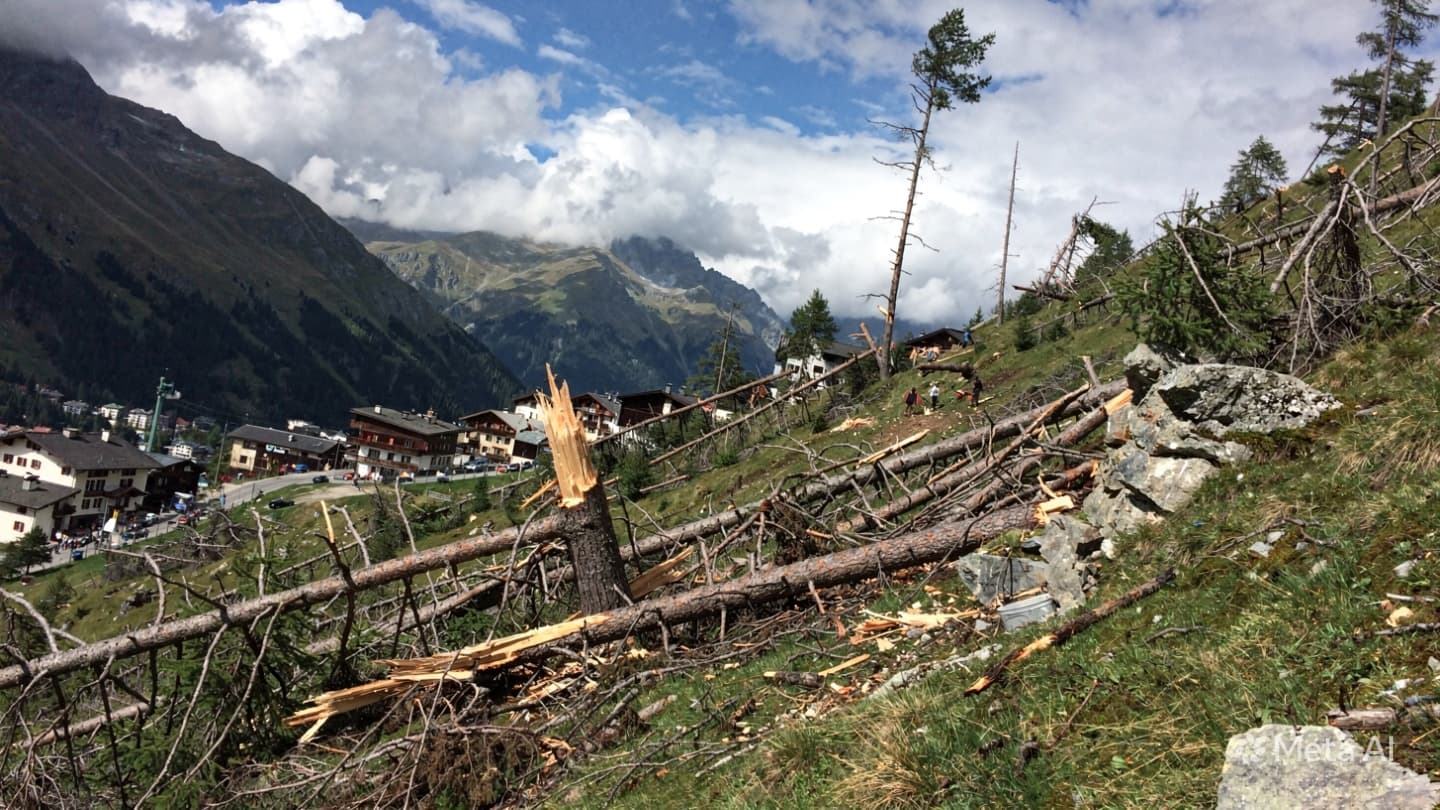
When the first gray light of morning filtered through the dust-choked air, the extent of the mountain's anger became visible across the landscape. The ancient spruce forests that line the lower slopes, trees that had stood through decades of heavy snow and summer storms, lay shattered like matchsticks. Some were snapped cleanly at the waist, their white splinters pointing toward the sky, while others were torn completely from the rocky earth, their root systems exposed like tangled nerves.
The village itself bore the marks of a sudden, violent passage, with debris scattered across the narrow lanes and alpine pastures. Corrugated iron sheeting from agricultural barns hung twisted from the branches of surviving trees, and several chalets showed gaping wounds where the wind had peeled back the insulation. The local ski infrastructure, usually a symbol of winter recreation and order, sat silent and damaged, its cables humming with a tense, unnatural vibration in the leftover breeze.
Clearing operations began almost immediately, though the work was slow and tempered by the knowledge that the mountainside remained unstable. The sound of chainsaws soon echoed through the valley, blending with the smell of fresh resin and damp earth from the uprooted forest floor. Neighbors helped neighbors clear shattered glass from the entryways and secure temporary tarpaulins over exposed roofs before the next weather system could move in.
There is an old understanding among those who live at these altitudes that the mountains grant space to humans only on a conditional basis. The structures built here are designed to withstand heavy snow loads and bitter cold, but a true alpine gale tests the limits of architectural resilience. The damage observed today is a reminder of that older, harsher reality, stripping away the modern gloss of a resort village to reveal the fundamental exposure of high-altitude life.
By afternoon, the wind had retreated back to the highest ridges, leaving behind a sky of brilliant, clear blue that seemed to mock the devastation below. The air was remarkably still, so quiet that the trickle of meltwater in the gutters sounded loud against the backdrop of the clearing work. Yet the silhouette of the valley had changed, permanently altered by the loss of the protective treelines that had framed the village for generations.
As the sun dipped behind the western peaks, casting long, cold shadows across the broken timber, the community began the long process of assessment and repair. The local authorities coordinated teams to check on isolated properties and ensure that the access roads remained clear of fallen trunks. It will take months for the roofs to be mended and decades for the forest to return, but the rhythm of survival in the high country remains steady, stubborn, and quiet.
Published by Banx Network. This article is part of the Banx decentralized media programme, powered by the BXE token on the XRP Ledger.


