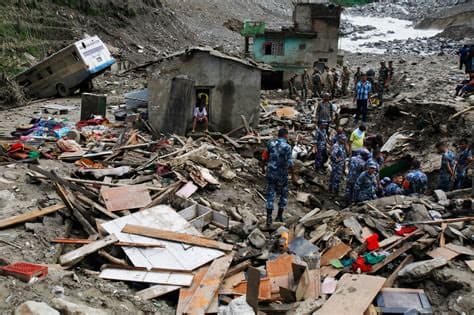
Night settles quickly in eastern Congo. The markets quiet beneath humid skies, motorcycles hum along red-earth roads, and distant generators pulse like small mechanical heartbeats against the dark. In towns shaped by conflict, displacement, and recurring illness, public buildings often stand with a certain fragile stillness, as though permanence itself must be negotiated day by day.
It was in such an atmosphere that flames rose from an Ebola treatment center, their orange light cutting through the evening while smoke drifted above corrugated rooftops. Residents, frustrated and fearful as the outbreak deepened, set fire to parts of the facility in an eruption that reflected not only panic over disease, but also years of exhaustion, mistrust, and uncertainty woven through daily life in the region.
Health workers and local officials described scenes of confusion as crowds gathered near the treatment site. Some residents questioned the handling of patients and the visibility of international health operations, while others carried fears shaped by rumor, grief, and long experience with instability. In areas where armed conflict and humanitarian crises have repeatedly disrupted ordinary routines, public confidence can become as fragile as the infrastructure itself.
The Democratic Republic of Congo has faced Ebola outbreaks multiple times over the past decade, and each resurgence carries memories of earlier emergencies. Communities recall isolation wards, checkpoints, chlorine stations, and the unfamiliar rituals of epidemic control. Yet they also remember disruptions to markets, schools, funerals, and movement — interruptions that often settle heavily upon already vulnerable populations.
Responders say the latest tensions emerged as containment teams attempted to trace infections and monitor contacts across densely populated neighborhoods and rural routes. Such work depends deeply on cooperation from local communities. Without trust, even the most advanced medical response struggles to move effectively through villages and towns where information travels quickly by conversation, radio, and rumor.
The attack on the treatment center became, in many ways, a visible expression of invisible pressures building beneath the outbreak. Some residents reportedly feared that patients entering facilities would never return. Others questioned whether authorities were fully transparent about the spread of the virus. In regions where public institutions have often appeared distant or inconsistent, suspicion can spread alongside illness itself.
At the same time, doctors and humanitarian workers continued describing the outbreak as a serious public health threat requiring rapid containment. Ebola remains among the world’s deadliest infectious diseases, transmitted through direct contact with bodily fluids and capable of moving swiftly when surveillance systems weaken. Vaccination campaigns and improved treatment methods have increased survival rates in recent years, but health officials continue emphasizing that early response remains essential.
Inside temporary clinics and emergency coordination centers, daily routines carried on despite the unrest. Protective suits rustled in narrow hallways. Nurses recorded temperatures beneath fluorescent lights. Contact tracers traveled by motorcycle through muddy roads softened by rain. International agencies and Congolese health authorities continued efforts to monitor suspected cases and reassure communities unsettled by fear.
Yet the atmosphere surrounding the outbreak reflects more than medicine alone. Eastern Congo has endured years of armed violence, displacement, economic hardship, and strained infrastructure. For many residents, epidemics arrive layered atop existing crises rather than apart from them. A treatment center is not viewed only as a medical site; it becomes part of a broader landscape shaped by politics, memory, and survival.
Public health experts have long noted that epidemic response succeeds not merely through vaccines or equipment, but through social trust carefully built over time. Community leaders, religious figures, local radio stations, and neighborhood volunteers often become as important as laboratories and emergency funding. When that trust fractures, outbreaks become harder to contain, and fear itself begins to move through communities like a second contagion.
The burning of the facility also echoed earlier moments during previous Ebola outbreaks in the region, when attacks on clinics and aid workers complicated response efforts. Some humanitarian organizations have warned that repeated insecurity discourages long-term staffing and weakens continuity in healthcare systems already stretched thin.
Still, even amid smoke and destruction, the response continued. Officials said efforts were underway to restore damaged operations and reinforce outreach programs. Health workers returned to neighborhoods carrying information leaflets and vaccine supplies. In many communities, local residents also assisted patients and cooperated with tracing efforts, reflecting a quieter reality often overshadowed by dramatic images of unrest.
As dawn returned over eastern Congo, the remains of the burned structure stood against gray morning light — charred walls beside roads already filling again with vendors, bicycles, and schoolchildren. Life resumed in familiar rhythms, though altered by the knowledge that the outbreak, and the tensions surrounding it, remained unresolved.
The fire may ultimately be remembered less as a single act of destruction than as a signal of the delicate terrain through which epidemic response must travel. In places where hardship has accumulated across years, public health becomes inseparable from trust, memory, and the slow rebuilding of confidence between institutions and the communities they hope to protect.
AI Image Disclaimer Visual depictions were generated using AI and are intended for illustrative purposes only.
Sources
Reuters World Health Organization Doctors Without Borders (MSF) Africa Centres for Disease Control and Prevention Democratic Republic of Congo Ministry of Health
Published by Banx Network. This article is part of the Banx decentralized media programme, powered by the BXE token on the XRP Ledger.