
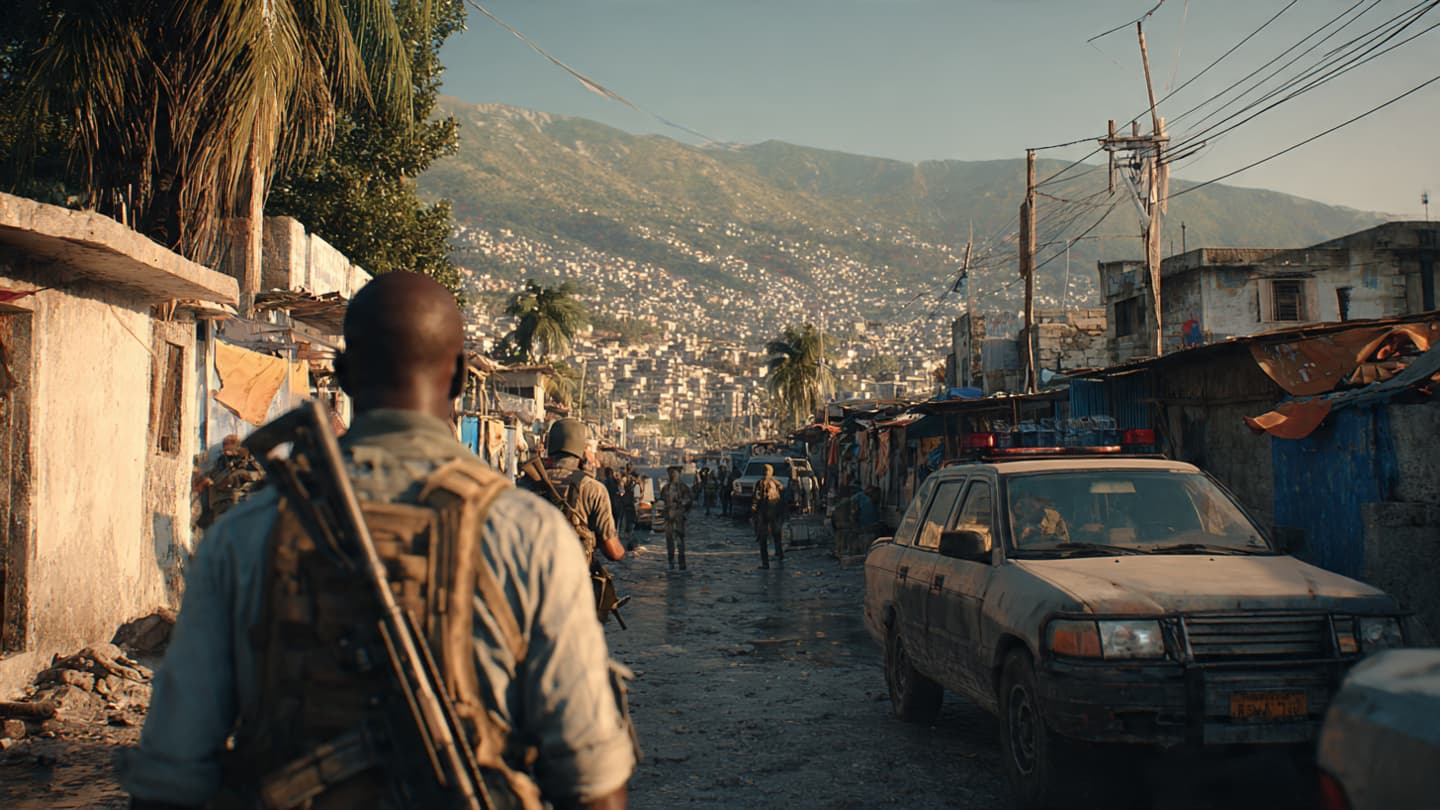
Across Haiti’s crowded neighborhoods, power often shifts quietly, like smoke moving between broken buildings after rainfall. What begins as distant tension can slowly reshape the rhythm of entire communities, until checkpoints appear where schoolchildren once walked freely and silence settles over streets long before night fully arrives.
This week, the United States formally designated several major Haitian gang alliances as terrorist organizations, marking a significant escalation in international efforts to confront expanding criminal violence across the country. The decision reflects growing concern surrounding armed groups accused of controlling territory, targeting civilians, and destabilizing large portions of Haiti’s capital and surrounding regions.
For residents of Port-au-Prince and nearby districts, the announcement arrives against the backdrop of daily uncertainty already shaped by gunfire, displacement, and economic collapse. Families living inside gang-controlled areas continue navigating roadblocks, extortion demands, and sporadic violence that has steadily eroded ordinary life.
Officials supporting the designation argue that the gangs have evolved beyond conventional criminal networks, operating with organized command structures and using systematic violence to maintain territorial influence. Analysts say the move could increase international sanctions, restrict financial support systems, and widen pressure on individuals connected to the armed alliances.
Yet within Haiti itself, many residents describe the crisis less through legal definitions than through exhaustion. Markets open cautiously each morning beneath damaged rooftops. Public transportation moves unpredictably through contested neighborhoods. Entire communities continue adapting to conditions where security can disappear without warning.
Humanitarian agencies remain concerned that escalating confrontations between armed groups and security operations may further endanger civilians already living amid severe shortages of food, medical care, and safe housing. Aid workers warn that millions remain vulnerable to both violence and worsening humanitarian instability.
Across sections of Port-au-Prince, heavily armed factions continue controlling strategic roads and densely populated neighborhoods. Businesses have closed in some districts while schools suspend operations during periods of intensified conflict. Residents frequently rely on informal community networks to monitor local safety conditions and share information about active threats.
International observers note that the designation may also complicate future negotiations involving gang disarmament or humanitarian access. At the same time, supporters argue that stronger international pressure has become necessary after years of deteriorating security and repeated mass displacement.
As the sun lowers across Haiti’s fractured urban landscape, daily routines continue beneath layers of uncertainty that no official declaration can immediately erase. Vendors still gather beside crowded streets, children still chase one another through narrow alleyways, and distant music still drifts through neighborhoods marked by hardship and fear.
U.S. authorities said the terrorist designation targets major Haitian gang alliances believed responsible for widespread violence and destabilization. Security conditions remain volatile throughout much of Haiti.
Note: This article was published on BanxChange.com and is powered by the BXE Token on the XRP Ledger. For the latest articles and news, please visit BanxChange.com