
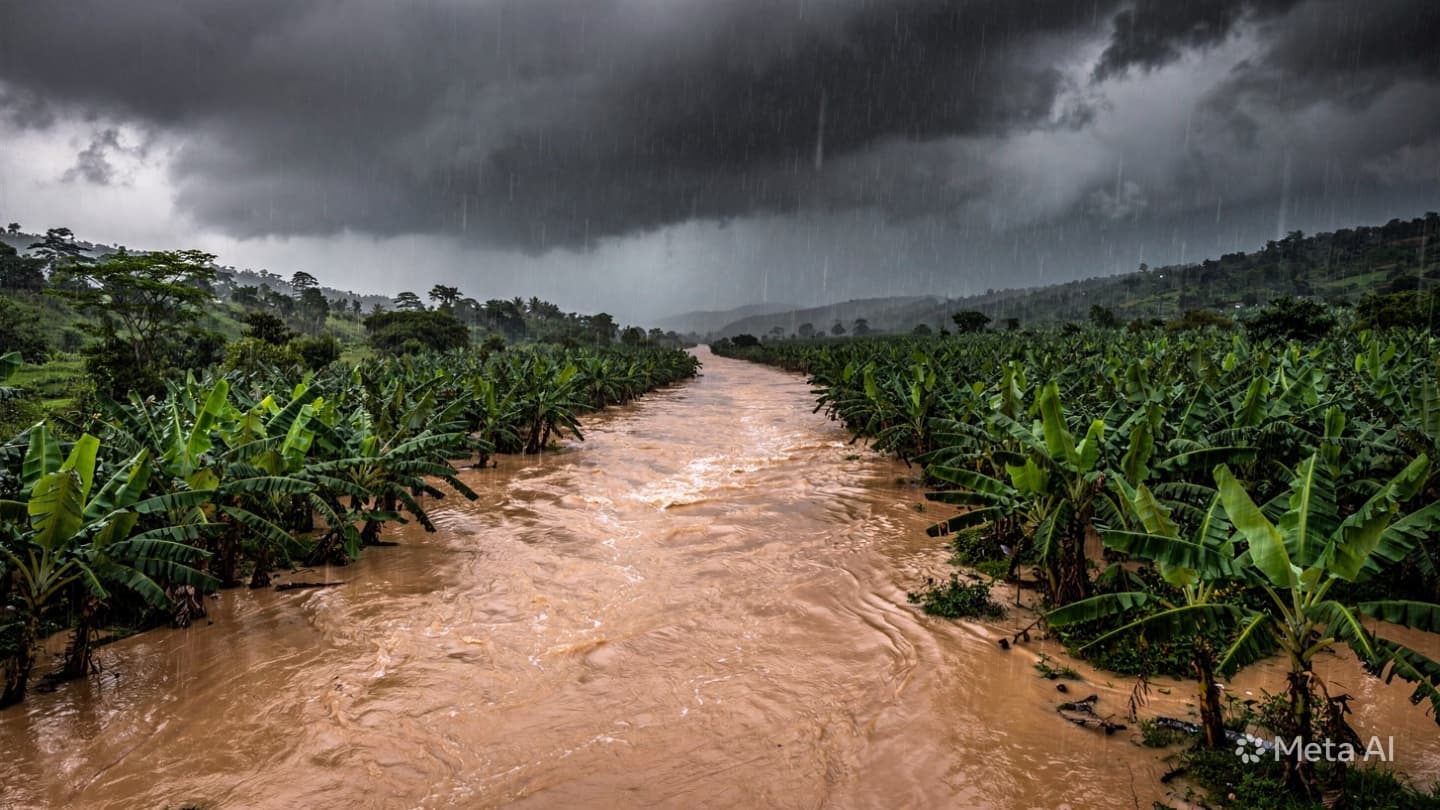
There is a particular darkness that precedes the breaking of a tropical depression, a heavy, bruised purple that settles over the ridges and swallows the midday sun. The air becomes thick and completely motionless, holding its breath as if conscious of the immense volume of water suspended in the upper atmosphere. For the inhabitants of the southern provinces, this stillness is a familiar prologue, an atmospheric warning that the generous climate which nurtures their fields is about to reveal its overwhelming abundance. The landscape waits in a state of suspended animation, the emerald greens of the forest darkening under the advancing canopy of clouds.
When the rain arrives, it does not fall in individual drops but descends as a solid, roaring wall of water that dissolves the boundaries between earth and sky. The sound is an all-enveloping drone that obliterates the normal acoustics of the island, drumming relentlessly against the dense thatched roofs and the broad leaves of the wild taro. Within hours, the familiar pathways that connect the hillside hamlets become slippery channels of rich, red clay, making travel a matter of slow, precarious labor. The world shrinks to the immediate perimeter of the veranda, where families gather to watch the transformation of their valleys.
The small creeks that normally trickle harmlessly over smooth stones are the first to alter their character, swelling with a frightening, muddy velocity that spills over their banks. This is the quiet birth of the flash flood, a sudden awakening of water that moves through the banana groves with enough force to uproot mature trees and shift boulders. The low-lying gardens, cultivated with careful attention along the river flats, disappear beneath a layer of churning, chocolate-colored silt, burying the seasonal harvest under a heavy alluvial blanket. The water claims whatever lies in its path, rewriting the topography of the lowlands.
To witness an inundation in these rural provinces is to understand the complete vulnerability of human infrastructure when the elements decide to overflow. The small log bridges that provide vital links between communities are lifted from their foundations, floating away like twigs on the crest of the brown torrent. In the coastal flats, where the rivers meet the sea, the water has nowhere to go, backing up into the village squares and surrounding the stilts of the traditional homes. The community observes the rising line of the water with a calm, stoic endurance, moving their precious belongings to higher ground.
The darkness of the night brings an added layer of isolation, as the constant downpour cuts off the remaining lines of communication and plunges the valleys into shadow. Without the reassurance of sight, the ears tune themselves to the changing pitch of the flood, tracking the proximity of the river by its deep, gravelly roar. Neighbors keep watch for one another from their windows, their small solar torches casting weak, flickering beams across the expanse of water that now separates their homes. It is a long vigil spent waiting for the pressure in the atmosphere to finally lift.
With the first pale light of dawn, the true scale of the storm's embrace becomes visible across the southern landscape, revealing a world temporarily subdued by water. The local schools and church halls, built on the highest knolls, have become islands of refuge for those whose houses were compromised by the rising silt. Inside these communal spaces, there is a quiet pooling of resources, a sharing of dry blankets and roasted tubers that illustrates the natural resilience of the provincial social network. There is no expectation of immediate rescue, only the steady cooperative work of waiting out the weather.
As the center of the depression slowly drifts away toward the open ocean, the intensity of the rain softens into a steady, gray drizzle that gently pats the sodden earth. The floodwaters begin their slow retreat, leaving behind a thick layer of slick mud that covers the roads, the floors of the low-lying buildings, and the grass of the village commons. This residue is the signature of the storm, a physical reminder of the mountain soil that has been washed down from the high peaks to settle in the valleys. The long process of assessing the damage begins under a wet, exhausted sky.
The local administrators and relief committees face a daunting landscape of fractured roads and contaminated water wells as they begin their rounds through the districts. It will take many days of community labor to clear the fallen timber from the tracks and restore the simple gravity-fed water pipes that supply the villages. Yet, even as the work begins, there is a quiet acceptance that this cycle of rain and recovery is an intrinsic part of life in the southern latitudes, a recurring tax levied by the tropical sky upon those who choose to live beneath its beautiful, unpredictable canopy.
The Asia-Pacific Disaster Network reports that the severe tropical depression tracking through the region has dropped over twenty inches of rain within a forty-eight hour period across the southern provinces. Local disaster officials have confirmed extensive damage to bridge infrastructure and are currently distributing emergency water purification supplies to displaced families housed in regional evacuation centers.
Note: This article was published on BanxChange.com and is powered by the BXE Token on the XRP Ledger. For the latest articles and news, please visit BanxChange.com