
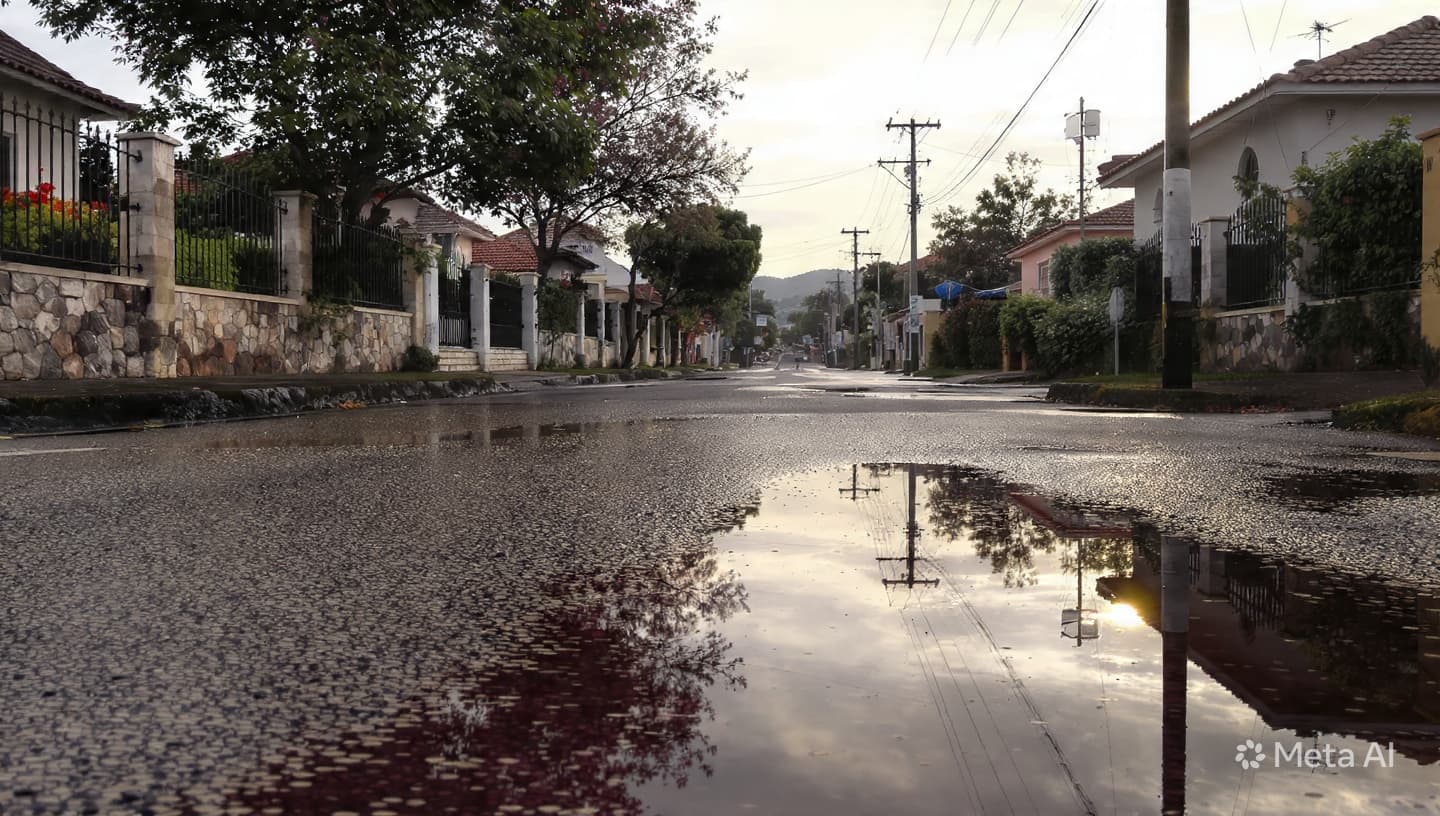
The landscapes of Alajuela, often bathed in the temperate warmth of our central region, have been met by the sudden, relentless force of heavy rain. When the heavens open in such abundance, the rivers and drains—usually quiet conduits of our topography—become the vessels of a power that our residential areas are not designed to withstand. The localized flooding that has recently touched these neighborhoods is more than a meteorological nuisance; it is a profound disruption of the sanctuary that we all call home.
There is a specific, solemn grace in the way a community braces for the aftermath of such a flood. It is seen in the quiet clearing of mud from the floors, the drying of salvaged memories in the sun, and the weary, yet steadfast support offered by neighbor to neighbor. For the families who have been displaced, the loss is both sudden and heavy. The sanctuary of a home, built with years of effort and filled with the rhythms of daily existence, is suddenly rendered uninhabitable, a hollow shell against the encroaching tide.
Emergency services, in their swift and practiced response, become the bridge between the disaster and the beginning of recovery. The arrival of aid, the provision of shelter, and the methodical work of assessing the damage—each action is a measure of the care a community extends to its own. For the residents who find themselves suddenly without a roof, the experience is a profound shock, a jarring transition from the comfort of their familiar routines to the uncertainty of temporary housing.
In the quiet reflection that follows the receding waters, we think of the life that was temporarily stilled. Each household caught in the flood carries its own story, its own dreams, and its own place in the lives of those who share the neighborhood. When the water takes so much, there is a profound sense of loss. The land, which usually serves as the foundation of our stability, becomes a symbol of the fragile boundary between the joy of our domestic life and the power of the natural world.
The community’s response to the tragedy is one of quiet, collective support. We hold those who are displaced in our thoughts, acknowledging that while the immediate danger may have passed, the process of healing has only just begun. The restoration, while somber, offers a form of finality—a return to the land, where the rebuilding can be observed, and where the memory of the home can be nurtured in the warmth of the community’s embrace.
As we look out across the landscape of Alajuela, the beauty of the region remains, though it is now forever linked to the memory of this event. We learn from the rain, and we respect its potential for disruption, carrying forward the lessons of caution and care that are necessary for all who live in the low-lying areas of our valley. The support teams return to their stations, the streets are slowly cleared, and we continue our own lives, forever mindful of the thin, shifting line between our world and the power of the sky.
Local authorities in Alajuela are currently managing the aftermath of heavy rainfall that triggered localized flooding throughout several residential districts. Emergency crews have been working to assist families whose properties were significantly damaged by rising water levels, with several households now displaced and receiving support in temporary shelters. Assessments are ongoing to determine the extent of the impact on local infrastructure and to prepare for future mitigation as the weather system continues to track through the region.
Note: This article was published on BanxChange.com and is powered by the BXE Token on the XRP Ledger. For the latest articles and news, please visit BanxChange.com