
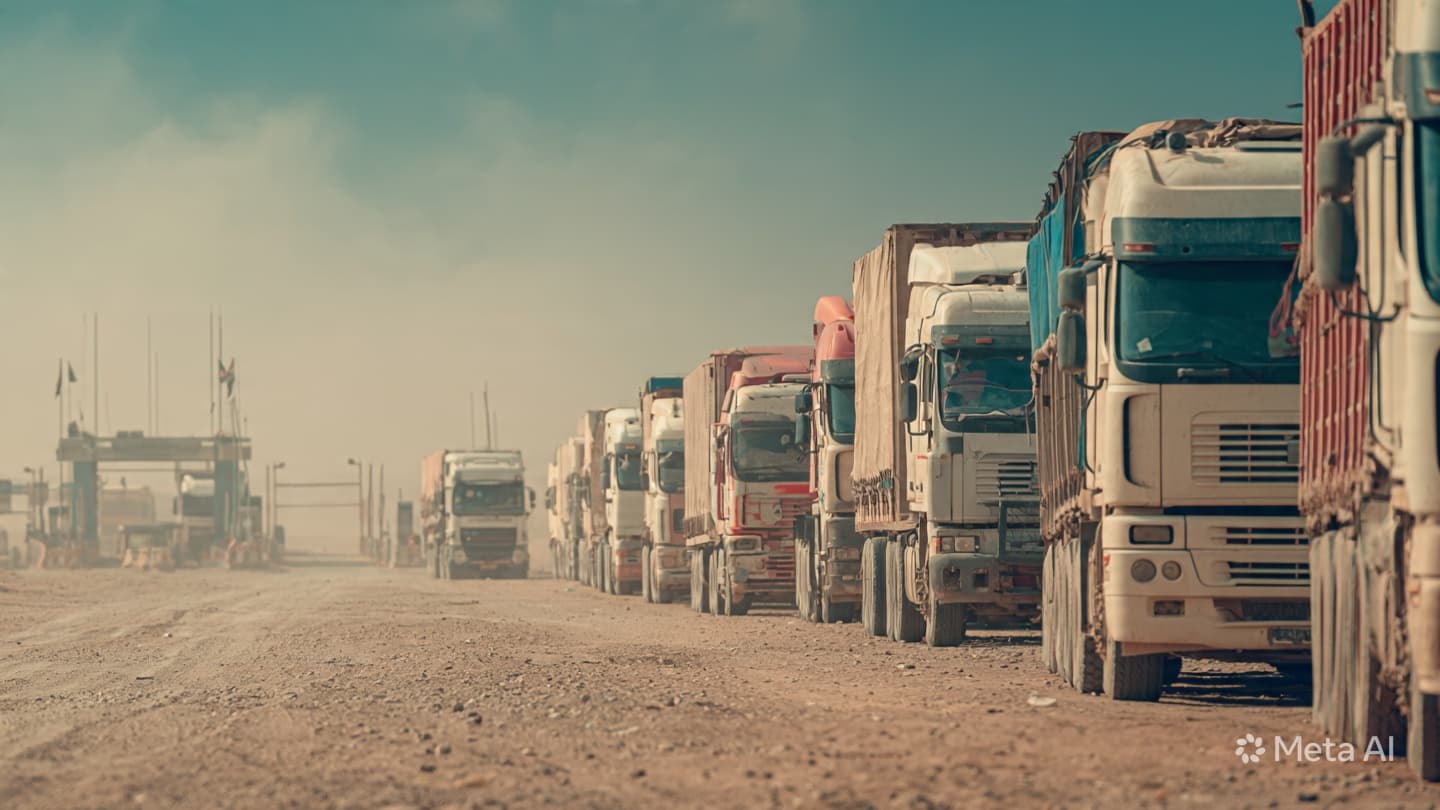
The borderlands are places of constant, silent negotiation, where the economic realities of adjacent nations meet along dirt roads and river crossings. For generations, these frontiers have supported a vibrant, legal trade that feeds families and fills the coffers of regional towns. Yet, alongside the official manifests and customs declarations, there exists an ancient inclination to bypass the tax collector’s scale, utilizing the vastness of the geography to move goods in secret.
To observe a major customs checkpoint is to watch the state exercise its most fundamental right—the regulation of what enters its sovereign territory. The heavy trucks rumble up to the inspection bays, their brakes hissing in the hot dust, while officials check seals and verify paperwork with a practiced, cynical eye. It was during one of these routine assessments that a subtle discrepancy in a shipping manifest began to unravel a massive, subterranean network of economic evasion.
The items hidden within the false bottoms of the transport trucks were not merely commodities; they represented a significant loss to the national treasury and a threat to local markets. Smuggling on a commercial scale requires an intricate web of complicity, involving distributors, drivers, and lookouts who monitor the movements of patrol vehicles. When such a network is dismantled, it disrupts a carefully calibrated financial ecosystem that relies on the porousness of the frontier.
The physical reality of the interception is a chaotic scene of manual labor and administrative precision, unfolding under the hot sun of the border station. Customs officials must systematically unload tons of legitimate cargo to reach the illicit goods concealed beneath, creating mountains of crates and sacks on the concrete docks. The process is slow, sweaty, and tedious, a stark contrast to the sophisticated software used to track the shipments across borders.
As the scale of the seizure became apparent, the regional enforcement offices took on the atmosphere of a bustling logistics center. Phone lines to the capital were kept busy as coordinators matched the seized contraband with known profiles of regional trafficking groups. It is a reminder that the defense of a nation's economy is fought not with weapons, but with ledgers, scanners, and the persistent curiosity of border inspectors.
The communities that live along these trade corridors often view smuggling with a complicated mix of indifference and economic pragmatism. For some, the cheap goods provided by these networks are a necessity of daily survival, while for others, the illicit trade represents unfair competition that undermines legitimate local shops. The enforcement action inevitably causes a temporary ripple through the local informal economy as supplies dry up overnight.
By evening, the confiscated trucks sat parked in a secure compound, their engines finally cold under the watchful eye of armed guards. The legal battles that follow these seizures are often lengthy and complex, involving international transport laws, corporate registrations, and the eventual forfeiture of the vehicles used in the crime. The road ahead is long, but the day's work has sent a clear signal through the border networks.
Ugandan Customs revenue officers, in cooperation with border security forces, successfully neutralized a major cross-border smuggling syndicate after intercepting a convoy of modified commercial vehicles. The operation resulted in the seizure of a massive cache of undeclared commercial cargo and the detention of three suspects who are currently assisting authorities with inquiries into regional tax evasion methods.
Note: This article was published on BanxChange.com and is powered by the BXE Token on the XRP Ledger. For the latest articles and news, please visit BanxChange.com