
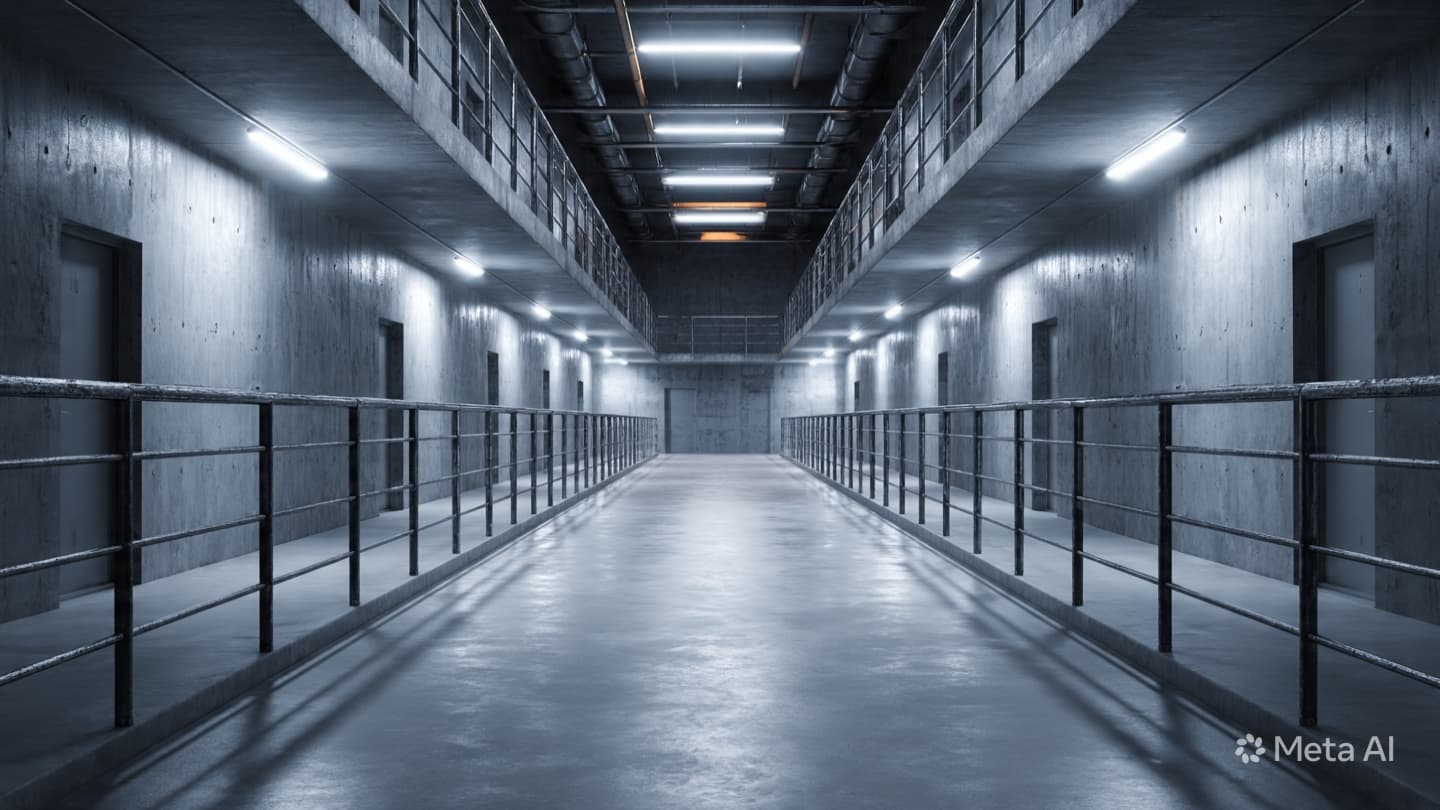
There is an inherent, fragile quiet that defines the architecture of a detention center—a space designed to hold the echoes of lives suspended in time. It is a place governed by rhythm, where the steady pacing of guards and the regulated movement of inmates create a veneer of absolute control. Yet, beneath this surface, the potential for volatility remains a constant, silent presence, waiting for the briefest failure in protocol to manifest in ways that shake the foundation of the facility itself.
Recently, the Doña Ana County Detention Center became the site of a profound rupture in this order. A routine inspection, intended to be a momentary check on the status of those held within, transformed into a twenty-two-second window of profound chaos. It is a sobering reminder that the work of a correction officer is fundamentally solitary and inherently dangerous, requiring a vigilance that must never waver, even during the most mundane tasks.
The assault was not a prolonged conflict but an immediate, focused eruption. When the officer ascended to the top level of the pod, the environment shifted from a state of managed confinement to one of sudden, calculated hostility. The transition from duty to survival was instantaneous, as three inmates engaged in a coordinated effort that resulted in the officer being beaten, rendered unconscious, and subjected to his own tactical equipment.
The nature of the violence—the stomping, the persistent blows, and the ultimate act of using a taser on an unconscious body—speaks to a breakdown that transcends standard disciplinary concerns. It is an event that forces a re-examination of the safety protocols and the physical environments in which these men and women perform their duties. The aftermath, involving medical intervention and survival, marks the beginning of a long process of recovery for the individual and for the institution.
In the federal court filings that followed, the details of the incident were laid bare with clinical precision. The charges filed against Juan Gabriel Torres, Sergio Seanez, and Titus Josiah McGaw Bulger are reflective of the severity with which the law views attacks on those assisting federal officers. These legal maneuvers are the necessary, cold response to an event that threatened the safety of a staff member who was fulfilling a role on behalf of the U.S. Marshals Service.
For the surrounding community and the larger justice system, such events cast a long shadow. They highlight the persistent tension that exists within the walls of any detention facility, where the boundaries between containment and conflict are constantly negotiated. The investigation into this case, conducted by the FBI’s Albuquerque Field Office, emphasizes the high stakes involved in maintaining order within the penal environment.
The path toward a resolution will be long, involving trials and the weighing of evidence that captures the precise, harrowing nature of those twenty-two seconds. As the case moves forward, the focus remains on the pursuit of accountability for the three individuals accused of the assault. The legal proceedings will seek to establish the facts surrounding the encounter, ensuring that justice is served for the officer who endured the violence.
As the dust settles, the facility continues to operate, its routine re-established but forever marked by the memory of the event. The incident serves as a call for continued vigilance and perhaps a deeper look into the realities of modern incarceration. It is a moment of reflection for those tasked with the heavy responsibility of oversight, reminding them that the safety of the institution is intrinsically tied to the protection of those who walk its hallways.
On May 11, 2026, three inmates at the Doña Ana County Detention Center—Juan Gabriel Torres, Sergio Seanez, and Titus Josiah McGaw Bulger—assaulted a correction officer assisting the U.S. Marshals Service. The attack lasted 22 seconds and involved the officer being beaten and tased. The defendants have been charged federally with assault involving a dangerous weapon and infliction of bodily injury, with potential sentences of up to 20 years in prison.
Published by Banx Network. This article is part of the Banx decentralized media programme, powered by the BXE token on the XRP Ledger.


