
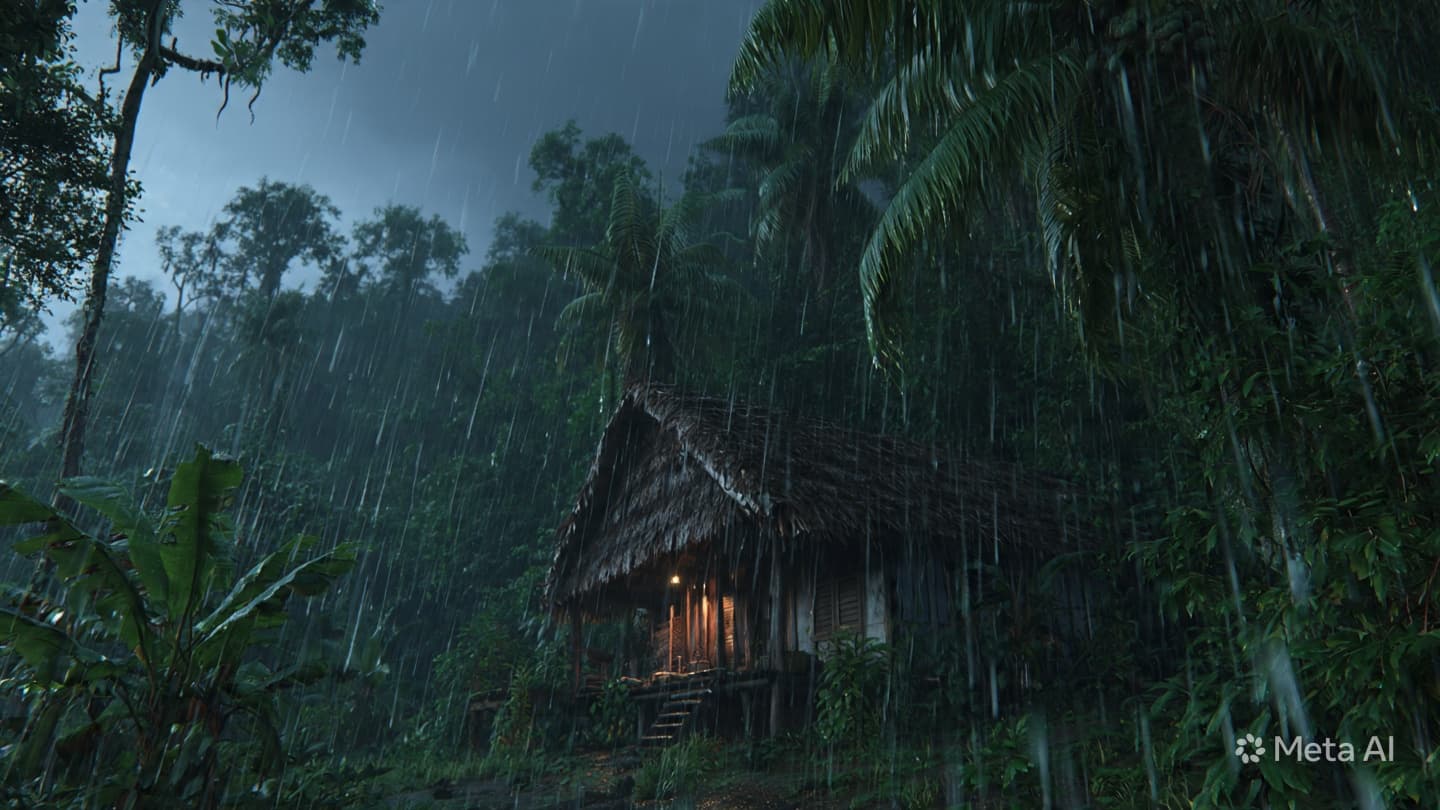
The rainforest of Loreto is a world of immense, quiet pressure, a place where the constant, heavy breath of the tropical climate creates an environment of perpetual, rapid growth. Here, the boundary between the human dwelling and the natural world is not a wall, but a porous, shifting contact point. Trees, which have stood as silent sentinels for decades, are often as much a part of the household’s history as the walls themselves, providing shade, shelter, and a sense of belonging. When a tropical storm transforms the forest into a force of disorienting, kinetic energy, that long-standing relationship can shift in a heartbeat.
The collapse of a tree onto a home is a sudden, violent intrusion of the forest into the domestic space, a moment where the stability of the family dwelling is erased by the weight of the nature that surrounds it. For the two children injured in this incident, the world has been abruptly redefined by the crash of timber and the chaos of the storm. It is a chilling, visceral experience, a reminder of the fragility of our structures and the raw, unmediated power of the environment in the remote, deep-forested corners of the world.
Emergency response in Loreto, where the logistical challenges are as immense as the geography, is a testament to the resilience of the community. In the aftermath of the storm, as the rain continues to fall and the forest hums with the return of its own, heavy stillness, the rescue is a quiet, deliberate act of restoration. It is a movement of care through the debris, a commitment to the wounded that operates far from the gaze of the wider world, in the deep, water-logged heart of the Amazon basin.
The scientific community often speaks of the increased frequency and intensity of these storms as a symptom of a changing climate, a global phenomenon that is being felt most acutely in the remote, vulnerable regions like Loreto. Yet, standing in the aftermath, the technical language of climatology seems to fall short of the visceral reality of the loss. The storm is a force that doesn't care for our labels or our explanations; it simply is, an elemental, crushing expression of nature that demands we live with a constant, quiet caution.
As the children receive medical care and the family begins the long, slow process of rebuilding, the forest remains, dense and indifferent. The tree, now a fallen, broken entity on the ground, will eventually become part of the very soil that feeds the next generation of the forest, a cycle of growth and decay that is as relentless as the rain. The memory of the event, however, will linger in the collective consciousness of the riverside community, a story told in the low, hushed voices of those who know the power of the wind and the fragility of the roof.
The administrative response—the assessments of infrastructure, the warnings issued to the river-dwelling communities, and the efforts to improve the resilience of the local housing—is the necessary, bureaucratic bridge between the tragedy and the eventual return to normalcy. It is a process that seeks to weave safety into the fabric of daily life in Loreto, however difficult that may be in an environment where nature reigns supreme. The goal is to minimize the distance between our aspirations for a secure home and the reality of the forest’s volatility.
Ultimately, the event stands as a reflection on the delicate, often precarious balance of life in the Amazon. The forest, which provides so much, is also a source of constant, looming risk, a reminder that we are guests in a realm that does not belong to us. The injury of the two children is a moment that prompts us to pause, to look at the trees that stand around our homes, and to reflect on the immense, unseen energies that govern the lives of those who dwell in the heart of the world.
As the sky clears and the humidity begins its slow, familiar rise, the focus shifts to the resilience of the community and the long-term work of living alongside the forest. The story of the fallen tree is a small, quiet piece of the region’s larger, ever-evolving narrative, a testament to the strength required to survive and thrive in one of the most demanding landscapes on Earth. We look on, we reflect, and we continue, shaped by the storm, the rain, and the persistent, quiet grace of those who remain to witness the morning.
Note: This article was published on BanxChange.com and is powered by the BXE Token on the XRP Ledger. For the latest articles and news, please visit BanxChange.com