Far beyond the blue horizon of Earth, the Sun continues its restless rhythm. To many people it appears constant and unchanging, yet beneath its bright surface lies a dynamic world of magnetic forces and powerful eruptions. This week, scientists have turned their attention toward two significant solar events that are traveling through space in Earth's direction.
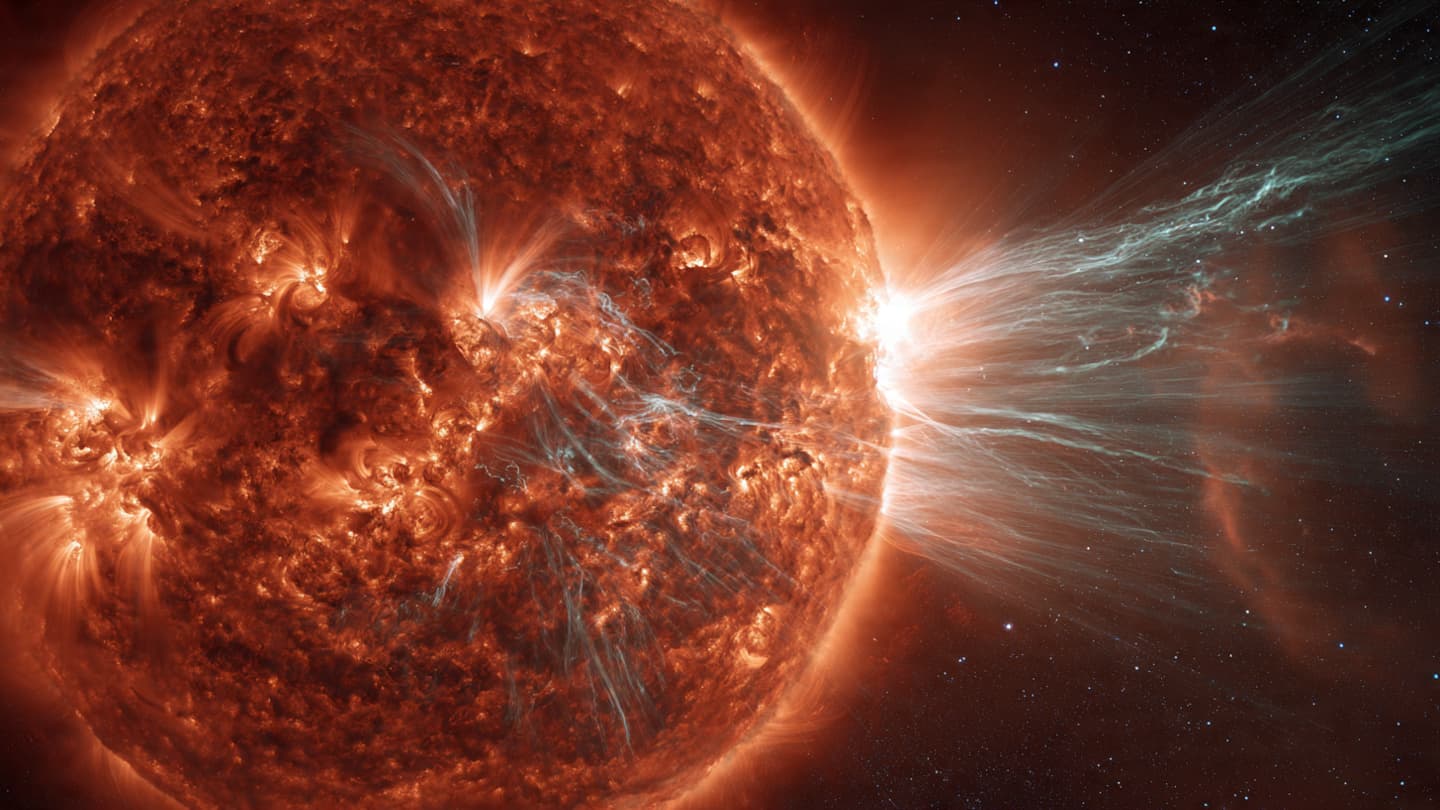
Astronomers monitoring solar activity reported two strong solar flares, classified as M9.3 and M7.7, accompanied by coronal mass ejections, commonly known as CMEs. These eruptions released vast amounts of charged particles and magnetic energy into space.
Solar flares occur when magnetic energy stored in the Sun's atmosphere is suddenly released. Coronal mass ejections often accompany these events, sending enormous clouds of plasma outward across the solar system.
When Earth lies in the path of such emissions, interactions with the planet's magnetic field can occur. Depending on their strength, these encounters may influence satellite operations, navigation systems, radio communications, and power infrastructure.
Space weather agencies around the world continuously monitor these developments. Advanced satellites and solar observatories provide researchers with real-time information about the speed, direction, and potential impact of incoming solar material.
Not all solar eruptions result in major disruptions. Much depends on the structure of the magnetic field carried by the CME and how it interacts with Earth's own protective magnetosphere.
One of the more visible effects can be the appearance of auroras. Charged particles entering the upper atmosphere may create colorful displays across polar regions and, during stronger events, even farther from the poles.
Scientists emphasize that modern forecasting capabilities have improved considerably. Space weather predictions now allow operators of critical systems to take precautionary measures when elevated activity is expected.
As observations continue, researchers remain focused on understanding the Sun's evolving cycle. Each solar event offers new data, helping humanity better prepare for the influence of the nearest star upon an increasingly technology-dependent world.
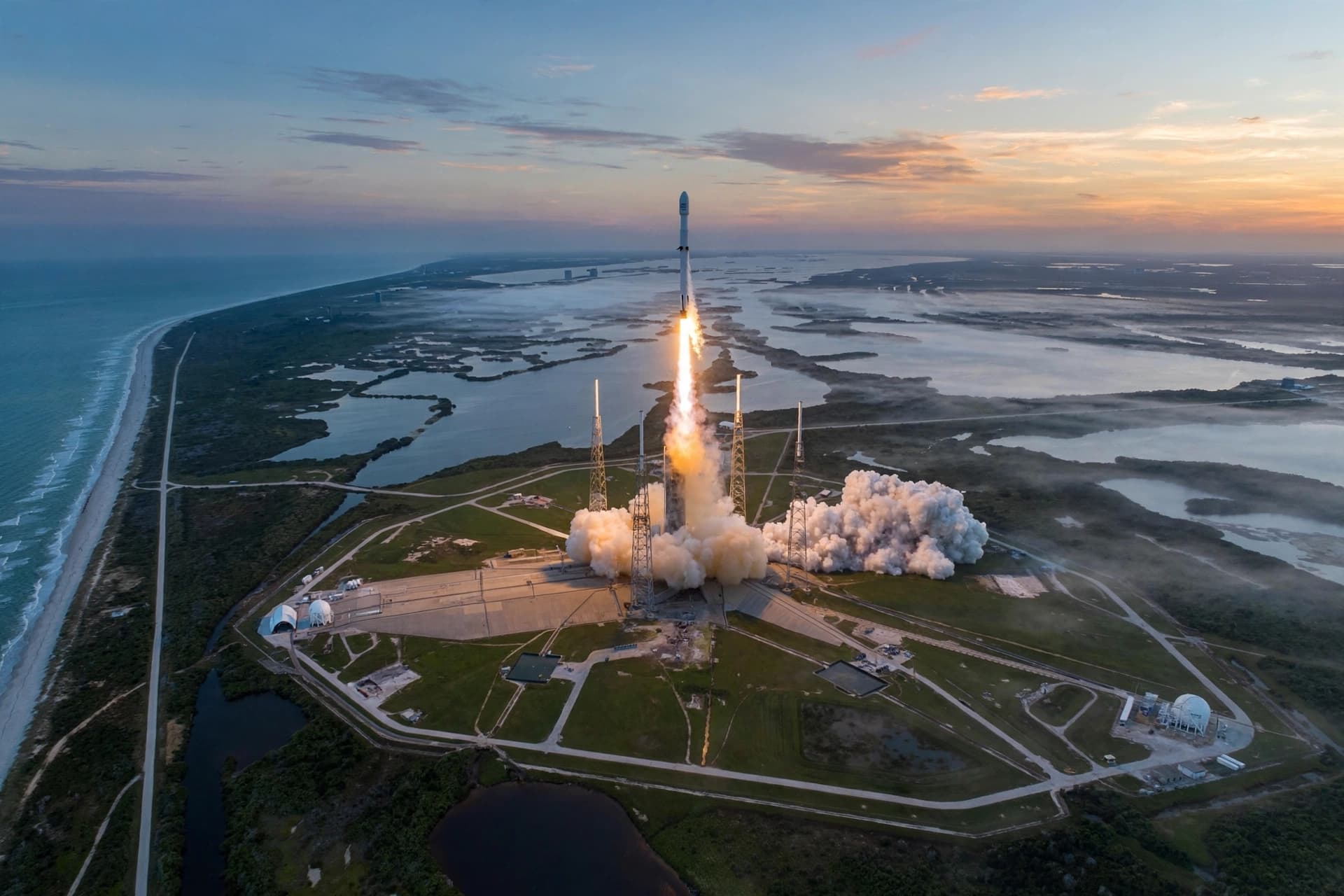
AI Image Disclaimer: The accompanying visuals are AI-generated illustrations intended to represent scientific concepts and are not actual photographs of the reported event.
Sources (Verification Check): NASA, NOAA Space Weather Prediction Center, Space.com, Reuters, ScienceDaily
Published by Banx Network. This article is part of the Banx decentralized media programme, powered by the BXE token on the XRP Ledger.