Many of nature's greatest achievements occur on a microscopic scale. Invisible to the naked eye, microorganisms have shaped Earth's ecosystems for billions of years. Today, scientists are exploring how these tiny forms of life might also help address modern industrial and environmental challenges.
Researchers are expanding studies on sustainable microbial factories—genetically engineered microorganisms capable of producing valuable chemicals, fuels, pharmaceuticals, and industrial materials. The goal is to reduce dependence on traditional manufacturing processes that often require greater energy consumption and produce higher emissions.
Microbial factories use bacteria, yeast, or other microorganisms that have been modified to perform specific biological tasks. By converting renewable raw materials into useful products, these organisms may support cleaner production methods across multiple industries.
Scientists are improving genetic engineering techniques to increase production efficiency while maintaining biological stability. Advances in synthetic biology allow researchers to fine-tune metabolic pathways so microorganisms can manufacture target compounds more effectively.
One important advantage of microbial production is flexibility. Depending on the organism and engineering strategy, researchers can produce biodegradable plastics, specialty chemicals, biofuels, food ingredients, and pharmaceutical compounds within controlled laboratory environments.
Although promising, the technology still faces technical challenges. Researchers continue working to improve production yields, reduce manufacturing costs, and ensure large-scale industrial applications remain economically competitive.
International collaborations among universities, biotechnology companies, and research institutions continue accelerating progress in this rapidly growing field. Shared scientific knowledge helps refine engineering methods while expanding potential commercial applications.
As sustainable manufacturing becomes increasingly important worldwide, microbial factories represent one example of how biology and engineering can work together. Continued research may contribute to more environmentally responsible production systems in the future.
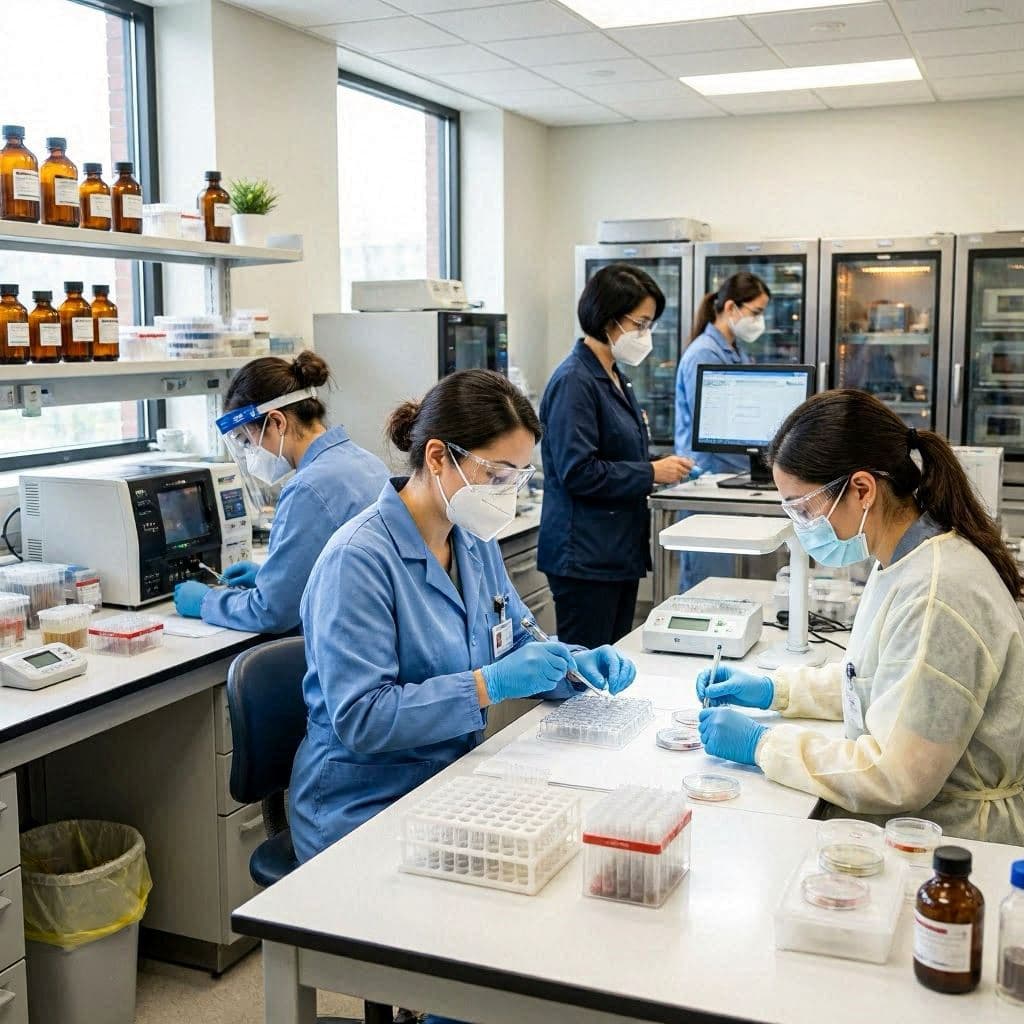
AI-generated image disclaimer: The accompanying illustration was generated using AI to visualize laboratory research and is not an authentic scientific photograph.
Published by Banx Network. This article is part of the Banx decentralized media programme, powered by the BXE token on the XRP Ledger.