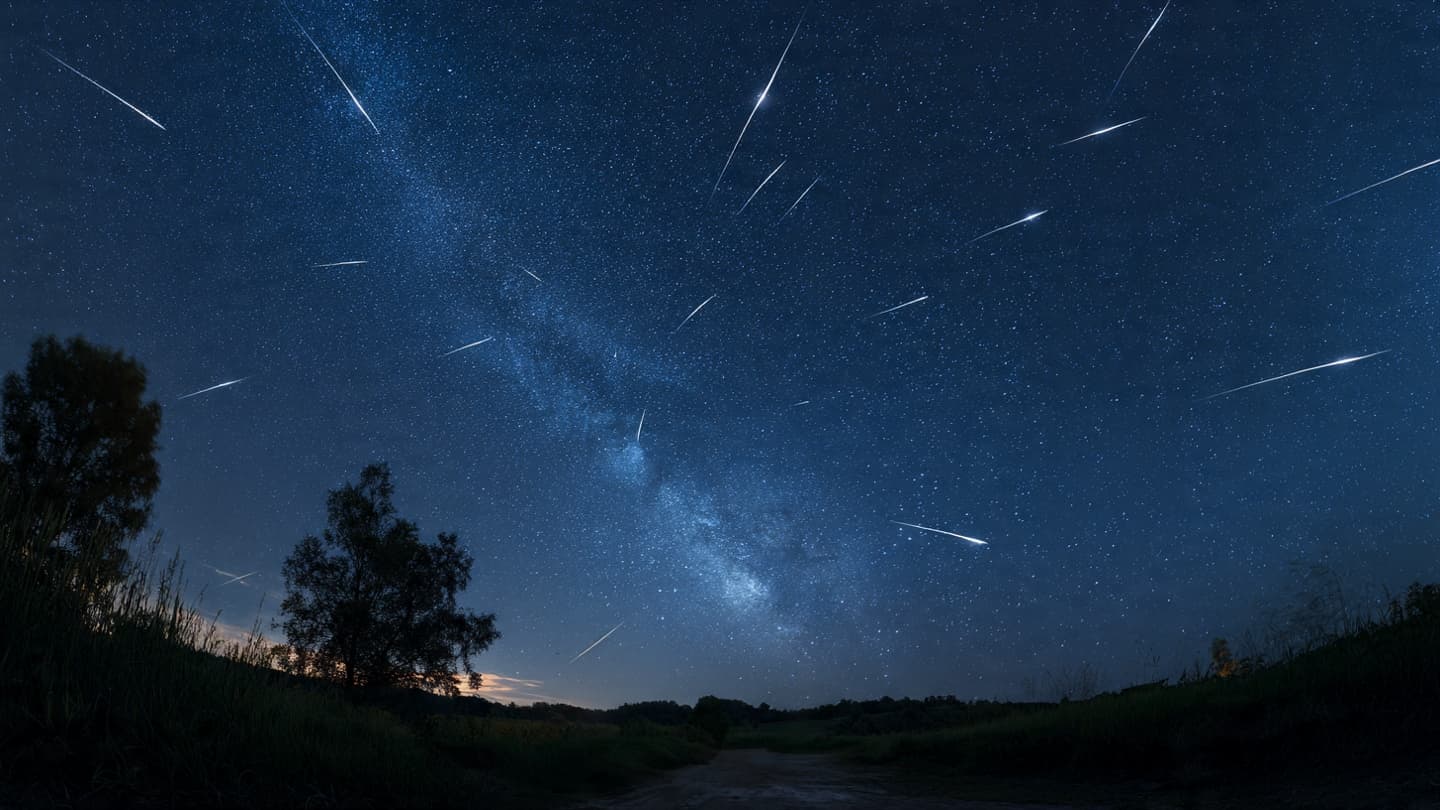
The night sky often resembles an old library whose pages are turned by light itself, and this week, observers across many parts of the world may once again look upward as the June Bootids meteor shower approaches its annual peak. Though modest in most years, the shower carries a reputation for unpredictability that has long fascinated astronomers and amateur skywatchers alike.
The June Bootids originate from debris left behind by Comet 7P/Pons-Winnecke. As Earth passes through this stream of cosmic material, tiny particles enter the atmosphere and burn brightly, creating brief streaks of light commonly known as shooting stars.
Unlike more reliable meteor displays such as the Perseids or Geminids, the June Bootids rarely follow a predictable pattern. Some years produce only a handful of visible meteors each hour, while other years have surprised observers with sudden outbursts reaching dozens or even hundreds of meteors per hour.
Astronomers note that the shower is expected to peak during the final week of June. The best viewing conditions are generally found in locations far from urban light pollution, where dark skies allow faint meteors to become visible.
The meteor shower appears to radiate from the constellation Boötes, although observers do not need to look directly toward the constellation. Meteors can emerge across broad areas of the sky, making wide, unobstructed views especially valuable.
One distinctive feature of the June Bootids is their relatively slow speed compared with many other meteor showers. These slower-moving meteors often leave graceful, lingering trails that can be easier for casual observers to notice.
Researchers continue to study the June Bootids because their erratic behavior may reveal how comet debris evolves over time under the influence of planetary gravity and solar radiation. Each year's display adds another piece to that scientific puzzle.
As weather conditions and local sky quality will ultimately determine visibility, astronomers encourage observers to remain patient. Even a quiet meteor shower can offer moments of reflection beneath a vast summer sky.
AI Image Disclaimer: Images accompanying this article are AI-generated and intended for illustrative purposes only.
Sources: Space.com, NASA, In-The-Sky.org, EarthSky
Published by Banx Network. This article is part of the Banx decentralized media programme, powered by the BXE token on the XRP Ledger.