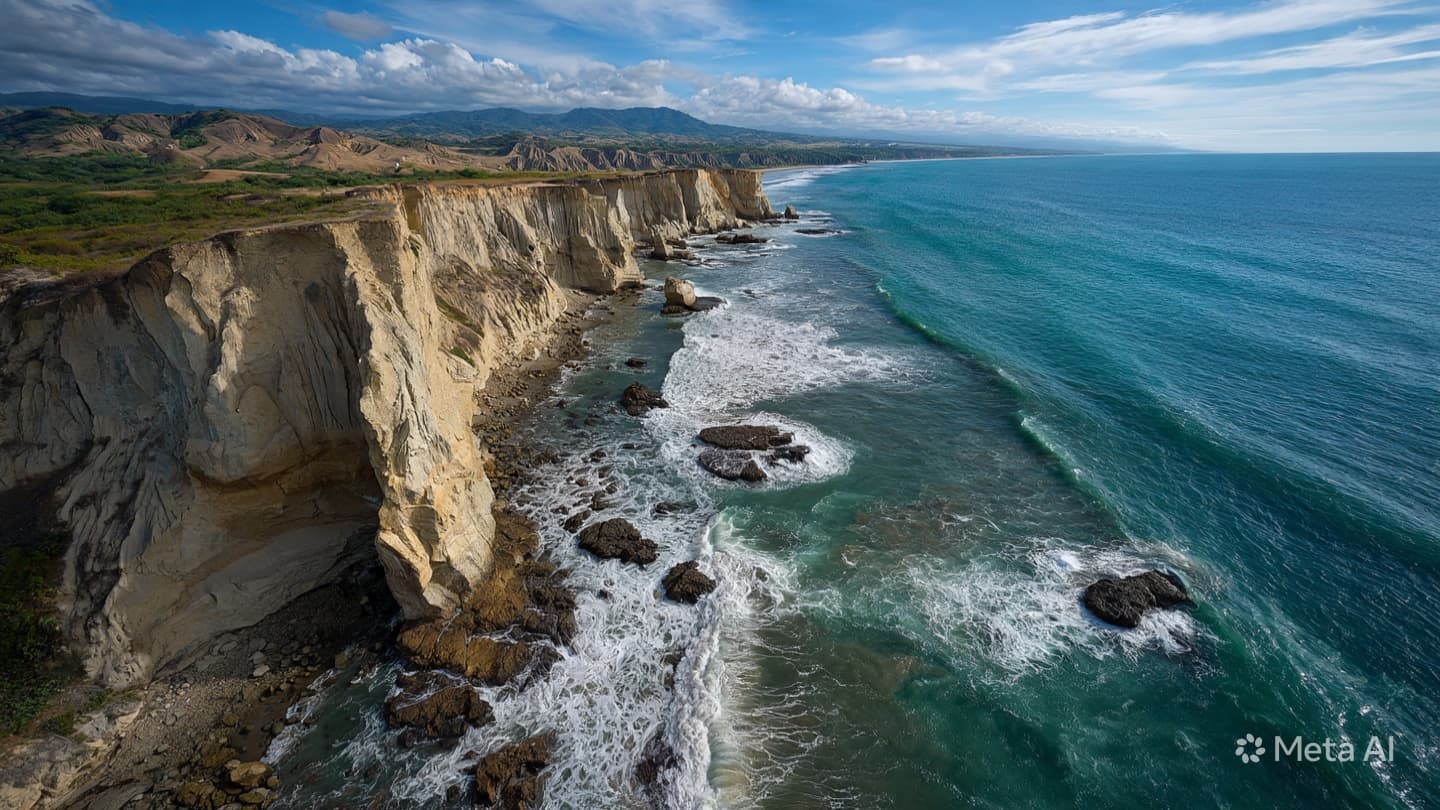
The coast of Manabí is a place of dramatic, beautiful tension, where the land meets the sea in a series of sweeping, limestone cliffs and hidden, crescent-shaped beaches. It is a landscape defined by its constant, geological evolution, a place where the persistent pressure of the tide and the salt air carves the shape of the shoreline day after day. To walk these paths is to witness the sheer, immense power of nature, a reminder that the boundary between the land and the ocean is not a fixed line, but a dynamic, changing reality. When that reality shifts—through erosion or a sudden, dramatic collapse—the human experience of the coast is changed in an instant.
The injury of a hiker triggered by a cliff-side collapse is a visceral manifestation of this coastal volatility. It is a moment where the beauty of the view becomes the site of a sudden, perilous transition, as the very earth beneath one's feet gives way to the gravity of the cliff. There is a terrifying, elemental suddenness to these events, a moment where the expected stability of the path is erased by the movement of the limestone. It is a reminder that in these rugged, beautiful regions, the trails we build are always a guest of the geography they traverse.
Recovery and rescue efforts in the aftermath are a testament to the resilience of the local teams, who must navigate the treacherous, shifting terrain to reach those in need. These professionals, moving through the loose rock and the unstable debris, carry out their duties with a somber, focused intensity. The retrieval of the hiker is not just an operation of search and rescue; it is a quiet, necessary act of restoration, a way of bringing stability to a narrative that ended in the suddenness of the cliff-side failure. Their work is cold, precise, and deeply human, performed under the watchful, indifferent gaze of the sea.
The scientific community often points to the intricate interplay of tidal action, structural weathering, and geological instability as the architects of such occurrences. Yet, looking upon the scene, the analytical language of geology seems to fall short of capturing the weight of the moment. The communities that live along this coast are intimately aware of the cliffs' vulnerability, yet even with that awareness, the suddenness of a collapse remains an unpredictable hazard. Each event serves as a sharp, painful instruction on the necessity of caution and the profound limits of human intervention when the coast is in motion.
In the days that follow, the cliff will likely settle, the debris will be partially cleared or consumed by the sea, and the path will be marked as a cautionary site. This is the cycle of life on the Manabí coast—a persistent effort to adapt and move on, even as the landscape holds the potential for future disruption. The memory of the event settles into the collective consciousness, becoming a local landmark, a point of reference for the risks of the coastal walk. The cliff, however, retains the memory of the event in the way it is etched into the minds of those who have seen it fall.
The administrative response—the assessments of trail integrity, the warnings issued to travelers, and the investigations into the coastline's stability—is the bridge between the tragedy and the eventual return to normalcy. It is a bureaucratic, necessary process that seeks to weave safety into the fabric of daily life along the coast. While it cannot prevent the next section of the cliff from falling, it serves as a measure of our commitment to safeguarding those who must traverse these beautiful, treacherous heights. The goal, always, is to minimize the distance between our aspirations for a safe coastal experience and the reality of the natural world.
Ultimately, the event stands as a reflection on the delicate balance of life along the Manabí shore, where the beauty of the coast is both a blessing and a burden. The injury of the hiker reminds us of the fragility of our excursions and our plans when faced with the unyielding, geological momentum of the sea. We move through this landscape with a mixture of reverence and caution, acknowledging that our journey is never entirely our own. It is a shared passage, subject to the whims of the environment and the quiet, persistent resilience of those who remain to witness the aftermath.
As the quiet returns to the coast, the focus shifts to the long-term work of environmental management and infrastructure resilience. These are the steps that ensure the region can continue to thrive, even amidst the persistent challenges of its geography. The hiker is remembered, the trail is re-evaluated, and the cycle of life continues, shaped and reshaped by the waves that pound endlessly against the base of the earth. We are all, in our own ways, travelers through these landscapes, shaped by the events that pass us by and the strength we find to continue.
Published by Banx Network. This article is part of the Banx decentralized media programme, powered by the BXE token on the XRP Ledger.